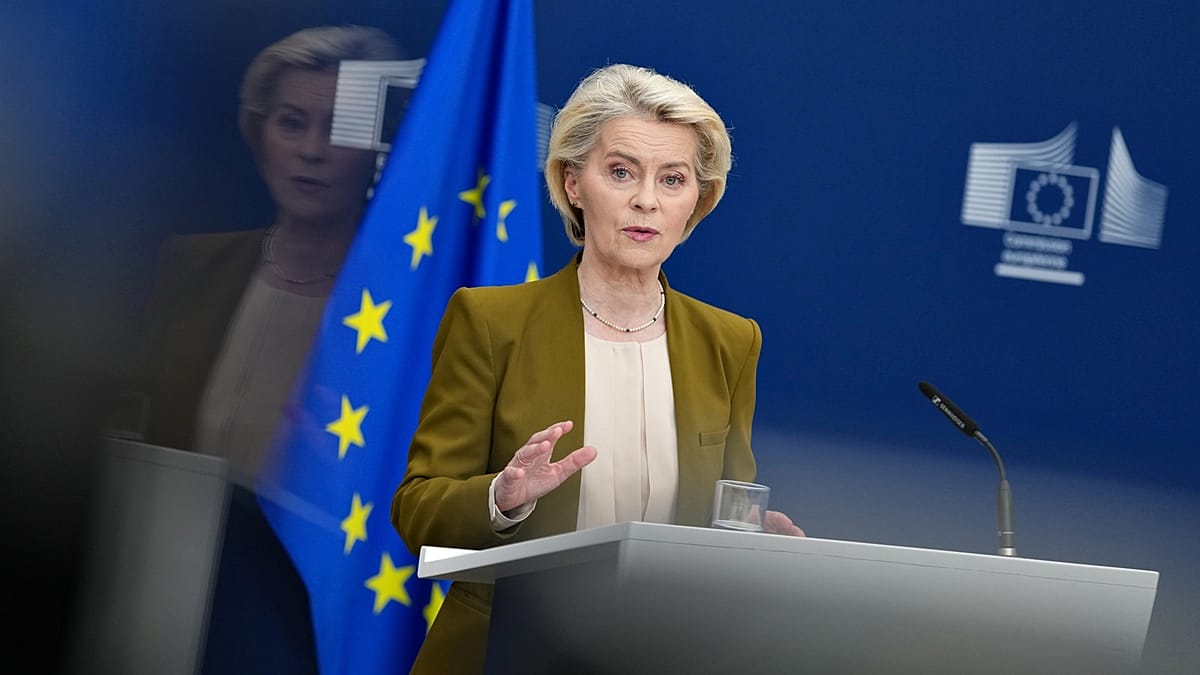
The European Commission has proposed a new round of sanctions against Russia, aiming to tighten restrictions on oil revenues, the so-called "shadow fleet," financial institutions, and individuals involved in the war in Ukraine. Commission President Ursula von der Leyen presented the package on Tuesday, framing it as a continuation of Europe's pressure campaign to force Moscow toward a ceasefire.
"Russia has clearly failed to subjugate Ukraine. The price Russia pays is heavier by the day, and it is paid primarily by the people of Russia," von der Leyen said. "So the objective of our package couldn't be clearer: we want to maintain the full intensity of our sanctions."
Delaying the Oil Price Cap Review
The centerpiece of the proposal is a delay in the scheduled review of the price cap on Russian oil, a mechanism jointly enforced by the EU, the G7, and Australia since December 2022. The cap, currently set at $44.10 per barrel, was made dynamic last year, with adjustments tied to market prices. However, disruptions in the Strait of Hormuz have pushed the price of Russia's Urals crude to $87 per barrel, up from $58 in February. If the EU proceeds with the planned review on July 15, the cap would rise, potentially granting Moscow temporary financial relief.
Von der Leyen argued that the adjustment mechanism "was not made for market shocks like the one caused by the closure of the Strait of Hormuz." The Commission proposes postponing the review until January 2027, keeping the cap at its current level. "The pause until January will give oil markets time to stabilise, while preserving pressure on Russia's revenues," she added.
This move effectively sidelines an earlier proposal for a full ban on maritime services—such as banking, insurance, and flagging—for Russian oil tankers. That plan, championed by Nordic and Baltic states, lost momentum after opposition from Greece and Malta, two coastal member states that service Russian tankers, and a lack of enthusiasm from other G7 allies. By shifting focus to the cap, the Commission acknowledges that a comprehensive ban is not imminent. A G7 leaders' summit in France next week is expected to address sanctions further.
Targeting the Shadow Fleet and Financial Networks
The package also blacklists 30 vessels from Russia's shadow fleet—aging, poorly maintained oil tankers used to bypass the price cap. These ships pose significant security and environmental risks to European waters, according to the Commission. More than 600 such vessels have already been denied access to EU ports and services. Additionally, ports, refineries, and other infrastructure supporting the shadow fleet will face blacklisting.
Financial measures include sanctions on 31 Russian banks and 20 cryptocurrency firms, platforms, and oil traders outside Russia accused of facilitating evasion. The proposal also bans exports of metals, alloys, and components used in the defense sector, and, for the first time, imports of certain fish products from Russia. Notably, European exports of alumina—a material linked to Russian weapons production—are excluded from the package, despite controversy over a plant in western Ireland. The EU's top diplomat, Kaja Kallas, has previously pressed Dublin on this loophole, as reported in Kaja Kallas Presses Ireland on Alumina Exports to Russia Amid Sanctions Loophole.
Restricting Entry for Russian Soldiers
A novel element in the proposal is a ban on entry into the Schengen area for Russian soldiers who have served in the invasion of Ukraine. This initiative, first put forward by Estonia, has gained support from other member states. "Europe stays off limits for anyone who has participated in the invasion of Ukraine, as simple as that," von der Leyen said.
The package also targets individuals involved in the war, including soldiers, and aims to close loopholes that allow Moscow to sustain its military operations. The proposal comes as Russia intensifies airstrikes on Ukrainian cities, including a recent drone barrage on Kharkiv, as detailed in Russian Drone Barrage Hits Kharkiv Residential Area as Attacks Intensify.
Path to Approval
Approval of the sanctions requires unanimity among the 27 EU member states. If endorsed, this will be the 21st package since February 2022. Officials and diplomats in Brussels are optimistic that a green light can be secured before July 15 to avoid the automatic review of the price cap. The proposal arrives amid signs of strain in the Russian economy, which has reinforced the push for restrictions.
"Our sanctions keep biting hard and cutting deep," von der Leyen said. "They are weakening the economic foundations of Russia's war effort." Meanwhile, Ukrainian President Volodymyr Zelenskyy has proposed a face-to-face meeting with Russian President Vladimir Putin to end the war, conditional on a ceasefire and based on the current line of contact.