Trade tensions between the European Union and China are escalating after Beijing called on EU member states to revise the bloc’s proposed “Made in Europe” legislation. The draft proposal, put forward by the European Commission, aims to tighten rules for foreign companies seeking access to EU public procurement contracts or investment opportunities. China’s commerce ministry responded sharply, warning that if the EU “insists on this punishment and treats China’s enterprises in a discriminatory manner,” Beijing would retaliate with countermeasures.
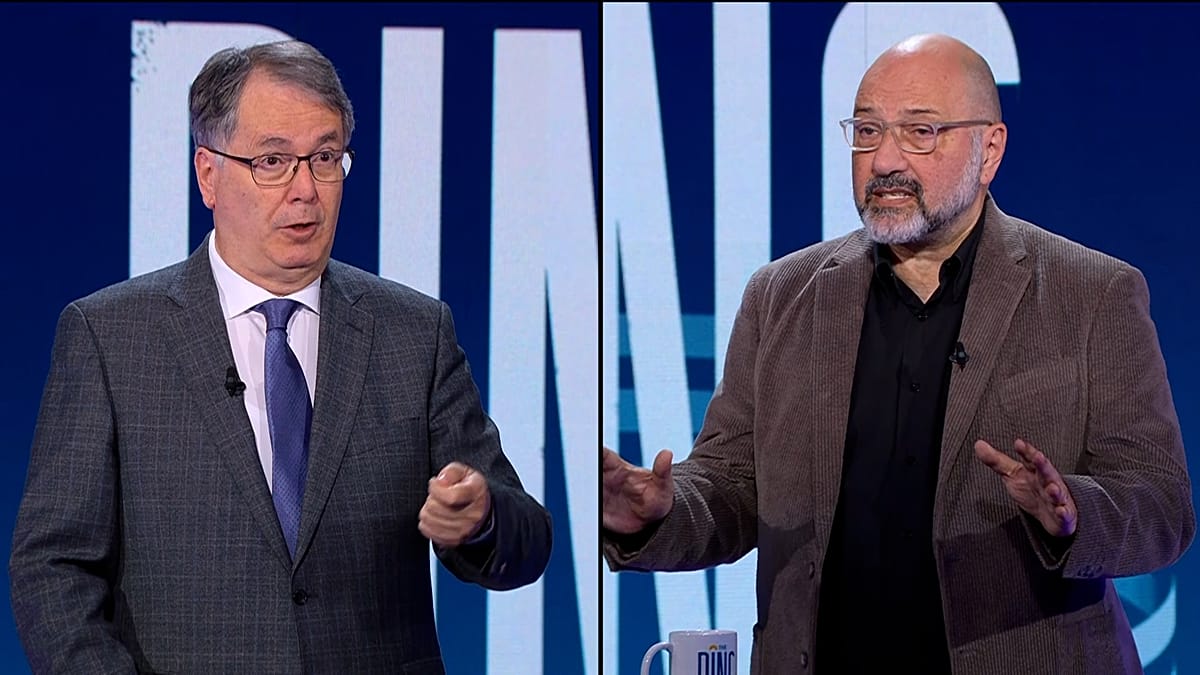
As Europe navigates a world of aggressive tariffs from the Trump administration, the question arises: is the EU heading toward a full-scale trade conflict with China, or can it strike a balance between protection and cooperation? This topic was the focus of the latest episode of The Ring, the weekly debate show held at the European Parliament in Brussels.
Two Perspectives on Trade Strategy
In the left corner stood Sakis Arnaoutoglou, a Greek MEP from the Socialists and Democrats Group (S&D) and a member of the delegation for relations with the People’s Republic of China. He advocates for a pragmatic approach to global tensions. “Europe must remain open to cooperation with China, but it cannot remain naive,” Arnaoutoglou said. “We need a relationship based on fairness, reciprocity and transparency. The aim is not confrontation.”
In the right corner was Nicolás Pascual de la Parte, a Spanish MEP from the centre-right European People’s Party (EPP) and a member of the Committee on Security and Defence. He warned about the global power shift driven by Beijing. “China’s export restrictions are an escalation of the weaponization of trade policies,” he said. “We have to confront this in a smart way. That means we cannot decouple from China, but we have to de-risk.”
The debate comes at a time when the EU is also facing pressure from the United States. As Trump threatens 25% tariffs on European cars, the bloc must manage multiple trade fronts simultaneously. The EU’s trade chief has urged the US to restore a 15% tariff cap, but tensions remain high. Meanwhile, internal rifts among EU negotiators ahead of key US trade talks complicate the picture further, as reported by European Pulse.
The proposed “Made in Europe” legislation is designed to bolster Europe’s industrial capacity by giving preference to European firms in public contracts and limiting foreign access to strategic sectors. Critics argue it could provoke a trade war with China, which is already the EU’s second-largest trading partner. Supporters, however, see it as a necessary step to protect European jobs and innovation.
Arnaoutoglou emphasized the need for a balanced approach. “We cannot afford to isolate ourselves,” he said. “But we must ensure that our markets are not exploited by unfair practices.” De la Parte countered that Europe must be more assertive. “We have seen how China uses trade as a weapon,” he said. “If we do not respond, we risk losing our strategic autonomy.”
The debate highlighted the broader challenge facing the EU: how to maintain open markets while protecting its interests in a world of rising protectionism. As former EU foreign policy chief Catherine Ashton noted, Trump views trade as a weapon, and the EU must adapt. The same logic applies to relations with China.
For now, the European Commission is pushing ahead with its legislative proposal, but member states remain divided. Some, like France and Germany, support stronger protections, while others, such as the Netherlands and Sweden, warn against provoking Beijing. The outcome of this debate will shape the EU’s trade policy for years to come.