Brussels is moving on two fronts this week: finalising a massive financial lifeline for Kyiv and tackling the energy price spike that threatens households and businesses across the continent. The €90 billion loan for Ukraine, long stalled by Budapest’s objections, is now set to be disbursed after Hungary lifted its veto. The decision follows weeks of tense negotiations and marks a significant step in the EU’s commitment to Ukraine’s reconstruction and macroeconomic stability.
Ukraine Loan: A Breakthrough After Budapest’s Blockade
The loan, part of a broader G7-backed initiative, will provide Kyiv with essential budget support as it continues to defend against Russian aggression. The funds are expected to be channelled through the EU’s Ukraine Facility, with disbursements tied to reforms in governance, anti-corruption, and energy sector modernisation. Hungary had previously blocked the package over concerns about Ukrainian energy transit via the Druzhba pipeline, but a compromise was reached after assurances from the European Commission.
Euronews’ Sasha Vakulina reported that the agreement signals a renewed unity among member states, even as divisions persist on other issues. The loan is a critical component of the EU’s broader strategy to keep Ukraine’s economy afloat while it pursues full integration into the European Union, a goal President Zelenskyy has insisted must go beyond symbolic gestures.
Energy Crisis: Commission Targets Rising Costs Amid Iran War
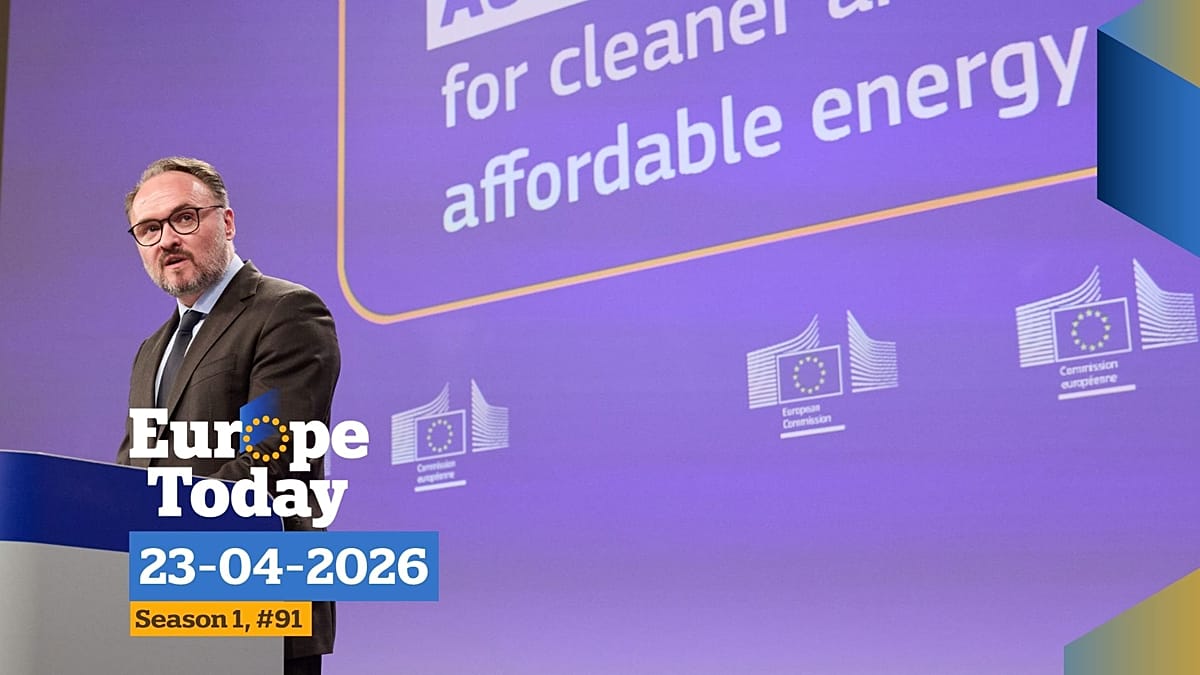
Separately, the European Commission has unveiled a new package to combat rising energy costs, driven largely by the ongoing conflict in Iran and the disruption of oil and gas flows through the Strait of Hormuz. The measures include temporary price caps on electricity, accelerated approvals for renewable projects, and a coordinated effort to fill gas storage ahead of next winter. Energy Commissioner Dan Jørgensen, in an interview on Europe Today, stressed that the EU must learn from the 2022 crisis: “We cannot afford to be reactive again. This package is about structural resilience, not just emergency fixes.”
The crisis has already had knock-on effects. A jet fuel shortage is threatening summer travel, with airlines cutting routes and warning of higher fares. Jakub Janas, an energy analyst, explained that refineries in Europe are struggling to source crude from alternative suppliers after Iranian shipments were halted. The situation is particularly acute in Central and Eastern Europe, where dependence on Russian pipeline oil remains high despite diversification efforts.
Defence and Security: Latvia’s Minister and Former NATO Chief Weigh In
On the security front, Latvia’s Defence Minister Andris Sprūds and former NATO Secretary General Anders Fogh Rasmussen joined the programme to discuss the alliance’s posture in the Baltic region. Sprūds emphasised that Russia’s war in Ukraine has fundamentally altered Europe’s security landscape: “We are investing in new capabilities, but we need a permanent NATO presence, not just rotational deployments.” Rasmussen echoed the call for a long-term commitment, warning that any pause in support for Ukraine would embolden Moscow.
The discussions come as EU leaders gather in Cyprus to tackle a packed agenda, including Ukraine, the Hormuz crisis, and the activation of the mutual defence clause. The summit is expected to produce a joint statement reaffirming support for Kyiv and outlining steps to reduce energy dependency on volatile regions.
What’s Next for European Energy Policy?
The Commission’s package also includes a push for faster permitting of wind and solar farms, as well as investments in grid interconnections. Critics, however, argue that the EU is still too slow in transitioning away from fossil fuels. A recent report by experts on the AccelerateEU plan urged a shift from crisis-driven measures to long-term structural reforms, including a carbon border adjustment mechanism that rewards energy efficiency.
Meanwhile, the US and Azerbaijan have launched talks on the TRIPP Corridor, a new route for Caspian energy to reach European markets. If successful, this could further reduce the EU’s reliance on Russian gas and Iranian oil. But as the jet fuel crisis shows, the transition will not be smooth.
For now, the EU’s twin moves on Ukraine and energy signal a determination to act, even as internal disagreements and external shocks test the bloc’s cohesion. The coming weeks will reveal whether these measures are enough to stabilise both Ukraine’s finances and Europe’s energy markets.



