This week, Europe confronts a trio of pressing challenges: escalating trade tensions with the United States, renewed diplomatic efforts between Washington and Tehran, and a record-breaking heatwave that has already claimed more than 1,300 lives across the continent. Each issue tests the resilience of European institutions and the adaptability of its member states.
US-Iran Talks Resume in Qatar
After a tense weekend marked by mutual threats, the United States and Iran have agreed to resume nuclear negotiations in Doha, Qatar. Osama Rizvi, founder of Rizvi Insights, assesses the implications for regional stability and global energy markets. The talks come as the 2015 Joint Comprehensive Plan of Action (JCPOA) remains in limbo, with European signatories—France, Germany, and the United Kingdom—pushing for a diplomatic breakthrough. Iran has sent a delegation to Qatar but denies direct US negotiations, underscoring the fragility of the process. Any disruption to Iranian oil exports could send energy prices soaring, directly affecting European consumers and businesses already grappling with inflation.
Trump's Tariff Threat Looms Over Transatlantic Relations
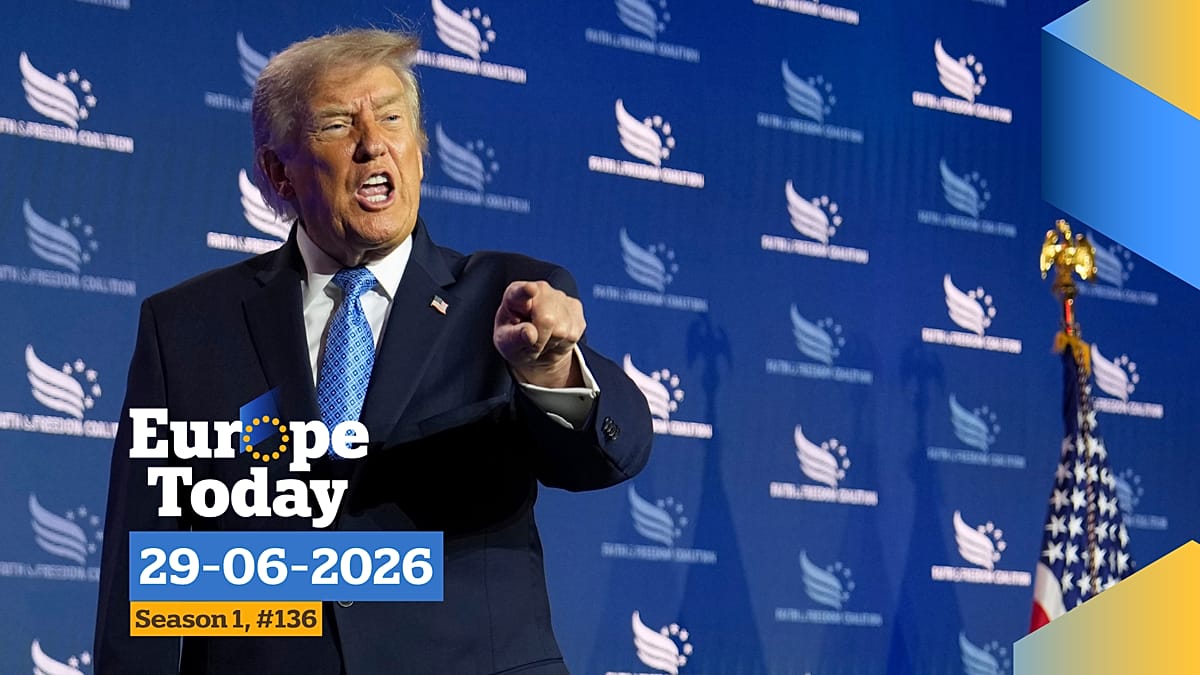
Former US President Donald Trump has once again threatened to impose tariffs on European imports, reviving memories of the 2018 trade disputes that targeted steel, aluminum, and luxury goods. Euronews' Stefan Grobe reports from Brussels, where US Independence Day celebrations became a stage for political maneuvering. European Commission officials in Brussels are bracing for potential levies on German automobiles and French wine, sectors vital to the economies of Berlin and Paris. The European Union has signaled it will retaliate proportionally, but the prospect of a renewed trade war adds uncertainty to an already fragile economic recovery.
Deadly Heatwave Grips the Continent
Southern and central Europe are enduring an unprecedented early-summer heatwave, with temperatures exceeding 40°C in cities like Rome, Madrid, and Athens. Carlo Buontempo, Director of the Copernicus Climate Change Service, explains that this heatwave is breaking records due to a persistent high-pressure system over the Mediterranean. Copernicus warns of 'extremely unusual' heatwaves across Europe with no relief in sight. The death toll has surpassed 1,300, with the elderly and vulnerable most at risk. In Portugal, the IPMA has warned of 43°C temperatures and tropical nights, while Ukraine's energy grid faces new strain as the heatwave moves east.
The Air Conditioning Debate Intensifies
As temperatures soar, a political debate is heating up over how Europe should adapt. Diana Ürge-Vorsatz, Vice-Chair of the Intergovernmental Panel on Climate Change, tells Euronews' Méabh McMahon that expanding air conditioning access for the elderly and vulnerable is a short-term necessity. However, she warns that widespread AC adoption could exacerbate climate change by increasing energy demand and refrigerant emissions. The EU has refused to take sides in the air conditioning debate, leaving member states to balance public health with long-term climate goals. The heatwave has also exposed a class divide, as wealthier households install cooling systems while lower-income communities suffer.
World Cup Roundup
Amid the political and environmental turmoil, the FIFA World Cup continues to captivate European fans. Austria secured a dramatic place in the knockout stage, while Germany and the Netherlands prepare for crucial group-stage matches. The tournament offers a brief respite from the continent's pressing challenges.