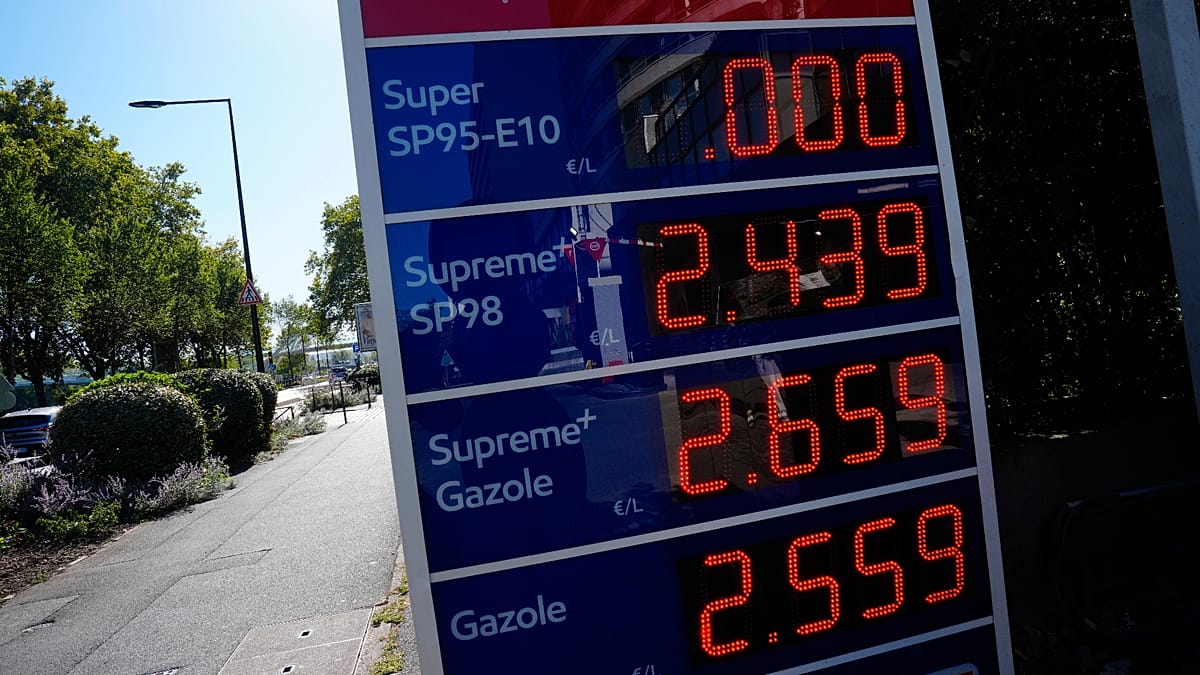
The world's energy markets are reeling from what the International Energy Agency (IEA) has called "the largest physical supply disruption in the history of global energy markets." With key shipping lanes under attack and refineries damaged, European motorists are bearing the brunt of the crisis, facing pump prices that have climbed above €2.40 per litre in several countries.
The immediate trigger is the renewed hostilities in the Strait of Hormuz, where Iranian attacks have slashed daily cargo passage to fewer than 20 vessels. Simultaneously, Houthi rebels in Yemen are disrupting traffic through the Bab-el-Mandeb strait, a vital route connecting the Red Sea to the Indian Ocean. These two chokepoints handle a significant share of the world's oil and refined products, and their partial closure has sent shockwaves through global supply chains.
Where are pump prices highest?
According to live tracker fuel-prices.eu, the Netherlands has the most expensive petrol in Europe, averaging €2.43 per litre, followed by Denmark at €2.35 and Finland at €2.32. France and Greece are not far behind, with petrol at €2.23 and €2.20 respectively.
Diesel prices are even steeper. Denmark tops the list at €2.52 per litre, while France and Italy see diesel at €2.40 and €2.36. For context, drivers in North Macedonia pay €1.70 per litre and those in Andorra €1.72 – a difference of nearly a euro per litre compared to Denmark.
But these nominal prices only tell part of the story. To understand the real impact on households, we need to adjust for purchasing power standards (PPS), which account for differences in income levels and cost of living across countries.
The real burden: purchasing power parity
Using a Europe in Motion estimate, we calculated the cost of filling a 50-litre tank as a percentage of each country's GDP per capita, adjusted for purchasing power. The results are stark.
The Balkans are suffering the most. Bosnia and Herzegovina tops the list, where a full tank consumes a significant share of average income. In the European Union, Greece is the hardest hit, with both petrol and diesel prices taking the biggest bite out of household budgets.
This disparity highlights the uneven impact of the crisis. While a Danish driver may pay more in absolute terms, the relative burden is far lighter than for a driver in Sarajevo or Athens.
Refineries under pressure
The supply disruption is not limited to crude oil. The IEA reports that global refinery production in July 2026 was nearly five million barrels per day lower than in July 2025, creating a bottleneck in the refined products market. With Gulf crude supplies disrupted, refineries are scrambling for alternative sources, but crude grades are not always interchangeable, and replacing established supply routes is costly.
At the same time, attacks on refineries in Saudi Arabia, Kuwait, and Bahrain have halted or reduced production, further tightening supplies of diesel and jet fuel. This has pushed refining margins to historic highs, adding another layer of pressure on pump prices.
The war in Ukraine adds yet another shock. While European imports of Russian oil have been severely curtailed, other major buyers like Turkey and Brazil are being forced to seek alternative supplies of diesel, intensifying global competition for refined products. The IEA expects refining margins to peak in October, offering a glimmer of hope that the worst may be over, but the road to recovery remains uncertain.
For European consumers, the crisis is a stark reminder of the continent's dependence on global energy markets. As G7 pressure on the Houthis continues, and with new risks to LNG supplies emerging, the energy landscape remains volatile. The OECD's modest growth forecast for 2026 already factors in the shock, but the human cost at the pump is immediate and unevenly distributed.