The leaders of the Group of Seven industrialised nations have issued a joint appeal to Yemen's Houthi movement to halt all military operations and threats against civilian shipping, urging the Iran-aligned group to re-enter Yemen's stalled political process in good faith. The statement, signed by Canada, France, Germany, Italy, Japan, the United Kingdom and the United States, also called on Tehran to cease arming and supporting the Houthis, accusing Iran of breaching several UN Security Council resolutions.
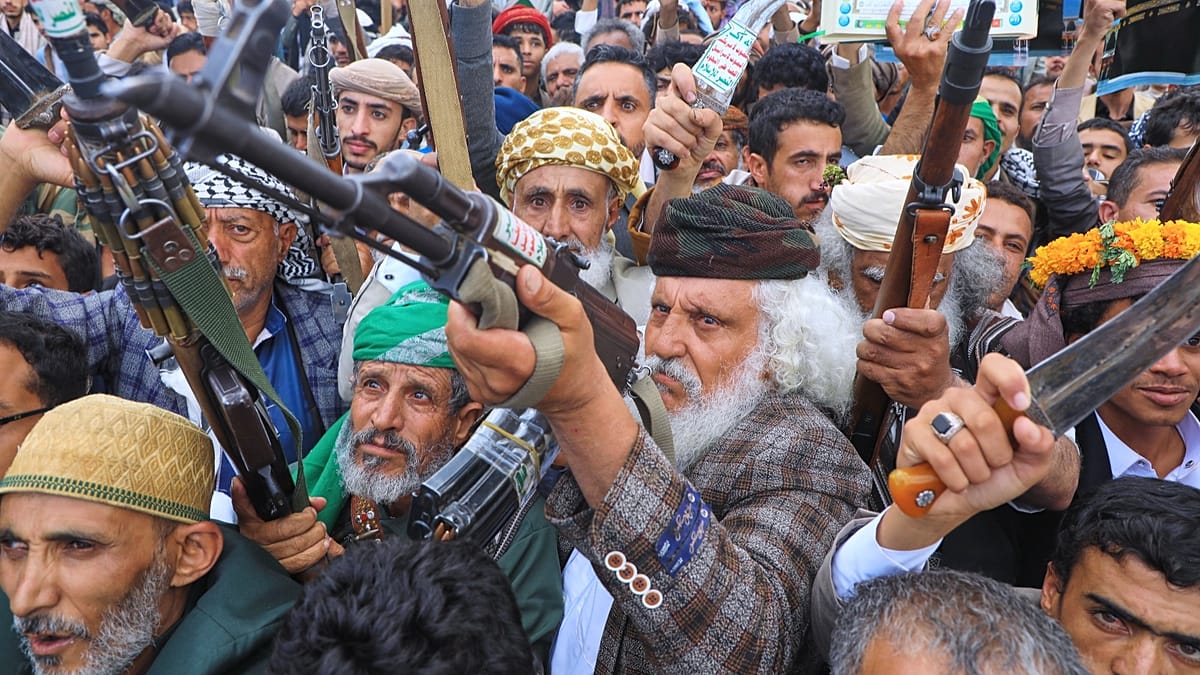
The G7 intervention reflects mounting alarm in Western capitals over the Houthis' recent offensive to seize control of Yemen's entire Red Sea coastline, a campaign that has disrupted one of the world's busiest maritime corridors and pushed energy prices higher. The group's gains have tightened Iran's grip over two critical chokepoints — the Strait of Hormuz and the Bab-el-Mandeb — through which Gulf oil exports, including those of Saudi Arabia, must pass.
European capitals weigh in
European governments have moved swiftly to shore up Riyadh's defences while insisting they will not be drawn into direct combat. UK Prime Minister Andy Burnham agreed on Monday to provide defensive air-to-air refuelling support for Saudi jets, a move that stops short of offensive involvement. France, meanwhile, signalled its readiness to help secure Saudi energy infrastructure targeted by the Houthis, adopting what a diplomatic source described to AFP as a "strictly defensive approach" that "in no way involves taking part in the conflict with the Houthis."
The pledges came after a Houthi drone attack on Riyadh on Saturday — the first strike on the Saudi capital in years — and a subsequent Saudi bombardment of the Red Sea port of Mokha that killed at least six people and wounded eight, according to the Houthi-affiliated news agency Saba. The exchange marks a sharp escalation in a war that had been largely frozen since a 2022 truce but resumed in July.
The Houthis have also targeted facilities belonging to Saudi oil giant Aramco in the port city of Yanbu, while Riyadh says the East-West Pipeline, a vital crude export route, has been shut down following drone attacks launched from Iraq. The disruption has raised fresh questions about the vulnerability of global energy supply chains, a concern that resonates particularly in Europe, where the fragility of oil security has become a recurring theme since Russia's full-scale invasion of Ukraine.
Diplomatic manoeuvres
Behind the scenes, Yemen's internationally recognised government has been lobbying Washington for support. Rashad al-Alimi, head of the Presidential Leadership Council, held a call with US President Donald Trump on Sunday to request American backing against the Houthis, according to a source in his office. Trump stopped short of promising military assistance, the source said, framing the conversation as a gesture of solidarity with Yemen's embattled administration.
Saudi Crown Prince Mohammed bin Salman also pressed Trump to strike the Houthis, US media reported, with the New York Times saying the crown prince called on Sunday to "implore him, again" to counter the group's advances. Axios reported that Trump had rebuffed a similar request the previous week, while Fox News said the president claimed the Houthis had agreed not to target US assets — a claim that echoes earlier Houthi pledges regarding US shipping.
The diplomatic flurry coincides with the Mecca Joint Defence Agreement, signed last month by Pakistan, Saudi Arabia and Turkey, which commits the three countries to mutual defence in the event of an attack on any of them. The pact was forged against the backdrop of US-Iran hostilities and regional strikes by Tehran-backed forces.
In a televised address on Monday, Houthi leader Abdulmalik al-Houthi claimed Saudi Arabia had launched 760 airstrikes as of the previous day, asking rhetorically whether such a bombardment of Pakistan or Turkey would not provoke a major crisis. He accused Riyadh of seeking to "push the Turks and Pakistanis forward" and of importing "Takfiris" from Syria, warning the two countries against entanglement for political and financial gain.
The Houthi movement, also known as Ansar Allah, takes its name from the late spiritual leader Badreddin al-Houthi and his son Hussein, killed by Yemeni government forces in 2004. Under Abdulmalik, the group has evolved from an isolated faction in Yemen's northwest into the de facto authority in Sanaa and a regional actor capable of disrupting global trade. As the conflict widens, European governments face a delicate balancing act: protecting energy supplies and shipping lanes without being sucked into another Middle Eastern war.