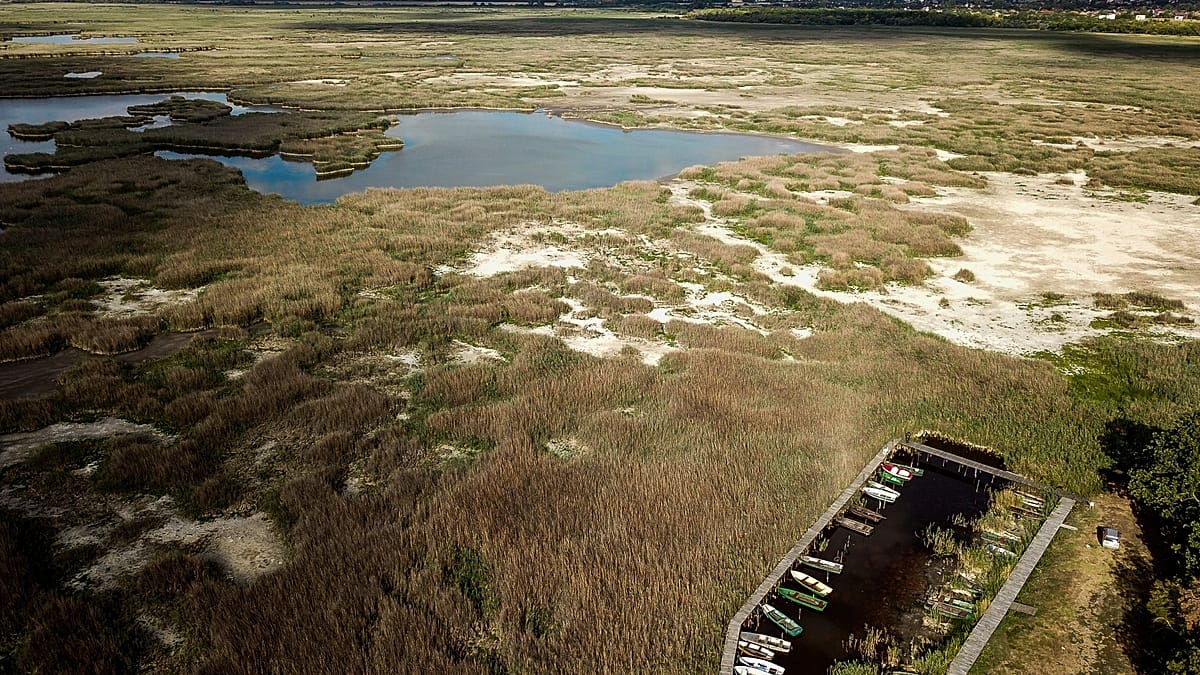
Every summer now brings the same troubling signs: rivers shrinking, soils turning to dust, and towns imposing water restrictions. But the scale of the problem is growing, and Europe's water security is becoming a defining challenge of the decade.
In France, 67 departments are currently under water restrictions, with 20 on high alert. The Danube has fallen to its lowest level since 1996, disrupting agriculture, shipping, and energy production across Central and Eastern Europe, from Hungary to Romania. The Netherlands declared a water shortage as early as July, leaving houseboats stranded on dried-up riverbeds, while seven Greek islands in the Aegean have declared drought emergencies.
According to the European Commission, water stress affects 30 percent of Europeans and 20 percent of the EU's land area every year. In Southern Europe, the situation is more acute: 30 percent of the population lives under permanent water stress, a figure that can rise to 70 percent during peak summer months.
Heatwaves and over-extraction
Intense heatwaves are accelerating evaporation and worsening drought conditions. By mid-July, 38 percent of Europe's land was in drought, up from 15 percent in January, according to the WISE Freshwater data service. The record heat has also fueled wildfires from Albania to Spain, compounding the pressure on water resources.
But the crisis is not only about climate. Decades of over-extraction to meet growing demand have depleted aquifers and rivers. Europe loses an estimated 23 percent of its treated water to leaking infrastructure, and poor ecological conditions further reduce the availability of clean water.
The melting of Swiss glaciers at a record pace is another stark reminder of how climate change is altering the continent's water cycle. Glaciers act as natural reservoirs, and their rapid retreat threatens long-term water supply for millions.
The EU's response
In 2025, the European Commission launched the Water Resilience Strategy, a comprehensive plan with more than 50 concrete actions. The strategy aims to make the EU water-resilient by fostering a water-smart economy, protecting the water cycle, and ensuring clean and affordable water for all member states.
The plan includes measures to improve water efficiency in agriculture and industry, reduce leakage, and promote reuse and recycling. It also emphasizes nature-based solutions, such as restoring wetlands and floodplains, which can help retain water in the landscape.
However, experts caution that the strategy's success will depend on implementation and funding. National governments must translate EU guidelines into local action, and investment in infrastructure is critical. The potential of rooftop rainwater harvesting in cities is one example of innovative approaches that could complement large-scale measures.
As the Danube's low water levels reveal wartime relics near Budapest, the visible effects of drought are a stark reminder of the urgency. The EU's plan is a step forward, but whether it can stop Europe from running out of water remains an open question.