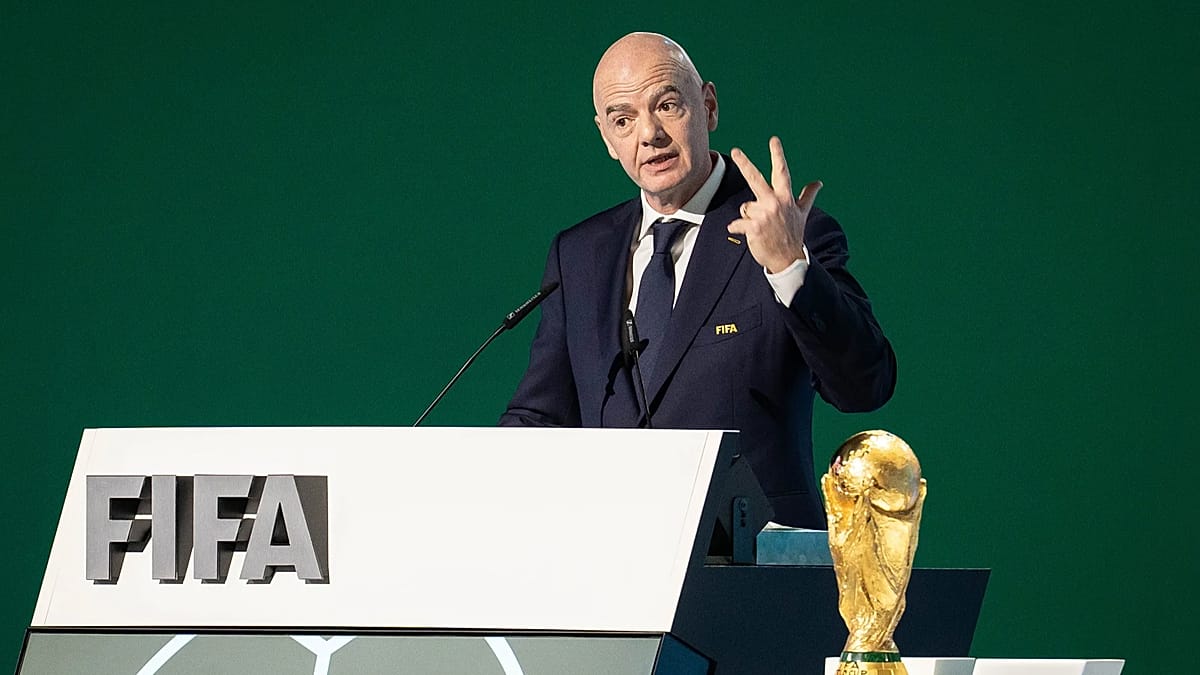
FIFA has proposed a $6.35 billion (€5.5 billion) four-year development fund, according to a letter sent by President Gianni Infantino to the heads of the six continental confederations on 28 September. The plan, which would allocate $25 million (€21.5 million) to each of FIFA's 211 member associations, is expected to be finalised by the FIFA Council in December and approved at the organisation's congress in March.
The proposal, reported by the Associated Press, comes as European football leaders intensify efforts to find a candidate to challenge Infantino in the upcoming presidential election. UEFA, which represents 55 member associations—more than a quarter of FIFA's voting members—has been preparing a criminal complaint against Infantino in Switzerland over alleged financial mismanagement linked to a World Cup commercial rights deal. UEFA has also sought court approval in the United States to obtain evidence related to the case.
Fund details and revenue projections
In his letter, Infantino said that submissions from the confederations confirm "broad agreement on the central objective: FIFA's financial success must serve football and all FIFA's 211 member associations." He added, "I am confident that together we can reach a sustainable and properly supported outcome for FIFA's member associations and for football in every part of the world."
The fund would see each association receive $25 million over four years, a significant increase from the initial $10 million (€8.6 million) that had been planned. FIFA intends to draw more than $3.5 billion (€3 billion) from reserves boosted by the success of the 48-team World Cup, according to two officials who spoke anonymously as the proposal has yet to be formally announced.
FIFA projects around $15 billion (€12.9 billion) in revenue for the 2022–2026 cycle, which includes the men's World Cup to be hosted by the United States, Canada, and Mexico. This figure significantly exceeds earlier projections, the officials told AP.
Infantino under scrutiny
The development fund proposal arrives amid heightened scrutiny of Infantino's leadership. Last month, he expressed openness to an independent review of FIFA's governance and possible reforms, a move seen as an attempt to defuse criticism ahead of the election.
Candidates seeking to challenge Infantino must enter the race by 18 November. The presidential election is scheduled for 18 March in Rabat, Morocco. Infantino, who has led FIFA since 2016, is seeking re-election for another term.
The timing of the fund announcement is notable, as it could be seen as an effort to secure support among smaller football nations, which hold the majority of votes in FIFA's electoral college. European associations, however, remain wary of Infantino's concentration of power and the lack of transparency in FIFA's financial dealings.
UEFA's move to file a criminal complaint in Switzerland and seek evidence in the US underscores the depth of the rift between European football's governing body and FIFA's leadership. The dispute centres on a commercial rights deal for the World Cup, which UEFA alleges involved financial irregularities.
As the election approaches, the development fund may become a key talking point. While the proposal promises significant investment in grassroots football and infrastructure worldwide, critics argue that it does little to address the governance concerns that have dogged FIFA under Infantino's tenure.
For European football leaders, the challenge is to find a credible candidate who can rally support beyond the continent. With 211 member associations, FIFA's electoral landscape is heavily weighted towards smaller nations in Africa, Asia, and the Americas, many of which have benefited from FIFA's development programmes.
The outcome of the March congress will determine whether Infantino secures a third full term or whether European pressure translates into a change at the top of world football's governing body.