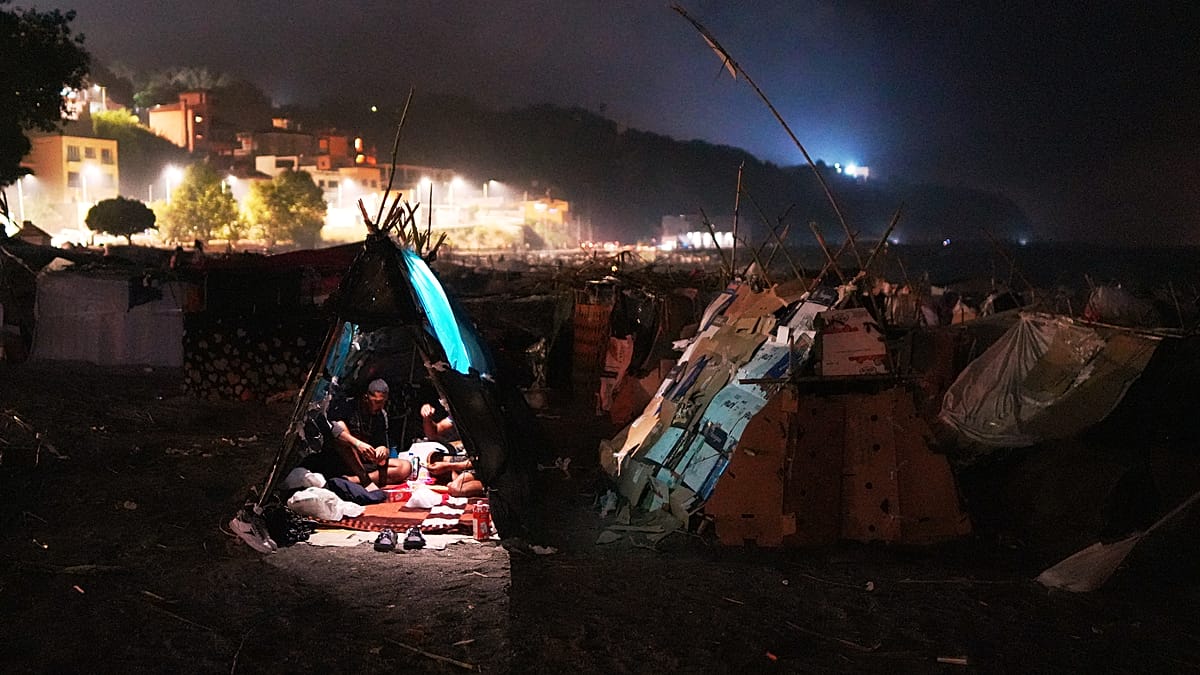
As Europe endures another summer of record heat and drought, firefighters from Portugal to Greece are confronting a phenomenon once considered rare on the continent: fire tornadoes. These spinning columns of flame and smoke, technically known as fire whirls, have been reported in several recent blazes, adding a new layer of danger to an already challenging fire season.
James Urban, an assistant professor at Worcester Polytechnic Institute in Massachusetts who studies wildfire behavior, says the conditions across southern Europe have become ripe for such extreme events. “We’ve seen fire whirls reported in a number of fires in Europe in recent days,” he told European Pulse.
How fire whirls form
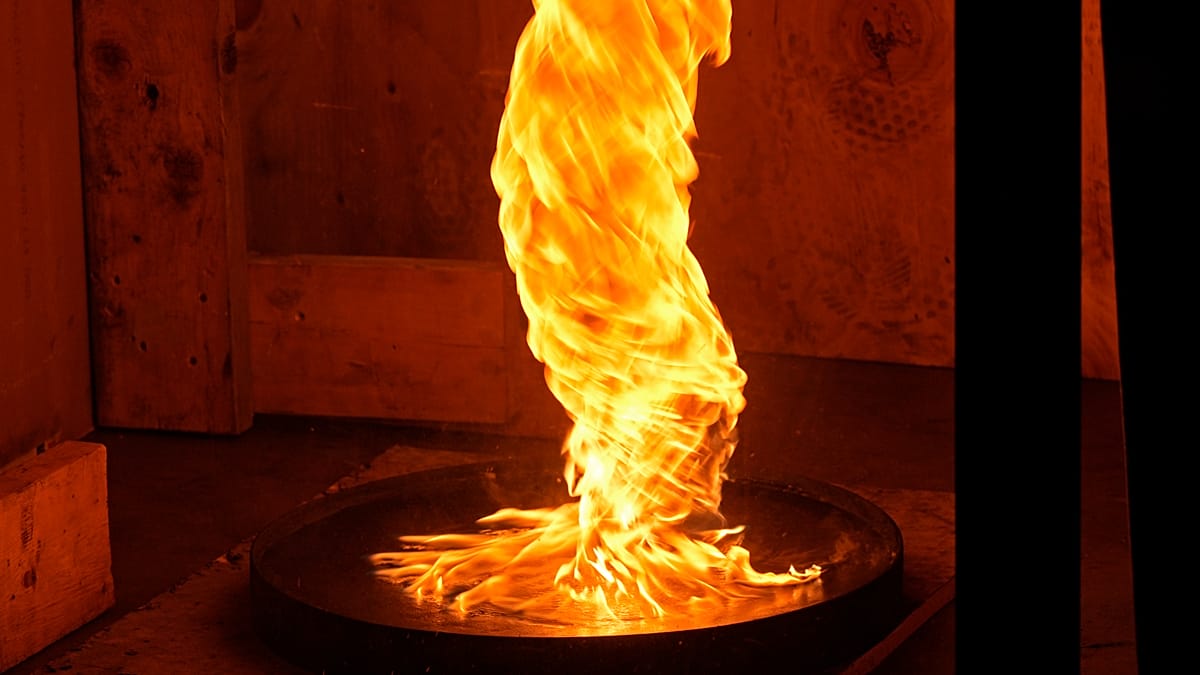
Fire whirls arise when a fire generates its own rotating airflow. As air is drawn into the flames from different directions, obstacles such as vegetation, uneven terrain, or even the fire’s own shape can force that airflow into a spin. “The fire entrains air from the sides,” Urban explains. “Through obstructions—other fires, vegetation, or local geographical features—the flow can become constrained and create a recirculation pattern, causing it to circulate and spin.”
That rotation can dramatically increase the fire’s intensity. The spinning motion pulls flames closer to the ground, allowing them to consume vegetation more rapidly and release heat at a much higher rate. The result is a fire that burns hotter, moves faster, and behaves in ways that are difficult to predict.
Urban and his colleagues have recreated fire whirls in laboratory settings to study their mechanics. Their work shows that these vortices are not just a curiosity but a serious hazard for anyone in the vicinity.
Why they are so dangerous
The most immediate threat from fire whirls is their ability to hurl burning debris far ahead of the main fire front. This process, known as firebrand spotting, can ignite new fires hundreds of meters away, causing the blaze to jump roads, firebreaks, and even rivers. “Fire whirls can lead to firebrand spotting, where burning debris is launched ahead of the fire front,” Urban says. “This can lead to very rapid fire spread, which is hazardous to the fire service as well as nearby communities.”
For firefighters, the danger is twofold. Not only can spotting create new fronts behind their lines, but the whirl itself can change direction abruptly, potentially trapping crews. “It can cause the fire to jump essentially over the fire service, increasing the chances for them to be trapped,” Urban warns. “When firefighters are operating in conditions where fire whirls are occurring, they have to be very careful.”
The phenomenon adds to the growing complexity of wildfire management in Europe, where sixth-generation wildfires—blazes so intense they create their own weather—are becoming more common. Fire whirls are a hallmark of these extreme fires, which are driven by a combination of climate change, land-use changes, and accumulated fuel loads.
Urban believes the appearance of fire whirls in Europe is a sign of a broader shift. “These events reflect a change in wildfire behavior as climate conditions become more favorable for extreme fires,” he says. With temperatures continuing to rise and droughts becoming more frequent, the conditions that spawn fire whirls are likely to occur more often.
Across the continent, authorities are already grappling with the consequences. In Greece, France, Spain, and Portugal, firefighters have battled blazes that have forced evacuations and destroyed homes. The EU has mobilized its largest-ever firefighting response, with aircraft and crews from multiple member states deployed to the worst-hit areas. But as Urban’s research shows, even the best-prepared forces can be overwhelmed by the unpredictable nature of fire whirls.
For now, the advice to residents in fire-prone regions is to heed evacuation orders early and stay informed. For scientists, the focus is on improving models that can predict when and where fire whirls might form, giving firefighters the tools they need to stay safe.
“We’re learning more every year,” Urban says. “But the message is clear: fire whirls are a real and growing threat, and we need to take them seriously.”