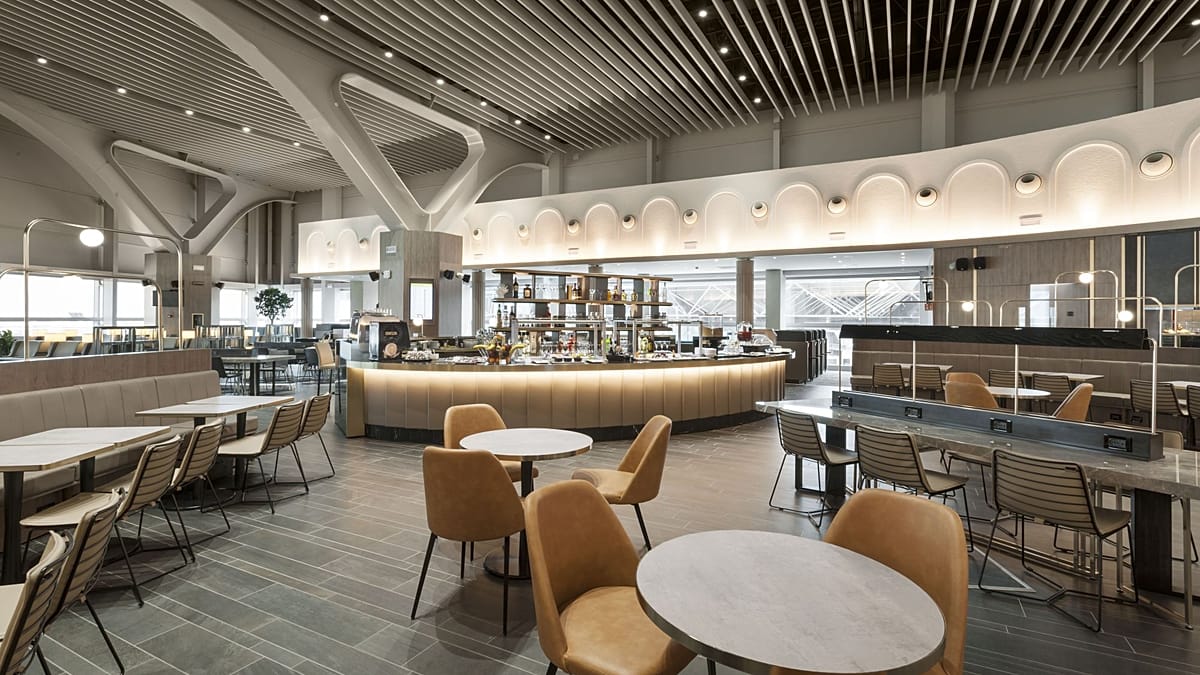
Skytrax has unveiled its ranking of the world's best airport lounges for 2026, and Europe claims four spots in the top 20. The Chase Sapphire Lounge at New York's LaGuardia Airport took the top prize, but the continent's finest is the Plaza Premium Lounge at Rome Fiumicino, which secured second place overall.
The annual list, announced at the World Airline Awards, is based on a global passenger satisfaction survey covering facilities, service, and hospitality. Travellers' votes determine the standings, making it one of the most recognised benchmarks in the industry.
Beyond Rome, two other European lounges made the top ten: another Plaza Premium Lounge at London Heathrow's Terminal 4, ranked fourth, and the Coral Cosmo Lounge at Bangkok's Suvarnabhumi Airport, which is not European but sits at seventh. The remaining European entries in the top 20 are the Vienna Lounge at Vienna International Airport (12th), the iGA Lounge at Istanbul Airport (17th), and Airport Lounge World at Munich Airport's Terminal 1 (18th).
Plaza Premium Group dominates again
Plaza Premium Group, which operates three of the top 20 lounges—including one at Dubai International—was also named the world's best independent airport lounge group for the tenth consecutive year. The company pioneered the concept of independent airport lounges 28 years ago, and its founder and CEO, Song Hoi See, said the award reflects the trust of travellers and the dedication of staff.
“Being named world's best airport lounge group for a tenth consecutive year is an incredible honour,” Song said. “When we pioneered the concept of the independent airport lounge 28 years ago, our dream was to change how people experience airport transit. This award is far more than a trophy, it reflects the trust our travellers place in us and the dedication our teams bring to their work every single day.”
The European results highlight a broader trend: airports across the continent are investing heavily in premium passenger experiences. Rome's Fiumicino, for instance, has undergone significant upgrades in recent years, and its Plaza Premium Lounge is a key part of that transformation. Similarly, Vienna's lounge offers a distinctly Austrian touch, with local design and cuisine, while Munich's Terminal 1 lounge focuses on efficiency and comfort.
Istanbul Airport, which recently surpassed Heathrow as the world's most connected hub, also features in the top 20. Its iGA Lounge is known for its spacious layout and amenities, reflecting the airport's ambition to become a global aviation leader.
The ranking comes at a time when the aviation industry is grappling with operational challenges, from jet fuel supply risks at smaller airports to occasional disruptions like the drone incident at Luxembourg Airport. Despite these hurdles, lounges remain a bright spot for travellers seeking comfort and reliability.
For frequent flyers, the list offers a useful guide. The top 20 includes a mix of independent lounges and those operated by airlines or financial institutions, such as American Express Centurion and Capital One. Notably, the Chase Sapphire Lounge at LaGuardia took the crown, a testament to the growing trend of premium travel experiences offered by credit card companies.
European travellers looking for a superior pre-flight experience now have several options, from the Mediterranean charm of Rome to the efficiency of Munich. As the industry evolves, these lounges set the standard for what passengers can expect—and they are likely to inspire further investment across the continent.