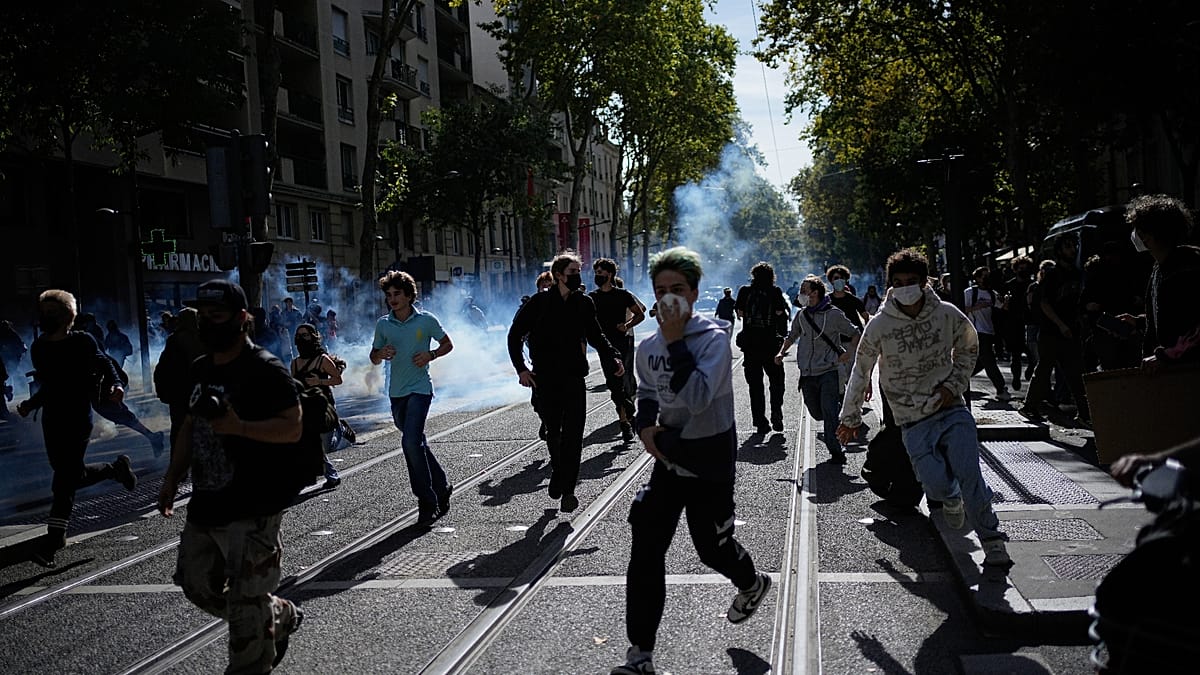
It started with a handful of students and teachers at a secondary school in Créteil, southeast of Paris, demanding more staff and better facilities. Within days, their action had ignited a nationwide movement, with blockades, marches, and—on the margins—violence that has left hundreds injured and drawn politicians into a bitter argument over the state of France's education system.
The protests began on 17 September and spread rapidly after videos of the initial demonstrations circulated on social media. Students across the country echoed the same grievances: overcrowded classrooms, frequent teacher absences, dilapidated buildings, and a system they say is failing them. By early October, more than 700 of France's 3,700 secondary schools had been affected in some way, according to Justice Minister Gérald Darmanin.
From peaceful marches to riots
While many demonstrations have remained peaceful, others have descended into chaos. Rioters have clashed with police, set fire to school entrances, and damaged or ransacked buildings. The Interior Ministry reports over 5,060 arrests, 87% of them minors, and more than 170 students, 78 staff members, and 600 police officers injured.
Two incidents have particularly shocked the public. In Lens, northern France, a 15-year-old was seriously injured by a grenade; prosecutors are still determining whether he picked it up or it was thrown at him. In Tours, a 16-year-old lost sight in his right eye, allegedly after being hit by a rubber bullet. His family has filed a complaint against police. Both cases are under investigation.
The French Human Rights League (LDH) has condemned what it calls a "global deviation from the rule of law" in police interventions. Its president, Nathalie Tehio, said international legal standards were not just being "disregarded" but "completely trampled upon."
Police unions defend their tactics. Stanislas Gaudon of Alliance Police Nationale told Euronews that officers are focused on securing school perimeters. "When there are acts of aggression and the use of force, it's a question of determining the proportionality and the legitimacy of the act," he said. "If this is done against individuals who have fired at police officers or thrown acid, then the use of force to disperse is necessary."
Political fallout
The unrest has put the government under pressure. On Friday, Education Minister Édouard Geffray met with unions and parent groups. On Sunday, Prime Minister Sébastien Lecornu announced a five-point plan: preventing class cancellations, improving facilities with regional authorities, reorganising school days, making the university application platform Parcoursup more transparent, and a general pledge to support students.
The hard left has rallied behind the movement. Jean-Luc Mélenchon, leader of La France Insoumise, declared: "What we want is for this country's young people to emerge from this episode with their heads held high." Critics accuse him of exploiting the protests for political gain; Mélenchon insists his party supports but does not organise the movement, and wants it to remain non-violent.
Teacher unions warn against politicising the crisis. Jean-Rémi Girard, president of the SNALC union, told Euronews: "We really have to be very careful not to turn what is happening—regardless of the political side involved—into a political tool, because it is very dangerous." He stressed that teachers are "the ones out there in the field, and we need to be looked after and protected."
Girard argues the grievances are not new. "French classrooms are among the most crowded in Europe," he said, citing difficulties replacing absent teachers and inadequate facilities during heatwaves. "The starting point is that the school system is in crisis, and it has been for a long time."
He also noted that a minority of troublemakers have infiltrated the protests. "They come here to cause trouble, and I've seen that," he said, describing colleagues trying to calm students outside school gates. "Anything can happen and in five minutes the atmosphere can change."
The movement shows no sign of abating. Student unions have called for a day of mass action on Tuesday, and hundreds of schools remained closed on Monday for safety reasons. As the government seeks to restore order, the deeper questions—about funding, staffing, and the very purpose of the French school system—remain unresolved.
For a broader perspective on how such unrest fits into European education debates, see our earlier coverage of the school closures and the arson attack in Paris. The situation also echoes Spain's recent housing protests, where similar frustrations over public services have boiled over.