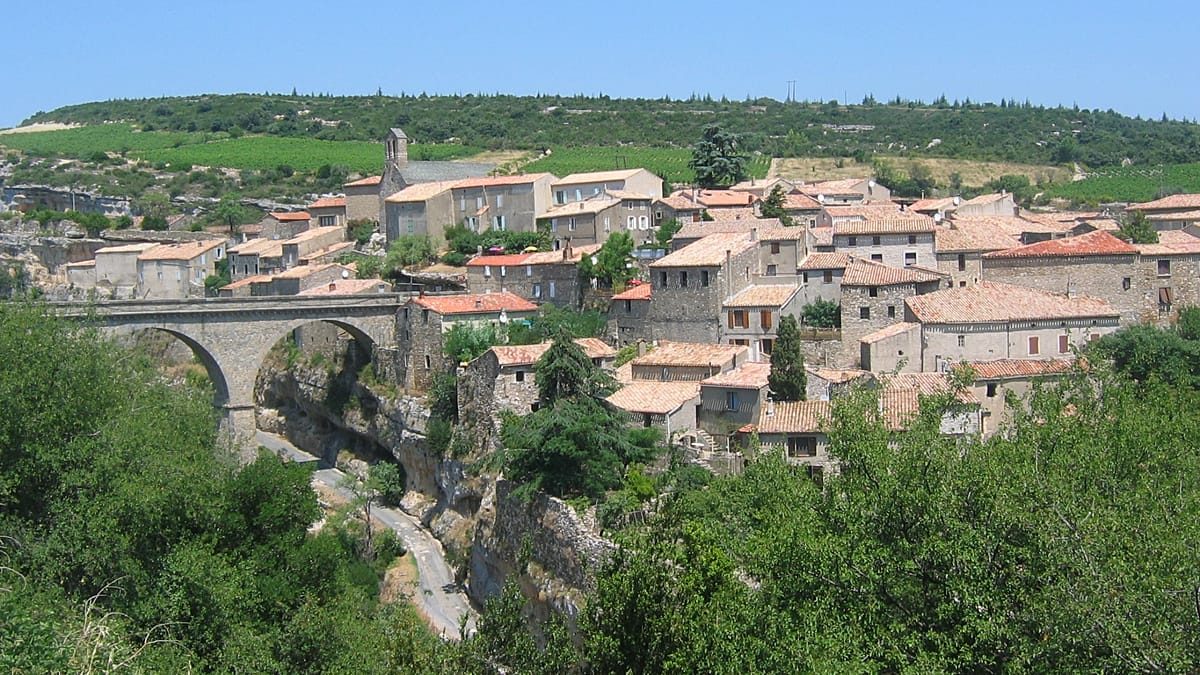
As France braces for another summer of scorching temperatures, with forecasts of 40°C heatwaves echoing the deadly conditions of 2003, one small community north of Tours is attracting attention for a centuries-old solution: living inside the rock itself.
The village of Trôo, in the Loir-et-Cher department, is a troglodyte settlement where homes are carved directly into the soft limestone cliffs. While such dwellings were once common across the Loire Valley, Trôo remains one of the few places where cave homes are still permanently inhabited. Residents say the thick rock walls provide a natural thermal buffer, keeping interiors around 20 degrees Celsius regardless of the weather outside.
Dominique Opéron, a local resident, notes that even when the mercury climbs above 35°C, her home remains pleasantly cool. “We don’t need air conditioning,” she explains. “The rock does all the work.” This passive cooling is not only comfortable but also energy-efficient, a growing concern as heatwaves disrupt daily life across the country and push up electricity demand.
A Natural Refuge in a Warming Climate
Jean-Luc Eclercy-Deterpigny, chairman of the local tourism association, describes the cave dwellings as “an incredible stroke of luck” in an era of climate change. “As heatwaves become more frequent and intense, our residents can rely on the natural cooling effect of the rock,” he says. “It’s a form of housing that has proven its resilience over centuries.”
The village also boasts several kilometres of underground tunnels, some of which are open to visitors. A handful of cave homes remain permanently occupied, blending traditional architecture with modern living. Local officials report a steady increase in tourist interest, as people search for practical ways to adapt to rising temperatures.
This trend is not isolated to France. Across southern Europe, from Italy to Greece, traditional building techniques—such as thick stone walls, shaded courtyards, and underground spaces—are being rediscovered as climate-adaptive strategies. In Trôo, the appeal is both practical and cultural: the village offers a glimpse into a way of life that predates modern air conditioning by centuries.
The broader economic implications are significant. A recent study suggests that extreme heat could cost France, Italy, and Spain billions by 2030, affecting agriculture, tourism, and labour productivity. Solutions that reduce energy consumption and reliance on fossil-fuel-powered cooling are increasingly valuable.
Trôo’s cave homes are not without challenges. Humidity can be an issue, and modern amenities require careful integration. But for residents like Opéron, the benefits outweigh the drawbacks. “We have a stable temperature all year round,” she says. “In winter, the rock retains warmth; in summer, it keeps us cool. It’s a very comfortable way to live.”
As France confronts the reality of more frequent heatwaves—which already cause an estimated 5,400 annual deaths and deepen social inequalities—the example of Trôo offers a tangible, low-tech adaptation. It also underscores a broader European conversation about how to build resilience into the continent’s housing stock.
For now, the village remains a quiet outlier, but its model may inspire wider interest. As Eclercy-Deterpigny puts it, “We are not just preserving history; we are living in a way that makes sense for the future.”