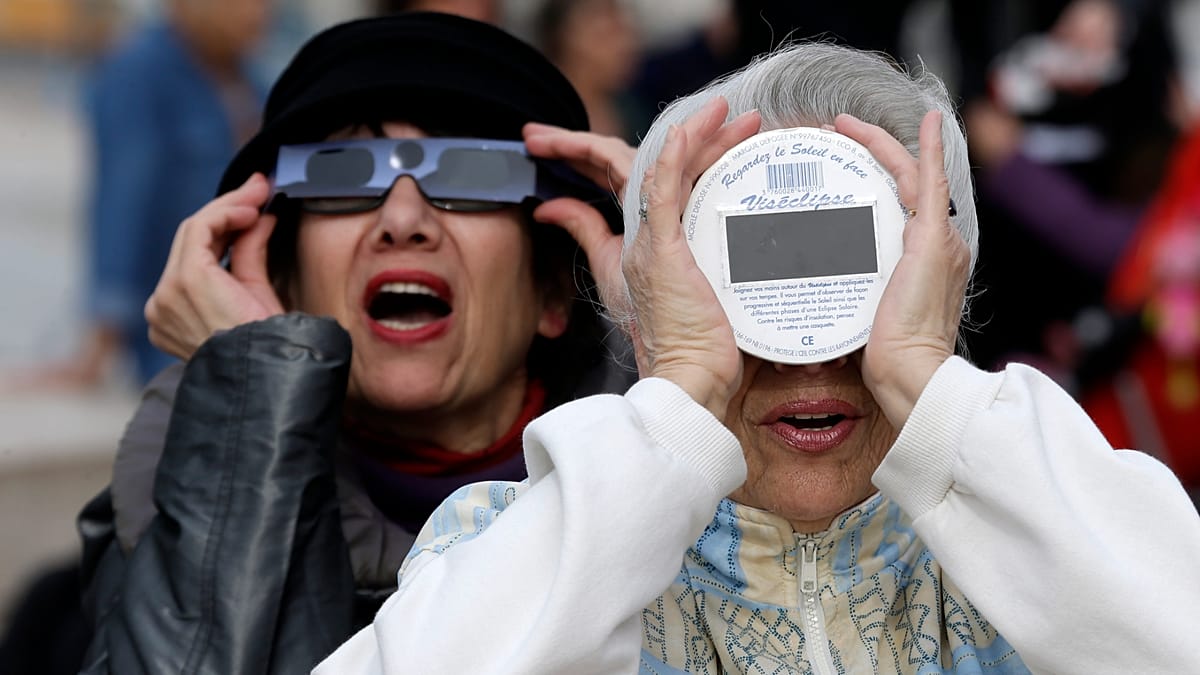
With a rare solar eclipse set to sweep across parts of Europe on Wednesday 12 August, France is experiencing an unprecedented rush for protective eyewear. Pharmacies, opticians and specialist retailers report that certified viewing glasses are selling out within hours, prompting repeated restocking orders as customers scramble to secure a safe view of the celestial event.
"We were out of them for three days, but this morning we received a good supply for Wednesday evening," Aurélie Letavi, a pharmacy assistant in Paris, told AFP. The demand reflects a growing awareness that watching the eclipse without proper protection can cause irreversible damage to the eyes.
Why certified glasses are non-negotiable
The eclipse occurs when the Moon passes between the Earth and the Sun, and while the spectacle is awe-inspiring, the risks are real. Ophthalmologists stress that looking directly at the Sun, even for a few seconds, can burn the retina and lead to permanent vision loss. The only safe way to observe the event is with glasses that meet the ISO 12312-2 standard and carry the CE mark, which guarantees they filter out harmful radiation.
These glasses are available in pharmacies, opticians and select retail chains, priced between €1.50 and €4. However, the surge in demand has left some outlets empty-handed, and experts advise buyers to be cautious about counterfeit or substandard products.
"The danger comes from retinal burns. Because we tend to stare at the sun, that burn will occur at the macula or just next to it. This area is very small, about 500 microns in diameter. It is where the cones and rods are found, and it is this area that allows you to see colours and to have sharp, detailed vision. So if you burn this area, you lose your fine vision. And that damage is irreversible," warns Dr Eric Frau, an ophthalmologist and retina specialist.
Lessons from the 1999 eclipse
The last total solar eclipse visible from mainland France was in August 1999. In its aftermath, the Institute for Public Health Surveillance (InVS) recorded 1,024 consultations for eye complaints, with around 300 showing retinal abnormalities. Of those, 147 patients (14%) had retinal damage and 106 (10%) had corneal damage. The figures serve as a stark reminder of the consequences of inadequate protection.
This year's eclipse will also be visible from northern Spain, Iceland and Greenland. For France, the next comparable event is not expected until 2081, making Wednesday's viewing a once-in-a-lifetime opportunity for many.
Safety guidelines from French authorities
In response to the high public interest, the French Ministry for the Economy and the Ministry of Health have launched an awareness campaign. They urge the public to follow a few simple rules to enjoy the eclipse safely.
- Before the eclipse: Purchase glasses only from reputable sellers such as opticians, specialist retailers, pharmacies or recognised associations. Verify the CE mark and ISO 12312-2 certification.
- During the eclipse: Do not look at the sun for more than three consecutive minutes. Take breaks to rest your eyes.
- Children: Supervise children closely. As Dr Frau explains, "It is not more dangerous for a child. It is just that children are harder to supervise. And if they suffer a burn, they will be affected for the rest of their lives."
For those who miss out on glasses, there are alternative ways to observe the eclipse, such as using pinhole projectors or watching live streams. But experts insist that no DIY method should involve looking directly at the sun.
The eclipse is also generating interest beyond France. In Spain, authorities have offered free electricity to households that reduce consumption during the event, a creative incentive to encourage safe viewing while easing grid strain. Meanwhile, Iceland is bracing for a rare total eclipse, with tourism officials expecting a surge of visitors.
As the continent prepares for this celestial spectacle, the message from health officials is clear: protect your eyes, or risk losing your sight. The eclipse will be a moment of wonder, but only for those who take the necessary precautions.