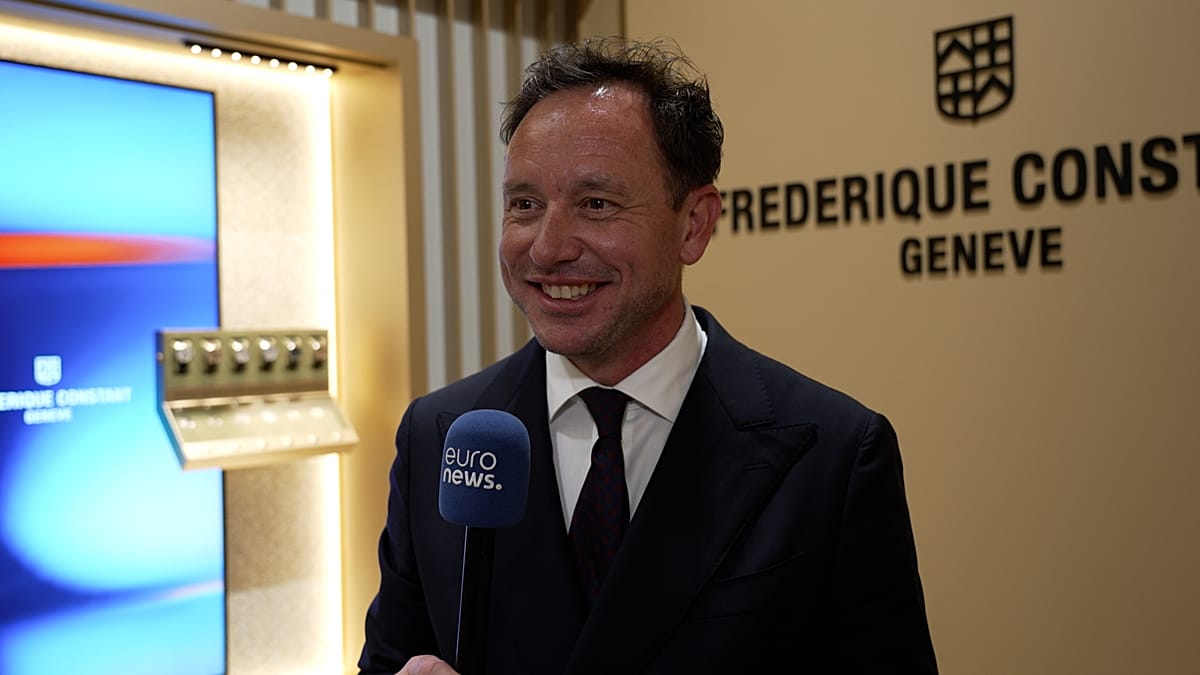
In an industry often dominated by oversized, bulky timepieces, Niels Eggerding, CEO of the Swiss watchmaker Frederique Constant, is taking a different approach. He believes that smaller, more elegant designs can win over a new generation of watch enthusiasts.
Eggerding, who leads the relatively young brand founded in Geneva in 1988, is positioning Frederique Constant as a counterpoint to the prevailing trend of large-diameter watches. Instead of chasing the market for 45mm or even larger cases, the company is focusing on reimagining classic designs in more restrained proportions.
“We want to prove that size isn't everything in watchmaking,” Eggerding said in a recent interview. “Younger buyers are looking for something that feels personal, not just a statement piece. They appreciate craftsmanship and heritage, but they also want something that fits their lifestyle.”
A Shift in Consumer Preferences
The strategy reflects broader shifts in the luxury goods market across Europe. In cities like Milan, Paris, and Berlin, a growing number of consumers are gravitating toward understated elegance over ostentatious displays of wealth. This trend is particularly pronounced among millennials and Gen Z, who often prioritize authenticity and sustainability over brand prestige.
Frederique Constant’s approach is not entirely new. The brand has long been known for offering accessible Swiss-made watches with classic aesthetics. However, Eggerding’s emphasis on smaller cases—typically 38mm to 40mm—marks a deliberate departure from the industry norm. Many competitors, including established names like Rolex and Omega, have steadily increased case sizes over the past two decades.
“We are seeing a return to the proportions of the 1950s and 1960s,” Eggerding explained. “That era produced some of the most iconic watch designs, and we believe there is a strong appetite for that aesthetic today.”
The company’s latest collection includes models inspired by vintage chronographs and dress watches, with slim profiles and clean dials. Prices range from €1,000 to €3,000, positioning Frederique Constant as a mid-range option in the Swiss watch market.
Eggerding also highlighted the importance of storytelling and community engagement. The brand has been active on social media platforms like Instagram and TikTok, where it showcases the craftsmanship behind its watches and connects with younger audiences. “We are not just selling a product; we are inviting people into a world of horology,” he said.
The strategy appears to be paying off. Frederique Constant has reported steady growth in sales across Europe, particularly in markets like Germany, France, and the United Kingdom. The brand is also expanding its presence in Asia, where demand for smaller watches is rising.
However, the watch industry faces broader challenges. The global luxury watch market has seen fluctuating demand, partly due to economic uncertainty and changing consumer habits. In Switzerland, exports of watches have been impacted by geopolitical tensions and supply chain disruptions. Yet Eggerding remains optimistic. “We are not trying to compete with the giants,” he said. “We are carving out our own niche.”
For European watch enthusiasts, Frederique Constant’s focus on smaller, classic designs offers a refreshing alternative. As the industry evolves, the brand’s bet on subtlety and craftsmanship may well prove prescient.