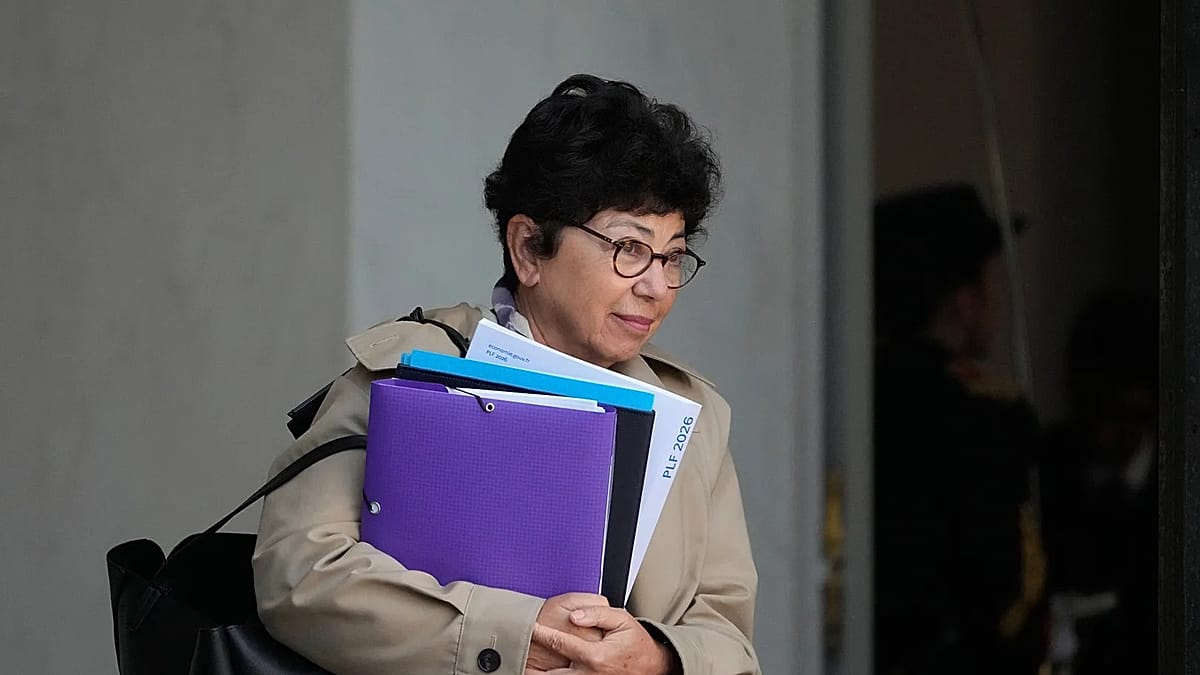
Monique Barbut, France's Minister for Ecological Transition, has withdrawn her resignation after President Emmanuel Macron declined to accept it, ending a dramatic day that exposed deep rifts within the government over agricultural policy and pesticide regulation.
Barbut had announced her departure earlier on Wednesday via a scathing LinkedIn post, accusing the government of breaking promises by allowing the reintroduction of two pesticides previously banned in France. But by the end of the day, her office confirmed she would remain in her post, citing "the urgent need to tackle the impacts of climate change, which are already hitting France hard, and to address pressing environmental health issues."
Pesticide dispute at the heart of the crisis
The flashpoint was the government's emergency agriculture bill, approved by the French parliament on Tuesday. The legislation empowers the French Agency for Food, Environmental and Occupational Health & Safety to reauthorize acetamiprid and flupyradifurone — two pesticides permitted under EU law but previously outlawed in France — for struggling sectors such as hazelnut and sugar beet farming.
Barbut wrote on LinkedIn: "Contrary to the assurances I had been given, the government has prevented any debate on the scrapping of this measure, even though MPs also wanted it to be scrapped." She described the reversal as "one environmental setback too many."
The controversy echoes last year's Duplomb Act, which similarly sought to reintroduce acetamiprid before being struck down by the Constitutional Council. On Monday, MPs from the ruling coalition had proposed an amendment to remove the pesticide provision, but ministers rejected it.
Government spokesperson Maud Bregeon told reporters after Wednesday's cabinet meeting that Macron and Barbut "agreed to disagree on the agriculture bill as passed by parliament." She added: "The president refused to accept her resignation; and they agreed on three fundamental pillars – water, forests and environmental health – three areas in which she has agreed to remain fully committed."
Barbut's office later clarified that her disagreement with the government's position on the pesticide measure remains unchanged.
A minister known for brinkmanship
Barbut, a former head of the UN Convention to Combat Desertification, has built a reputation for outspokenness and has previously threatened to resign over funding shortfalls for her ministry. This latest episode underscores the tension between France's agricultural lobby — which argues that EU-authorized pesticides are necessary to protect key crops — and environmental advocates who see their reintroduction as a dangerous step backward.
The standoff also highlights broader European debates about pesticide regulation. While the EU has approved acetamiprid and flupyradifurone, several member states have imposed stricter national bans. France's own ban had been seen as a benchmark for the European Green Deal's ambition to reduce chemical pesticide use.
For now, Barbut remains at the helm of ecological transition, but the underlying policy dispute is far from resolved. The agriculture bill is expected to face further scrutiny in the Senate, and environmental groups have already signaled they will challenge the pesticide provisions in court.