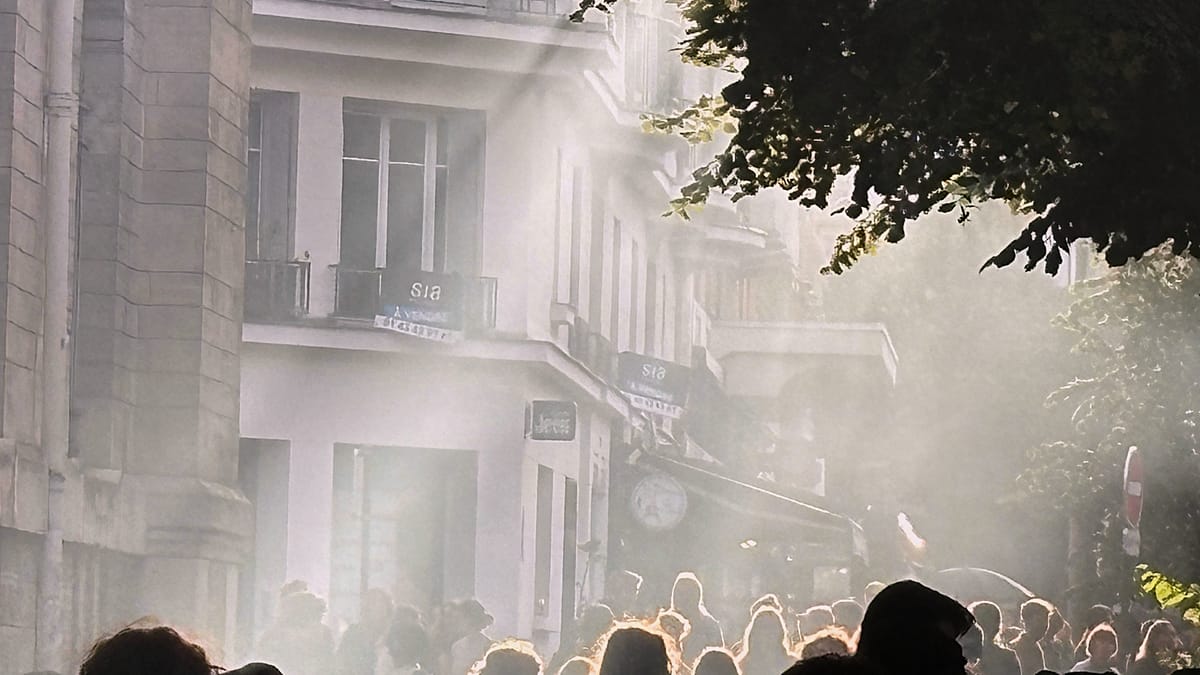
Student protests at French schools show no sign of abating, with demonstrators pressing for increased funding and better learning environments. The movement, which began in Paris, has now spread to other cities, including Rennes, where authorities have reported acts of vandalism and heightened tensions near several educational institutions.
Rennes becomes a flashpoint
In Rennes, a city known for its vibrant student community, the protests have taken a more confrontational turn. Local officials confirmed that several schools have been targeted by vandals, with broken windows and graffiti reported. Police have been deployed to maintain order, but clashes between students and law enforcement have occurred, echoing scenes seen earlier in the capital.
The unrest in Rennes is part of a broader wave of discontent that has swept across France. Students argue that chronic underfunding has left classrooms overcrowded, teaching materials outdated, and support staff stretched thin. They are calling on the government to prioritize education in the national budget and to address the systemic inequalities that affect schools in both urban and rural areas.
“We are not just protesting for ourselves,” said Camille, a 17-year-old lycée student in Rennes. “We are fighting for the future of public education in France. The government must listen before it is too late.” Her sentiments were echoed by peers in Lyon, Marseille, and Bordeaux, where smaller demonstrations have also been reported.
Government response and broader context
The French Ministry of Education has acknowledged the protests but has so far offered only limited concessions. In a statement, it reiterated its commitment to improving school infrastructure and promised to increase hiring of support staff in the coming months. However, student unions have dismissed these measures as insufficient, pointing to years of budget cuts that have eroded the quality of public schooling.
The protests come at a time of heightened political sensitivity in France. The government, already facing criticism over pension reforms and cost-of-living pressures, is wary of a prolonged student movement that could galvanize wider opposition. Earlier this week, police detained 625 people as lycée protests spread beyond Paris, signaling the scale of the unrest.
In a related development, the automotive giant Stellantis announced it would idle four French plants in October due to battery supply shortages, adding to the economic anxieties that underpin the student grievances. While the two issues are distinct, both reflect a broader concern about the future of French industry and public services in a competitive European market.
European dimension
The French protests are being watched closely across Europe, where education funding is a recurring challenge. In Spain, for instance, housing costs have sparked nationwide protests, highlighting how social pressures can quickly translate into public demonstrations. Similarly, the French students' demands resonate with peers in Germany and Italy, where teachers' unions have also called for increased investment in schools.
For the European Union, the situation in France underscores the need for a coordinated approach to education policy. While member states retain control over their school systems, the bloc has long advocated for shared goals in digital literacy, vocational training, and social inclusion. The French protests could serve as a catalyst for renewed debate on these issues at the EU level.
As the school year progresses, the question remains whether the French government can defuse the tensions or whether the protests will escalate further. In Rennes, the mood is defiant but weary. “We will keep going until we see real change,” said another student, who preferred to remain anonymous. “Our education is not a luxury; it is a right.”
The coming weeks will be crucial. With winter approaching and exams on the horizon, both students and authorities face difficult choices. The outcome of this standoff could shape the future of French education for years to come.