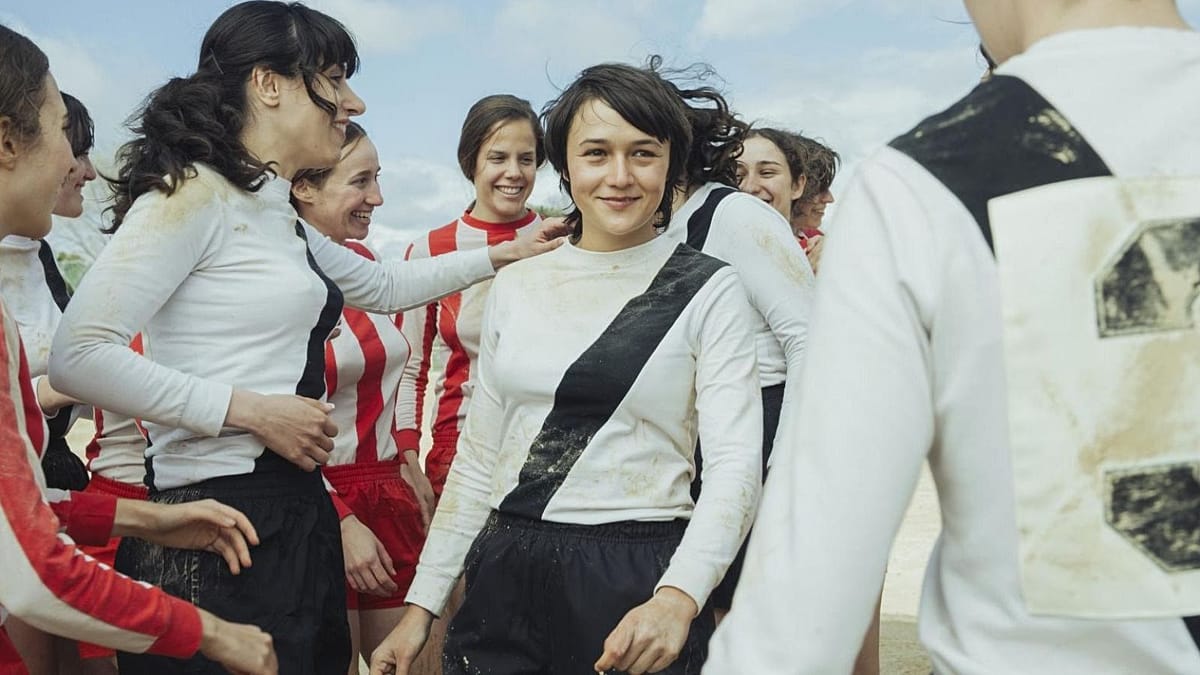
Long before Spain's women's team lifted the World Cup in 2023, a group of pioneers laid the groundwork in the shadow of the Franco dictatorship. In the early 1970s, a squad of women traveled across the country promoting a sport that was viewed with suspicion, playing international matches without the backing of the Royal Spanish Football Federation (RFEF). Their story, largely forgotten for decades, is now the focus of a new documentary film, 'Pioneers. They Just Wanted to Play', directed by Marta Díaz de Lope Díaz and set for release on 12 June.
The 'Clandestine' National Team
Spain's women's national team played its first international fixtures in 1971, but these were not recognized by UEFA or FIFA. The team was organized by Rafael Muga, a key promoter of women's football at a time when female players faced immense obstacles. The squad became known as the 'clandestine national team,' a term that has stuck for decades. However, director Díaz de Lope Díaz notes that some of the pioneers themselves reject that label: 'They said they weren't hiding, that there was a crowd and people came to watch them. But it's also understandable, because they had no official support.'
The lack of institutional backing was evident in symbolic details: the players were not allowed to use official crests or national anthems, and even the referee could not wear official kit. These details, the director explains, illustrate 'the federation's determination to keep them on the sidelines.'
Conchi Amancio: A Legend in the Making
At the heart of this story is Concepción Sánchez Freire, better known as Conchi Amancio. Regarded as the first Spanish female professional footballer, she scored over 500 goals in a 25-year career spanning Italy and England. Yet, more than half a century later, she remains largely unknown to the public. Her journey began on 8 December 1970, at the old Boetticher ground in the Madrid district of Villaverde, where a match drew between 7,000 and 8,000 spectators. Conchi, then just 13, scored all five of her team's goals, earning her the nickname 'Conchi Amancio' after Real Madrid legend Amancio Amaro.
Her talent quickly crossed borders. As a teenager, she signed for Gamma 3 Padua in Italy, becoming one of the first Spanish women to build a professional career abroad. The move was so striking that it featured on television news, with reports that her contract was worth close to 100,000 pesetas. Conchi went from working as a trainee hairdresser in Madrid to winning leagues and cups in Italy and later playing in England, retiring in Bristol after 25 years in the professional game.
An 'Unpaid Debt' Finally Acknowledged
Official recognition took decades. In 2019, the RFEF brought together the members of that first national team at its Las Rozas Football City headquarters, including Conchi Sánchez Freire. The federation described the event as a tribute to the women who 'changed history' and acknowledged an 'unpaid debt' to those pioneers. The RFEF stressed that these players had been a 'driving force behind fundamental transformations' and helped turn women's football into a sport followed and recognized by more and more people.
The film 'Pioneers. They Just Wanted to Play' aims to ensure that these stories are no longer forgotten. For Díaz de Lope Díaz, the lack of awareness surrounding these players was a key motivation: 'I found it incredible that I myself didn't know about this story. I've loved football since I was a child, I like telling stories about women and I thought it was a fascinating story.'
As Spain continues to grapple with broader social and economic challenges—such as the rental crisis and the impact of global instability on tourism—the recognition of these pioneers offers a moment to reflect on how far the country has come. The film is a reminder that the path to the World Cup was paved by women who played not for glory, but simply for the love of the game.