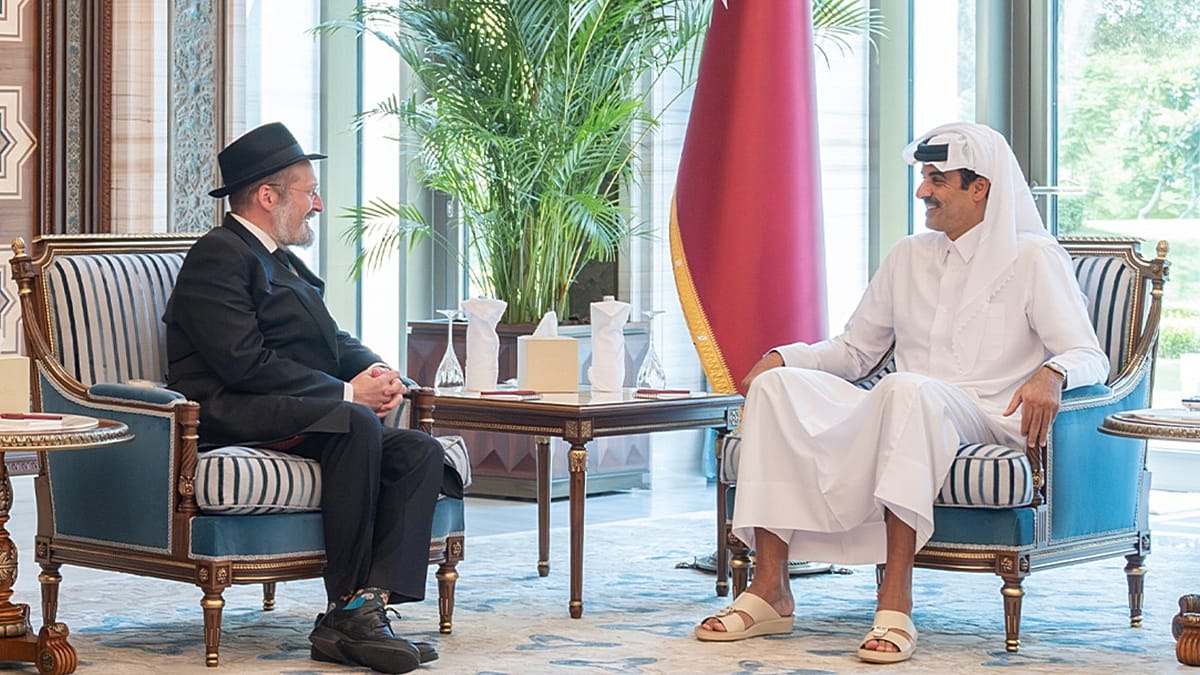
A delegation of rabbis from the Alliance of Rabbis in Islamic States (ARIS) visited Doha on Monday to offer condolences to Qatar's Emir, Sheikh Tamim bin Hamad Al Thani, following the death of the Father Emir, Sheikh Hamad bin Khalifa Al Thani. The meeting, which Rabbi Mendy Chitrik described as a reflection of friendship and mutual respect, comes at a time of heightened regional tensions.
Rabbi Chitrik, who chairs ARIS, told reporters after the meeting that the delegation felt warmly welcomed. "We felt very, very welcome in the Emir's presence today," he said. "Hearing the words of comfort, hearing the words of friendship and feeling the brotherhood that has always existed." The visit was intended to express solidarity with Qatar's ruling family and its people, as well as appreciation for the country's support of its Jewish community.
Interfaith dialogue as a bridge
ARIS represents rabbis serving approximately 110,000 Jews living in 18 Muslim-majority countries. Rabbi Chitrik emphasized that Jewish communities in the Muslim world serve as "bridges of coexistence and tolerance" and examples of how Jews and Muslims can live side by side. He noted that such engagements are particularly important during periods of conflict, saying, "At times of war and conflict, that is when friendship is tested. Being here at this time shows that we support our friends and partners here in Qatar."
The visit comes amid broader discussions about interfaith relations in the Middle East and beyond. For European audiences, the story resonates with ongoing debates about multiculturalism and religious coexistence across the continent. As Rabbi Chitrik put it, "Peace is not only between governments. Peace starts between people." This sentiment echoes themes explored in a recent analysis of rabbis in Muslim-majority countries.
Rabbi Chitrik acknowledged that Jewish communities in the Islamic world have declined significantly over the past century but stressed their continued presence remains important. "Jewish life in the Islamic world has its challenges," he said. "But we all belong to this region. We are all here, part of the region, and we will remain part of the region."
When asked about the impact of recent regional tensions, Rabbi Chitrik said it was too early to assess their long-term consequences but stressed that lasting peace begins with individuals. "It is an obligation on every person to make peace," he explained. "Start with peace in your own house, your own family, your neighbourhood and your friends. We can make the world a better place by doing another act of kindness, showing sympathy, showing love."
The delegation's visit to Doha highlights the role of religious leaders in fostering dialogue, a topic that has gained traction in European policy circles. The European Union has increasingly supported interfaith initiatives as part of its broader foreign policy, particularly in regions affected by conflict. This approach aligns with the view that diplomatic engagement can complement governmental efforts.
Rabbi Chitrik expressed optimism about the potential for engagement between neighbours, communities, and religious leaders. "When you open your heart and educate yourself about the person next door, that gives another glimpse of hope," he said. The visit underscores the importance of maintaining channels of communication even in challenging times, a lesson that resonates far beyond the Gulf.