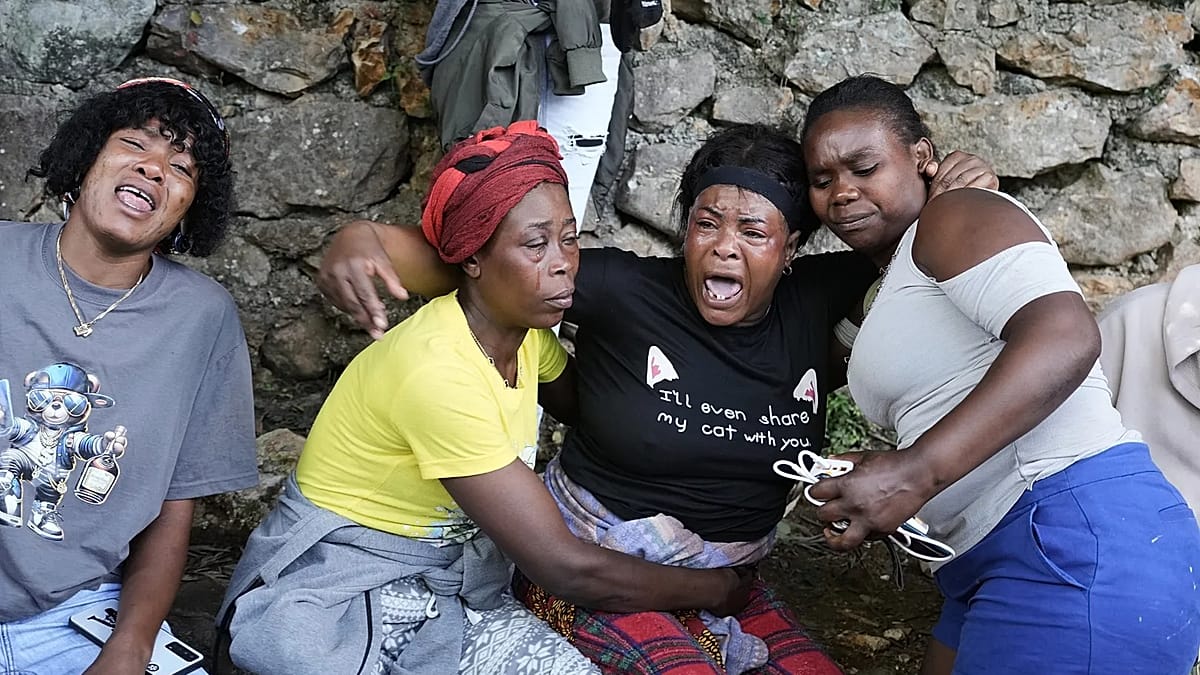
At least 47 people were killed and more than 50 kidnapped when armed men stormed the community of Kenscoff, just outside Haiti's capital Port-au-Prince, the United Nations reported on Tuesday. The assault, which unfolded over the weekend, is believed to be one of the largest mass kidnappings in the country in recent years.
Among the victims were relatives of Marc Paul, a 42-year-old Kenscoff resident. His brother, stepmother, stepfather, and two cousins were taken, while his 16-year-old niece was abducted and raped before managing to escape and reunite with him. “I had to run over bodies,” Paul said, recalling his flight from the attack. “I can't sleep knowing all these people died.” Paul and his family had already lost their home to a previous gang attack in January 2025.
UN Secretary-General António Guterres condemned the violence, noting that 22 of the victims were reportedly executed inside a church compound where they had sought refuge. “The relentless gang attacks on communities and the loss of lives underscore the alarming security conditions in Haiti,” he said in a statement.
Survivors demand protection
The attack has shattered hopes that security in the Caribbean nation was improving. Some survivors accuse the government of failing to provide adequate protection, a charge the national police reject. Romain Le Cour, head of the Haiti Observatory at the Global Initiative Against Transnational Organized Crime, said the assault sends a clear message: “The gangs are saying: when we choose to attack, we can, and we will succeed.” He added that if police and armoured vehicles were indeed stationed in Kenscoff beforehand, the situation is even more troubling: “You let the gangs come in even if you had everything in place?”
Haiti's National Police announced on Tuesday that an investigation had been ordered to determine whether there was “complicity or negligence” in the attack. Additional specialised units have been deployed to the area, with police stating they have an “obligation to protect the civilian population.”
The first major assault on Kenscoff occurred in January 2025, followed by sporadic attacks in the surrounding mountains. Sunday's operation was the largest to date. Armed groups now control an estimated 70% of Port-au-Prince and vast swathes of the country's central region and beyond.
The violence has displaced a record 1.5 million people across Haiti, according to UN figures released Tuesday. Between January and June, more than 3,050 people were killed, and nearly 800 cases of rape were reported between April and June, 87% of which were gang rapes. At least 81 people were also kidnapped during that same period.
This latest tragedy highlights the broader instability that continues to grip Haiti, a crisis that has drawn international concern but limited concrete action. As the UN and local authorities grapple with the fallout, families like Marc Paul's are left to mourn and demand answers.