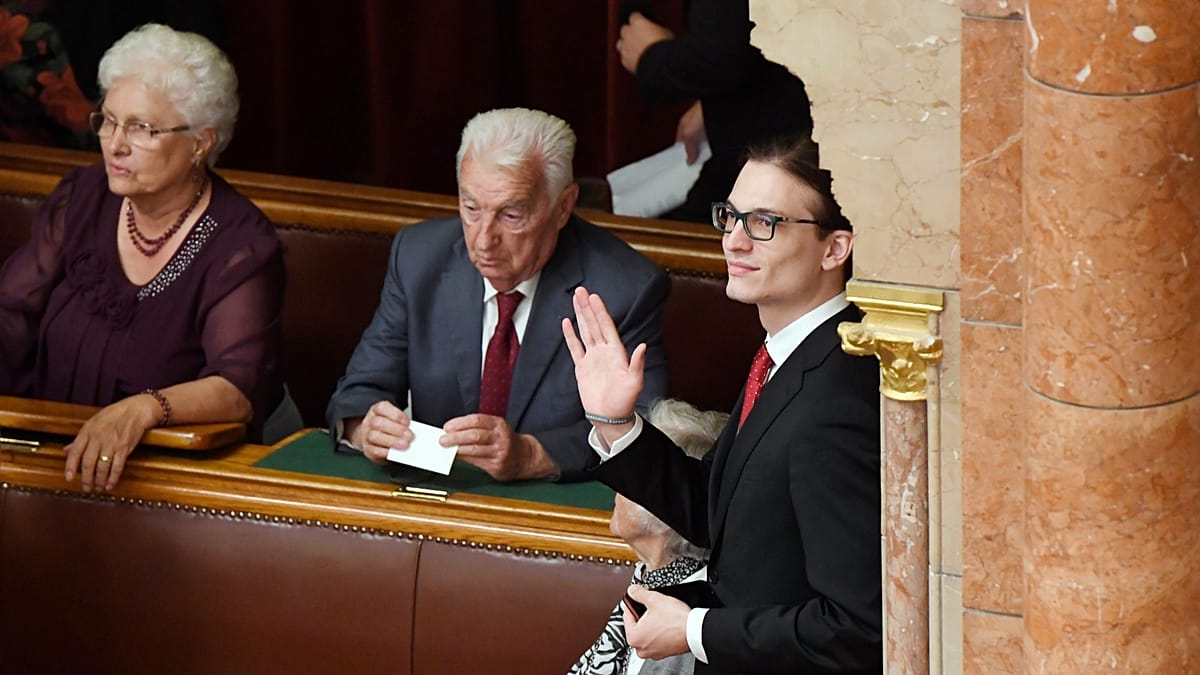
Gáspár Orbán, the son of Hungary's outgoing Prime Minister Viktor Orbán, has been discharged from the Hungarian Defence Forces, according to local media reports. The news, first published by investigative outlet Kontroll and confirmed by 444.hu, comes as the younger Orbán steps away from a military career that included training at the UK's elite Royal Military Academy Sandhurst.
Orbán, who held the rank of captain, submitted his demobilisation request before the parliamentary elections on 12 April, in which his father's Fidesz party suffered a landslide defeat to the opposition. Born in 1992, Gáspár Orbán studied law and initially pursued football, playing as a midfielder for Videoton FC Fehérvár and Puskás Akadémia FC before founding Felház, a charismatic Christian youth movement.
Military Career and Sandhurst Training
He was sworn into the Hungarian Defence Forces in 2019 and in 2020 was sent on a nine-month training course at the Royal Military Academy Sandhurst in the UK. His Hungarian peer on that course, Captain Szilveszter Pálinkás, told the telex news site that he had been called by the Chief of General Staff and told, "I have to feed him, water him, make sure he completes this academy, because if he doesn't, we'll lose our jobs."
The Sandhurst connection also featured in a controversial episode involving a Hungarian military mission to Chad. According to Captain Pálinkás, the mission—aimed at stemming migrant flows to Europe—was devised by Gáspár Orbán, who allegedly told a colleague at Sandhurst that he had a "divine inspiration" to help African Christians. In 2024, Hungary announced it would send around 200 troops to Chad to provide training and support counter-terrorism operations.
That mission raised eyebrows in Hungary, partly because the country had no substantive relations with Chad before, and the promised $200 million (€170 million) in aid was deemed an excessive pledge from one of Europe's poorer countries. Captain Pálinkás claimed that the mission had been planned by Gáspár Orbán, then a lieutenant-general, and that he expected losses of life of around 50%. Both Orbán and Defence Minister Kristóf Szalay-Bobrovniczky denied that claim, stating that the Chad mission did not happen, despite it being approved in parliament.
The younger Orbán's departure from the military coincides with a broader political shift in Hungary. The new government, led by Prime Minister Péter Magyar, has begun scrutinising Orbán-era defence plans for potential corruption risks, as reported by European Pulse. Meanwhile, the EU has finalised a €90 billion loan for Ukraine after Hungary lifted its veto, a move that underscores the changing dynamics in Budapest's foreign policy.
Gáspár Orbán's discharge marks the end of a military career that was both privileged and controversial, reflecting the intertwining of family, faith, and state power that characterised his father's long tenure. As Hungary transitions to a new government, the legacy of the Orbán era—including its defence and foreign policy initiatives—will continue to be debated.