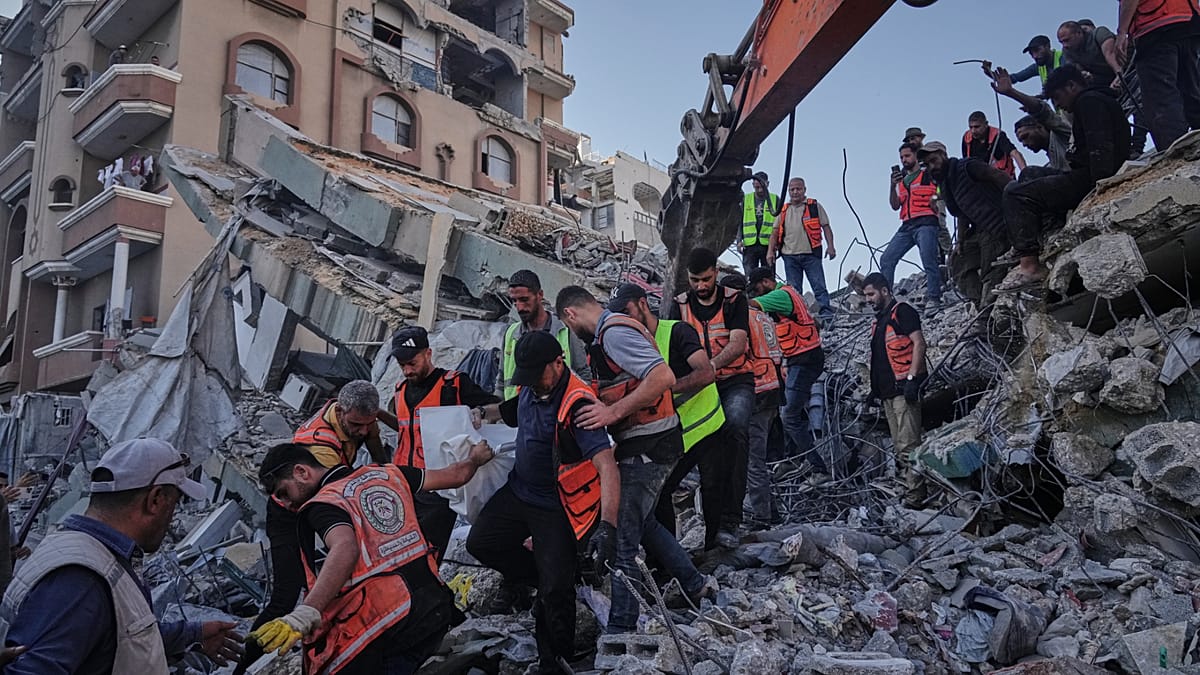
At least 12 people have been confirmed dead and dozens more are unaccounted for after a multi-storey building collapsed in Gaza City on Monday, 16 September. The building, which was sheltering families displaced by the ongoing conflict, came down without warning, according to medical officials at Shifa Hospital, the territory's main medical facility.
Rescue teams have been working through the rubble through the night, using heavy equipment and bare hands in an effort to reach survivors. The hospital said that the death toll is expected to rise as search operations continue, with many of the missing believed to be trapped under the debris.
A city under strain
Gaza City, already devastated by months of Israeli military operations, has seen a massive influx of internally displaced people. Many have sought refuge in residential buildings that were not designed to withstand the pressures of prolonged conflict, including overcrowding and damage from airstrikes. The collapse highlights the precarious conditions facing civilians across the enclave.
The incident comes amid a broader humanitarian crisis. The United Nations and aid agencies have repeatedly warned that infrastructure in Gaza is on the verge of total collapse, with water, sanitation, and medical services severely degraded. The building that fell was reportedly one of many makeshift shelters in the city, where families have been living in cramped and unsafe conditions.
Local authorities have not yet determined the cause of the collapse, but structural failure due to previous damage or overcrowding is suspected. The Israeli military has not commented on the incident, and it remains unclear whether any recent strikes occurred in the immediate vicinity.
This tragedy adds to a growing list of civilian casualties in the conflict. Just days earlier, Israeli strikes on Gaza camps killed at least two people and destroyed tents sheltering displaced families, underscoring the constant threat to civilians. The collapse also comes as regional tensions remain high, with the ceasefire in Yemen collapsing and Houthi advances forcing new displacement, a reminder of the wider instability across the Middle East.
European governments have repeatedly called for a ceasefire and for the protection of civilians under international law. The European Union has been a major donor to UNRWA, the UN agency for Palestinian refugees, and has urged Israel to allow more humanitarian access. However, diplomatic efforts have so far failed to halt the violence.
For the people of Gaza, the collapse is another blow to their already fragile existence. Many of the displaced had fled from other parts of the Strip, only to find that no place is truly safe. The psychological toll is immense, as families who have lost homes multiple times now face the loss of loved ones in a single, sudden event.
As rescue operations continue, the international community is being called upon to step up pressure for a durable ceasefire. The European Parliament has debated the situation repeatedly, and several member states have expressed support for a two-state solution as the only path to lasting peace. But for now, the immediate priority is saving lives buried under the concrete.
Shifa Hospital, already overwhelmed with casualties from daily airstrikes, is struggling to cope with the influx of the wounded. Medical supplies are running low, and doctors are working around the clock. The hospital's director told reporters that they are doing everything possible, but without a political solution, such tragedies will continue.
The building collapse in Gaza City is a stark reminder of the human cost of conflict. As the world watches, the people of Gaza endure yet another night of grief and uncertainty.