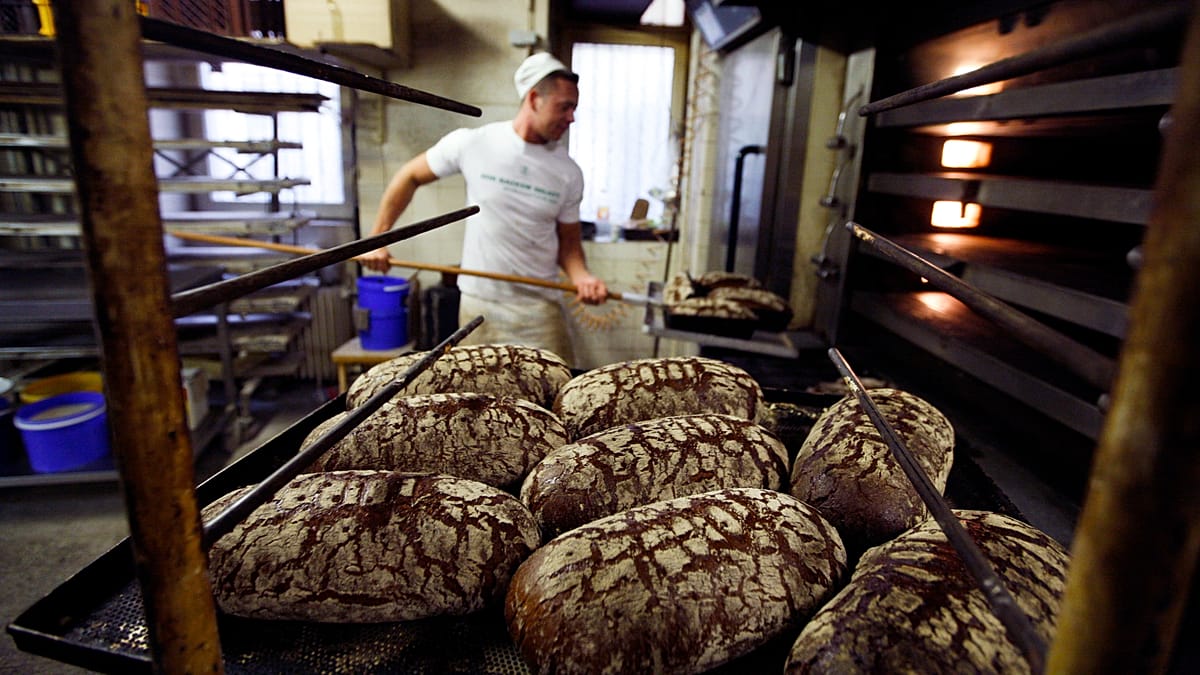
A minor dispute over a slice of bread has turned into a costly lesson for a Bavarian baker, who says he had to spend €15,000 on new weighing equipment after a customer complained that a half loaf was 10 grams lighter than expected.
Matthias Breitner runs several bakeries in and around Pfaffenhofen an der Ilm, a town north of Munich. For decades, he has sold half loaves to customers who prefer not to buy a whole one. The trouble began when a customer emailed to say that after weighing a half loaf at home, it came up 10 grams short of half the stated weight of a full loaf.
Breitner replied with a light-hearted note: “Sometimes you win, sometimes you lose. Next time it will surely be ten grams more.” But the customer was not amused and took the matter to the local authorities. The weights and measures office informed Breitner that he could no longer sell half loaves without weighing them individually at the point of sale.
The rules stem from Germany's Pre-packaging Ordinance (Fertigpackungsverordnung), which implements EU requirements along with additional national provisions. Under these rules, pre-packaged goods must meet strict weight tolerances. Breitner says he does not want to sell pre-packaged half loaves, so he must now weigh each portion as it is cut. That meant installing new scales across all his shops, at a total cost of around €15,000.
Ripple effects across the trade
Breitner told local media that some other bakeries have stopped selling half loaves altogether, fearing similar complaints and the cost of compliance. The case has made headlines across Germany, with many commentators questioning whether a 10-gram discrepancy justifies such a heavy financial penalty for a small business.
The episode comes amid a broader trend in Germany: courts are reporting a sharp rise in cases, and some officials suspect that artificial intelligence is making it easier for people to file lengthy legal submissions. According to reports by Tagesschau and the Süddeutsche Zeitung, more than 16,000 cases had been filed with the Berlin Labour Court by August — roughly the number it would normally receive in an entire year. Officials have cited the growing use of AI tools such as ChatGPT and Gemini as a possible factor, because they allow users to produce long legal documents quickly.
However, there is no evidence that AI played any role in the complaint against Breitner's bakery. The customer's email appears to have been a straightforward, if pedantic, observation.
For Breitner, the cost is not just financial. He worries that such disputes could push more bakeries to abandon the tradition of selling half loaves, a convenience that many Germans appreciate. “It's a shame that a single complaint can force us to change the way we do business,” he said.
The case also highlights the tension between consumer protection and the burden on small enterprises. While the EU's packaging rules aim to ensure fair trade and accurate labelling, their implementation can sometimes feel disproportionate. As German households look for ways to save money, the cost of compliance for small businesses may ultimately be passed on to customers.
In the meantime, Breitner has installed the new scales and continues to serve his customers, hoping that the next time someone weighs a half loaf, it will be exactly right.