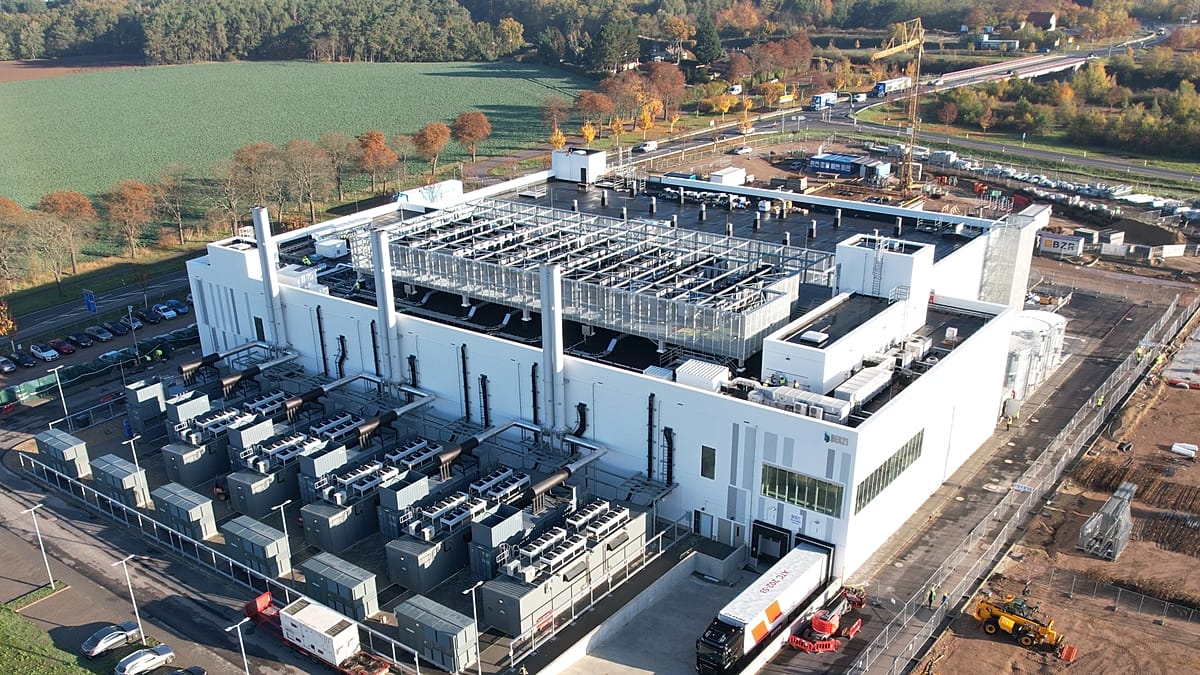
Data centres are the physical backbone of artificial intelligence, housing the servers and networking equipment that power everything from chatbot queries to cloud storage. As the AI boom accelerates, the geographic distribution of these facilities shapes which regions can build and deploy advanced systems. The latest data from Cloudscene, cited in Stanford's AI Index Report 2026, reveals a clear hierarchy: the United States leads by a wide margin, but Europe holds a strong second position.
The US hosts 5,427 data centres in 2025, more than ten times the number in any other country. This dominance underscores its leadership in AI infrastructure. However, two European economies — Germany (529) and the United Kingdom (523) — rank ahead of China (449), a notable finding given China's reputation as a tech powerhouse. Canada (337), France (322), and Australia (314) also feature prominently, while the Netherlands (298) is close behind.
Europe's Data Centre Landscape
EU member states collectively host 2,269 data centres, roughly 42% of the US total. Including the UK, that figure rises to about 51%. This concentration reflects the continent's strategic importance in global cloud and AI infrastructure. The distribution within Europe is uneven: Western Europe dominates, with Northern Europe playing a smaller but strategically vital role, while Central and Eastern Europe remain more fragmented.
Beyond Germany, the UK, France, and the Netherlands, only a handful of European countries host more than 100 data centres: Italy (168), Spain (144), Poland (144), and Switzerland (121). Sweden (95), Belgium (81), Austria (68), Ukraine (58), Ireland (55), and Denmark (50) fall in the 50–100 range. Several EU member states have fewer than 35 facilities, and among EU candidate countries, Turkey leads with 35.
The industry is heavily concentrated in the so-called FLAP-D markets: Frankfurt, London, Amsterdam, Paris, and Dublin. These cities combine major internet exchange points, strong demand from finance and tech sectors, excellent connectivity, and stable regulatory environments. According to Atlas Edge, they attract the bulk of investment and operator activity. Notably, Ireland lags behind other FLAP countries in total data centre count, despite Dublin's prominence as a hub.
However, raw numbers do not tell the full story. The Stanford report cautions that data centre counts do not capture differences in facility size, computing capacity, or utilisation. A single hyperscale facility can house far more computing power than dozens of smaller ones. The World Bank's report on cloud and data infrastructure identifies four key factors driving investment decisions: energy availability and cost, land and construction costs, connectivity, and regulatory stability.
Europe's energy transition and regulatory landscape are increasingly shaping where new data centres are built. Countries like Sweden and Denmark, with abundant renewable energy and cool climates, are attracting investment for energy-efficient facilities. Meanwhile, the EU's push for digital sovereignty and data localisation — exemplified by the EU Leaders Gather in Cyprus for Crisis Talks on Energy, Defence, and Middle East — could further influence infrastructure decisions.
The rise of cost-effective AI models, such as those from Chinese challenger DeepSeek, may also shift demand patterns. As DeepSeek V4: China's AI Challenger Pushes Cost-Effective Models Amid Global Tensions highlights, cheaper inference could reduce the need for massive data centre buildouts, though training large models still requires enormous compute capacity.
For Europe, the challenge is to balance infrastructure growth with energy and environmental goals. The continent's data centre count is substantial, but its share of global capacity remains modest compared to the US. As AI adoption spreads, the ability to host and power these facilities will be a key determinant of technological sovereignty.