The German government has sharply upgraded its economic outlook for 2026, citing resilient exports and a global surge in artificial intelligence investment. Berlin now expects Europe's largest economy to expand by 1.3% this year, more than double the 0.5% forecast it issued in April.
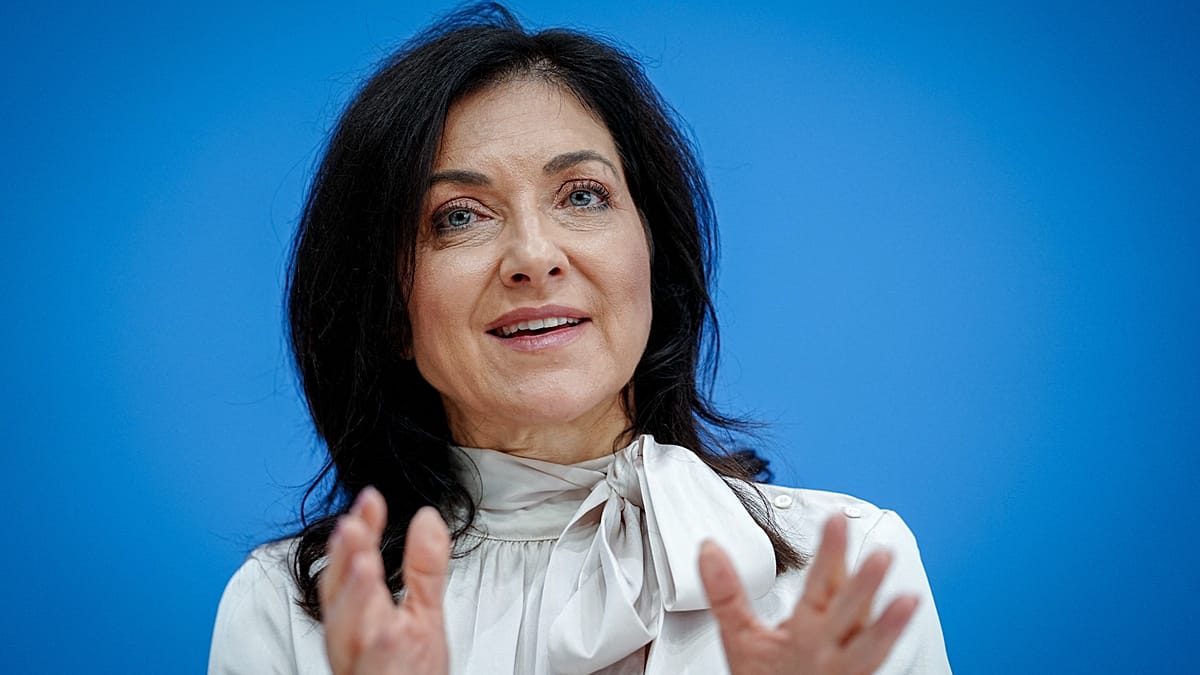
Economy Minister Katherina Reiche presented the revised figures on Thursday, saying the country had weathered the energy shock triggered by the Iran war better than anticipated. "Despite geopolitical uncertainties, despite a global energy price shock, despite the closure of the Strait of Hormuz and despite tariffs, the economy was able to embark on a path of recovery," she told reporters in Berlin.
The improved outlook offers some relief to Chancellor Friedrich Merz, who has faced criticism over his handling of an economy that has struggled with weak demand, high energy costs, and competition from China and the United States. Recent indicators, however, suggest a gradual turnaround is underway.
Exports and AI drive the rebound
Reiche attributed much of the upgrade to foreign demand. In the months following the outbreak of the Iran war, international buyers rushed to stockpile German-made goods such as steel, fertiliser, and aluminium, providing an unexpected boost to industrial output. The government now projects exports will grow by 3.7% this year, reversing a 0.9% decline in 2025.
German suppliers are also benefiting from the global boom in artificial intelligence. The construction of data centres across Europe and beyond has driven orders for German-made lasers, semiconductor machinery, and cooling systems, Reiche said. This trend is part of a broader AI-driven transformation that is reshaping economies worldwide.
The ministry also raised its 2027 growth forecast to 1.1% from 0.9%, and said increased public spending on defence and infrastructure would support the economy in the coming years. Growth is expected to slow to 0.6% in 2028.
Consumers still feel the pinch
Despite the brighter headline numbers, the government warned that household consumption would remain subdued. Higher energy costs are pushing up consumer prices, with inflation hitting 3.3% in September, the highest level in nearly three years. The ministry expects inflation to average 2.7% this year and rise to 3.0% in 2027, while real household spending is forecast to grow by just 0.3% and 0.5% respectively.
As in other European countries, fuel prices have surged amid the Iran war, prompting Berlin to announce a temporary fuel tax cut last week to ease the burden on drivers. The move echoes similar measures taken in France and Italy, where governments are grappling with the economic fallout of the conflict.
The German recovery is not happening in isolation. Across the continent, economies are adjusting to higher energy costs and shifting trade patterns. The global economic toll of the Iran war is being felt from Berlin to Madrid, and the European Union is exploring new tools to counter unfair trade practices, particularly from China.
Reiche acknowledged that the path ahead remains uncertain, but insisted that Germany's industrial base is proving more adaptable than many had feared. "The German economy proved more robust than projected in the spring," she said, adding that the recovery is still fragile and depends on global conditions stabilising.
For now, the government's revised forecast offers a rare piece of good news for Merz, who has staked his political capital on reviving the economy. Whether the momentum can be sustained will depend on energy prices, export demand, and the broader geopolitical situation.