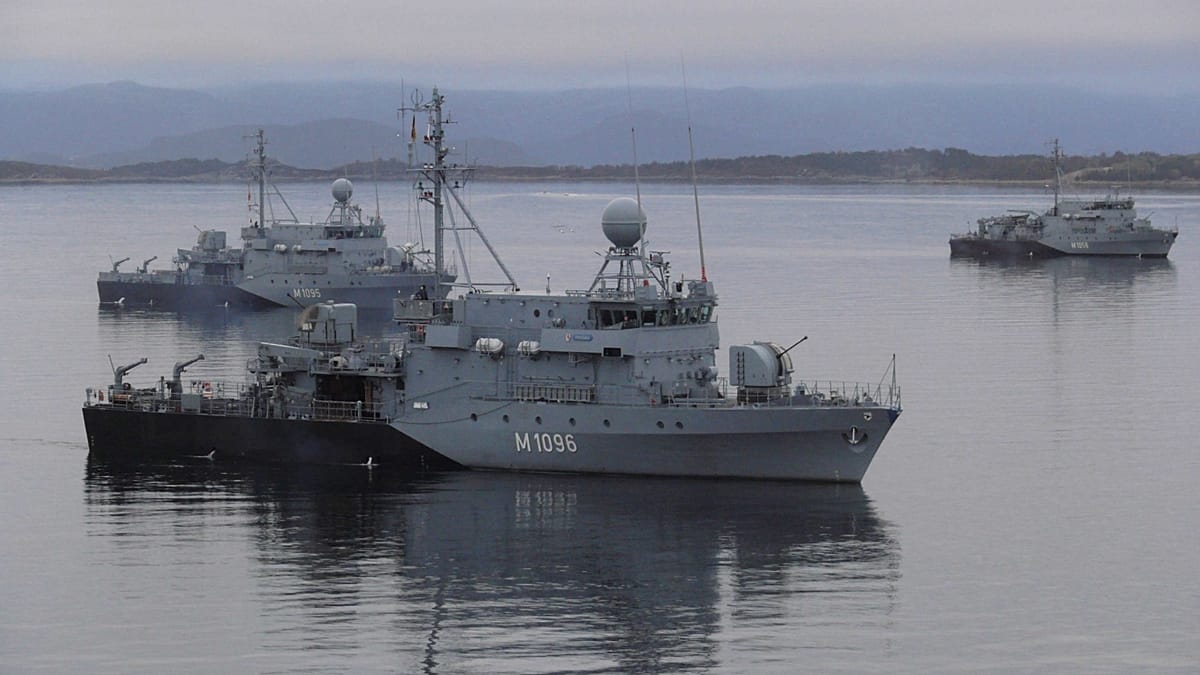
The German government has taken preliminary steps toward a possible military deployment in the Strait of Hormuz, according to a report from Der Spiegel. The foreign office and defence ministry have prepared a draft mandate for the Bundestag, which could be approved by the cabinet on short notice. However, Chancellor Friedrich Merz (CDU) stated after the G7 summit in Évian, France, that no final decision has been reached and that the legal basis for any participation still requires clarification.
Strategic Chokepoint and European Coordination
The Strait of Hormuz, a critical transit route for global energy supplies, has been a flashpoint in recent months amid tensions between the United States and Iran. France and the United Kingdom are already working on a mission to safeguard freedom of navigation and support potential mine-clearance operations in the region. Berlin has signalled its general willingness to join such an effort, alongside Paris and London, but within the framework of national legal provisions.
Germany's defence ministry confirmed that naval units are already on standby. The minehunter Fulda and the supply ship Mosel are currently in the eastern Mediterranean and could be redeployed to the area of operations within days.
Legal Hurdles and International Mandate
The question of a mandate under international law remains unresolved. Chancellor Merz has insisted on an international mandate, preferably from the United Nations Security Council, but a swift agreement there appears unlikely. A new EU mandate would also take time. Der Spiegel reported that ministries are examining whether a UN Security Council resolution adopted in March—introduced by Bahrain and reaffirming the right of states to protect their ships against attacks—could serve as a legal basis. That resolution describes obstacles to free passage as a threat to peace and international security.
Germany's armed forces, the Bundeswehr, are already stretched across multiple maritime operations. These include the EU mission EUNAVFOR Aspides, which protects international shipping from Houthi militia attacks, as well as UNIFIL, monitoring the Lebanese coast. The frigate Sachsen is involved in NATO operations securing the North Atlantic and Baltic Sea, protecting critical infrastructure such as undersea cables and wind farms.
The potential deployment to the Strait of Hormuz adds another layer to Germany's evolving defence posture, which has seen increased engagement in recent years. For context, Germany and Poland recently signed a defence pact as part of broader shifts in European power dynamics. Meanwhile, discussions about European strategic autonomy continue, with France and Germany pushing for European AI sovereignty in other domains.
The Strait of Hormuz remains a volatile chokepoint, and any European mission there will require careful coordination among member states. As Berlin navigates its legal and political constraints, the outcome will signal how Germany balances its global commitments with domestic and international legal frameworks.