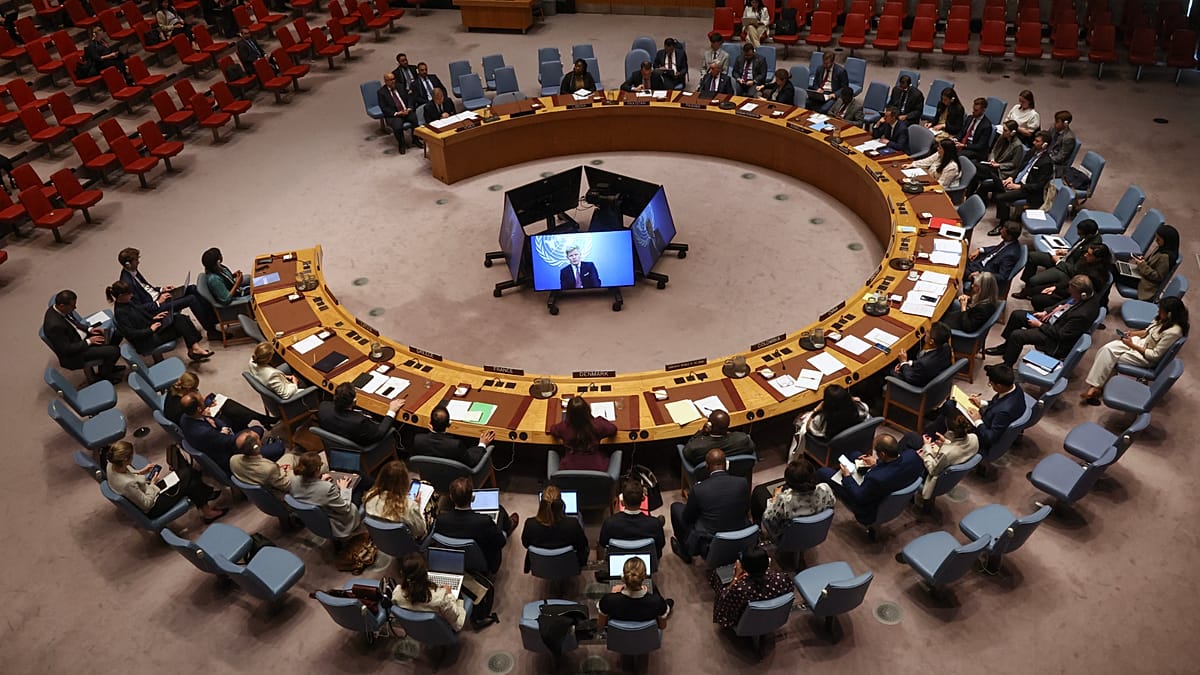
In a significant diplomatic setback, Germany failed on Wednesday to secure a non-permanent seat on the United Nations Security Council for the first time, losing out to Portugal and Austria in a secret ballot of the General Assembly. The two Western European seats, which become available in 2027, were awarded to Portugal with 134 votes and Austria with 131, while Germany managed only 104.
The UN Security Council comprises 15 members: five permanent—the United States, Russia, China, France, and the United Kingdom—and ten elected for staggered two-year terms, with seats allocated by regional blocs. The Western European and Others Group (WEOG) currently holds two of the rotating seats, which are contested every two years.
Diplomatic Implications for Berlin
Germany has been a regular contender for non-permanent seats, having served on the council six times since its founding in 1945, most recently in 2019–2020. This defeat marks a notable shift in international perceptions of Berlin's influence, particularly as it has long campaigned for a permanent seat on the council, alongside Japan, India, and Brazil. The result may reflect growing competition among European states for global diplomatic visibility, as well as broader geopolitical realignments.
Portugal's strong showing—134 votes—underscores its active foreign policy under the current government, which has focused on multilateralism and ties with Lusophone nations. Austria, with 131 votes, benefited from its neutral status and consistent engagement in UN peacekeeping and mediation efforts. Germany's relatively low tally suggests that its recent foreign policy stances, including its handling of the Ukraine conflict and energy transitions, may have alienated some member states.
The vote also comes amid heightened tensions in Europe, with NATO Secretary General Rutte's unannounced visit to Kyiv highlighting the continent's security challenges. Germany's failure to secure a council seat could complicate its ability to shape UN responses to crises in Ukraine, the Middle East, and the Sahel.
For the European Union, the outcome raises questions about coordination among member states. While Germany, Portugal, and Austria are all EU members, they campaigned against each other, reflecting the bloc's internal rivalries. The EU has long sought a unified voice at the UN, but this vote demonstrates the limits of such ambitions.
Domestically, the result may fuel criticism of Chancellor Olaf Scholz's government, which has faced scrutiny over its foreign policy coherence. The opposition Christian Democratic Union (CDU) has already questioned Berlin's ability to project power internationally, especially as job insecurity in Europe remains a pressing issue for many voters.
Looking ahead, Germany will need to recalibrate its diplomatic strategy if it hopes to secure a seat in future cycles. The next elections for the WEOG seats are scheduled for 2028, and Berlin may seek to strengthen ties with smaller states and Global South nations, which hold significant sway in the General Assembly. For now, the loss serves as a reminder that even Europe's largest economy cannot take its international standing for granted.