Germany's failure to win a seat on the United Nations Security Council for the first time is more than a diplomatic embarrassment. It is a symptom of a deeper malaise that, if left untreated, could destabilise the entire European Union. The fact that Portugal and Austria—both smaller economies—garnered more votes than Europe's largest power should alarm policymakers from Lisbon to Tallinn.
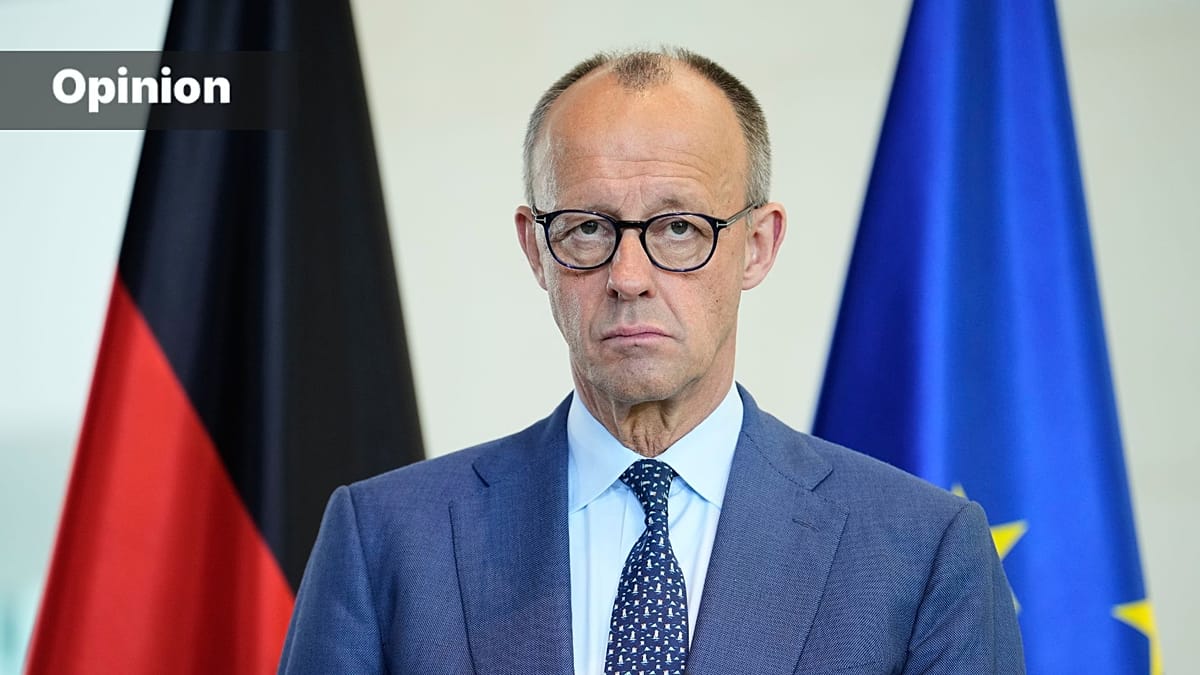
After 16 years of Angela Merkel's chancellorship, marked by strategic missteps in energy, economic, and migration policy, followed by three years of a dysfunctional coalition under Olaf Scholz, the current government under Friedrich Merz appears adrift. Germany has squandered the credibility it once enjoyed as a reliable partner. The UN Security Council vote was a reality check: the international community no longer sees Berlin as a leader worth following.
An economy in intensive care
Germany's economic model, once the envy of the world, is showing serious cracks. High energy costs, excessive bureaucracy, slow digitalisation, and underinvestment have turned "Made in Germany" from a mark of quality into a synonym for high costs and inefficiency. The country has become an old-people's home and a museum for a world that no longer exists. Yet it should be the engine driving Europe's future.
If Germany cannot get back on its feet, the European Union itself will be in danger. There is a reason why one often hears in Brussels, sometimes joking, sometimes with genuine concern: the EU exists as long as Germany pays. A weak Germany means a weak Europe.
Four areas for reinvention
To reverse this decline, Germany must focus on four critical areas. First, it must regain its economic competitiveness. This means cutting energy costs, slashing red tape, accelerating digitalisation, and boosting investment. Second, it must rebuild its defence capabilities. Peace and stability can no longer be taken for granted. Whether aiming for the Bundeswehr to become "the strongest conventional army in Europe" by 2039—exactly one hundred years after Nazi Germany's invasion of Poland—is wise is debatable, but it at least resembles a plan.
Third, migration must be managed more effectively. Humanity and order are not contradictions. A country that fails to secure its borders, rarely deports illegal migrants, and loses control over irregular immigration will not be taken seriously. Secure borders, functioning asylum systems, and successful integration are prerequisites for social cohesion and trust in the democratic rule of law. Germany's recent defiance of EU calls to end internal border checks highlights the tension between national sovereignty and European solidarity.
Fourth, Germany must once again become a centre of innovation. Artificial intelligence, digital infrastructure, advanced manufacturing, scientific research, and new energy technologies will determine the prosperity of future generations. Europe cannot continue falling behind the United States and China. A nation that once excelled in education and invention but no longer hosts a world-class university, has slipped in international education rankings, wins few major scientific prizes, no longer sets global standards, burdens research with regulation, overregulates AI, abandons nuclear research, turns away from combustion-engine innovation, and rejects advances in genetics will struggle to compete.
Values need power to be effective
In a world of growing competition, economic strength, technological sovereignty, and political effectiveness matter. Values remain important, but they only have influence when supported by power. The fuel for this turnaround is simple: pragmatism instead of ideology. This will not be achieved through speeches or moral appeals, one of Western Europe's least attractive habits. Leadership emerges from economic strength, political credibility, and the ability to solve problems.
To be clear: this is not an argument for German dominance. What Europe needs is a Germany that is reliable, strong, and capable of acting. A partner for peace and prosperity. If Germany renews itself, it can once again provide momentum for Europe. If it fails, it will become far more difficult for the entire continent to preserve prosperity, security, and influence.
The good news is that it is never too late—one just has to begin. In 1648, the Peace of Westphalia ended the Thirty Years' War, which had devastated Germany. In 1945, Germany and Europe lay in ruins, followed by reconstruction and reconciliation. In 1990, the Cold War ended. Germany has reinvented itself before. It can do so again.



