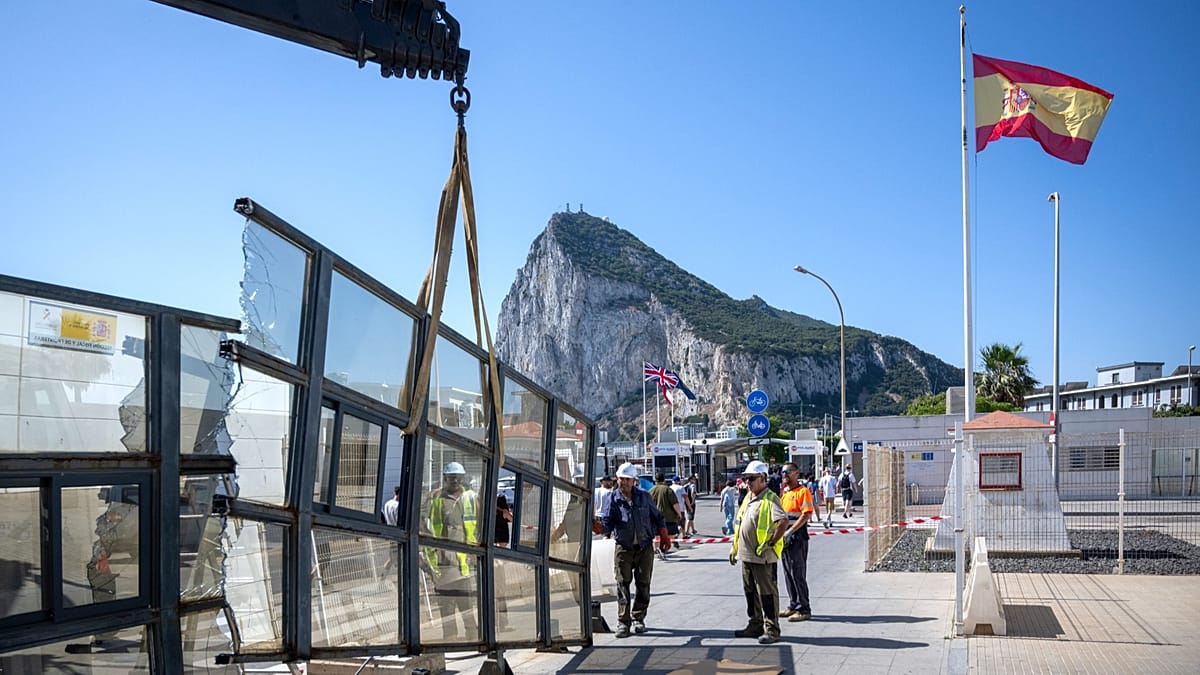
Just after midnight on Wednesday, the land border between Spain and Gibraltar opened without customs checks for the first time in decades. Several dozen people and vehicles crossed from the Spanish town of La Línea de la Concepción into the British overseas territory, marking what officials on both sides called a historic shift.
Gibraltar's Chief Minister, Fabian Picardo, was among those celebrating. 'Europe is back,' he told the crowd, which waved Spanish flags. The moment capped years of negotiations between London, Madrid, and Brussels following the United Kingdom's departure from the European Union in 2020.
End of an Era of Friction
The tiny territory, home to roughly 40,000 people, depends on about 15,500 workers who commute daily from Spain. During rush hours, long queues often formed at the border, especially when diplomatic tensions flared between Britain and Spain over sovereignty of the Rock. Spanish dictator Francisco Franco closed the border entirely in 1969 after Gibraltar voted overwhelmingly to remain British; the closure lasted 13 years, cutting off families and workers.
Under the new arrangement, Gibraltar aligns with the Schengen travel area, eliminating routine passport and customs checks at the land frontier. Travellers arriving from outside Schengen will still need to show passports at Gibraltar's airport and port. The agreement was signed in Brussels on Tuesday by EU trade chief Maroš Šefčovič, alongside British and Spanish ministers and Picardo.
Spanish Foreign Minister José Manuel Albares described the deal as opening 'a new era' for Gibraltar and the surrounding Campo de Gibraltar region, creating 'enormous opportunities.' Spanish Prime Minister Pedro Sánchez visited the border zone on Wednesday, where workers had already dismantled the old chain-link fencing. He called the new arrangements the removal of 'the last wall' inside the EU, promising a zone of shared prosperity.
Picardo framed the agreement as removing 'the physical barriers of a bygone era of friction' while keeping 'the keys to our own front door.' The territory, which covers less than seven square kilometres, relies on London for defence and foreign policy, but manages its own internal affairs.
Economic Lifeline and Lingering Sovereignty Dispute
Gibraltar's economy, built on financial services and online gaming, boasts one of the highest per capita incomes globally. For the Campo de Gibraltar region, historically plagued by high unemployment, the territory has been a vital source of jobs. Owen Smith, head of the Gibraltar Federation of Small Businesses, told AFP that a smoother border would make it easier for local companies to recruit and retain workers living in Spain. 'It's been a big factor in retention, and certainly a fluid border is going to make life much easier,' he said, calling the change 'very, very positive.'
Manuel Triano Paulete, secretary general of the CCOO trade union in Campo de Gibraltar, welcomed the end of what he called a 'sword of Damocles' hanging over cross-border workers, who often faced unpredictable delays. The agreement does not resolve the underlying sovereignty dispute, which dates to the 1713 Treaty of Utrecht, when Spain ceded the territory to Britain. Madrid continues to claim the Rock, and Spain ratified the deal while reaffirming its sovereignty claim. But both sides have prioritised practical cooperation over historical grievances.
The deal is also a tangible outcome of post-Brexit diplomacy, showing that the EU and the UK can manage sensitive bilateral issues. For the people of Gibraltar and the Spanish workers who cross daily, the removal of border checks means an end to the long queues that have been a daily frustration. As Picardo put it, the agreement signals that Europe, in its broadest sense, is back.