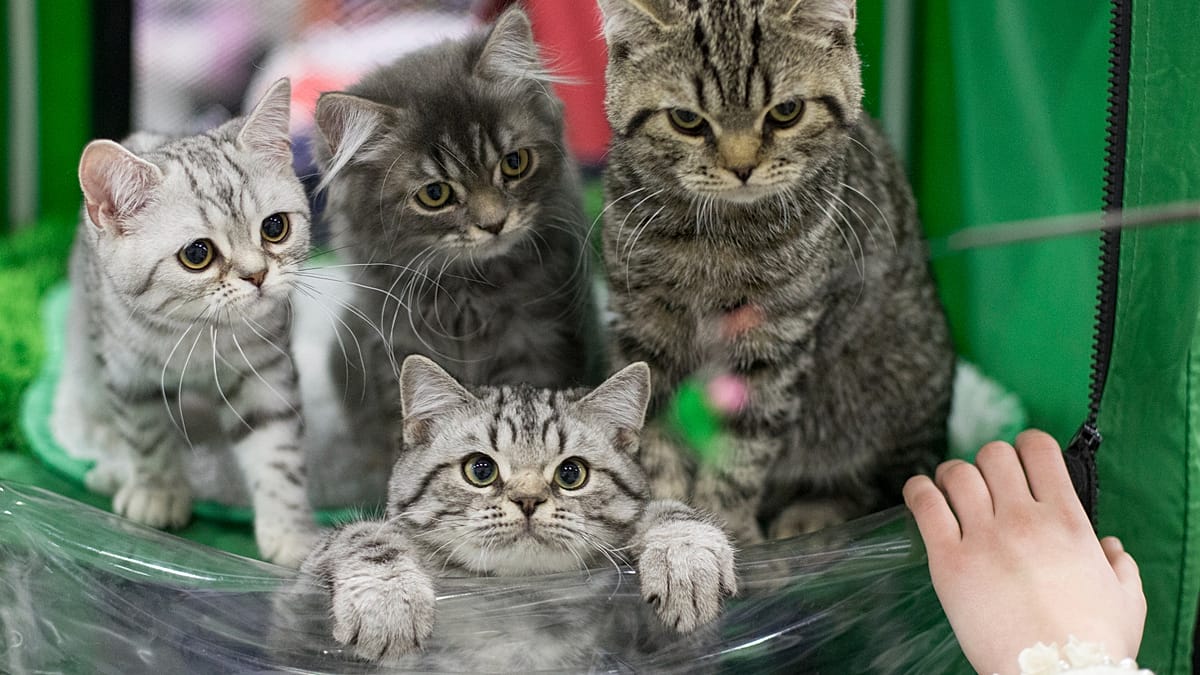
From Tokyo to Turin, the humble house cat has become a global economic powerhouse. The so-called “catnomics” market—spanning food, gadgets, merchandise, and even cat cafés—now exceeds €100 billion, according to a PW Consulting report cited by Agi. Cats alone account for 38.5% of all pet-economy spending, a share that continues to grow as more households choose felines over canines.
Japan’s 'Nekonomics' leads the way
In Japan, where the phenomenon is known as “Nekonomics,” the market is projected to reach nearly €17 billion (3,000 billion yen) in 2026, according to Professor Katsuhiro Miyamoto of Kansai University. The country’s affection for cats is evident in its pet population: a 2025 survey by the Japan Pet Food Association found 8.8 million cats versus 6.8 million dogs. Japanese families spend on average almost €10,300 (1.8 million yen) over a cat’s lifetime, a figure that underscores the deep bond between owner and pet.
Europe’s feline majority
Europeans are equally cat-centric. According to the 2026 “Facts & Figures” report by FEDIAF EuropeanPetFood, 49% of European households—about 149 million—own a pet, with cats outnumbering dogs: 111 million cats versus 91 million dogs. Cat food represents 50% of the pet food market value, slightly ahead of dog food at 46%, even though 58% of pet food produced in Europe is for dogs. Statista confirms the trend, noting that cat numbers have risen significantly since 2010, making them the EU’s most popular pet.
France and Germany top the European rankings for domestic cat populations, followed by Italy, where adoptions grew by 4.7% between 2022 and 2025, bringing the total to 11 million cats. Italian spending on cat food reached €2.35 billion annually, according to the ASSALCO-Zoomark 2026 Report, with the segment growing 4.3% year-on-year.
Gen Z men drive US adoption surge
Across the Atlantic, the American Pet Products Association reports that Gen Z men are fueling a 27% rise in cat adoptions in just one year. Men now make up 43% of US cat owners, and 53 million households—39% of the total—have at least one cat, a 5% increase from 2024. Notably, households with three or more cats have grown by 45% since 2018, reflecting a shift toward multi-cat homes.
China’s cat economy outpaces dogs
China is also seeing a feline boom. Urban areas now host 72.9 million cats versus 53.4 million dogs, with the cat market growing 5.2% compared to 3.2% for dogs. This growth is part of a broader trend where cats are increasingly seen as companions rather than just pets.
The 'silver cat economy' emerges
Beyond basic needs, the market is diversifying. In Hong Kong, a “silver cat economy” is developing around the care of ageing felines, with spending on veterinary services, specialized diets, and comfort products rising. This niche reflects a growing awareness of cats’ longevity and the desire to provide for their later years.
The global catnomics phenomenon is not just about numbers; it signals a cultural shift in how we relate to animals. As more Europeans and Asians embrace feline companionship, the pet economy is being reshaped—one purr at a time.