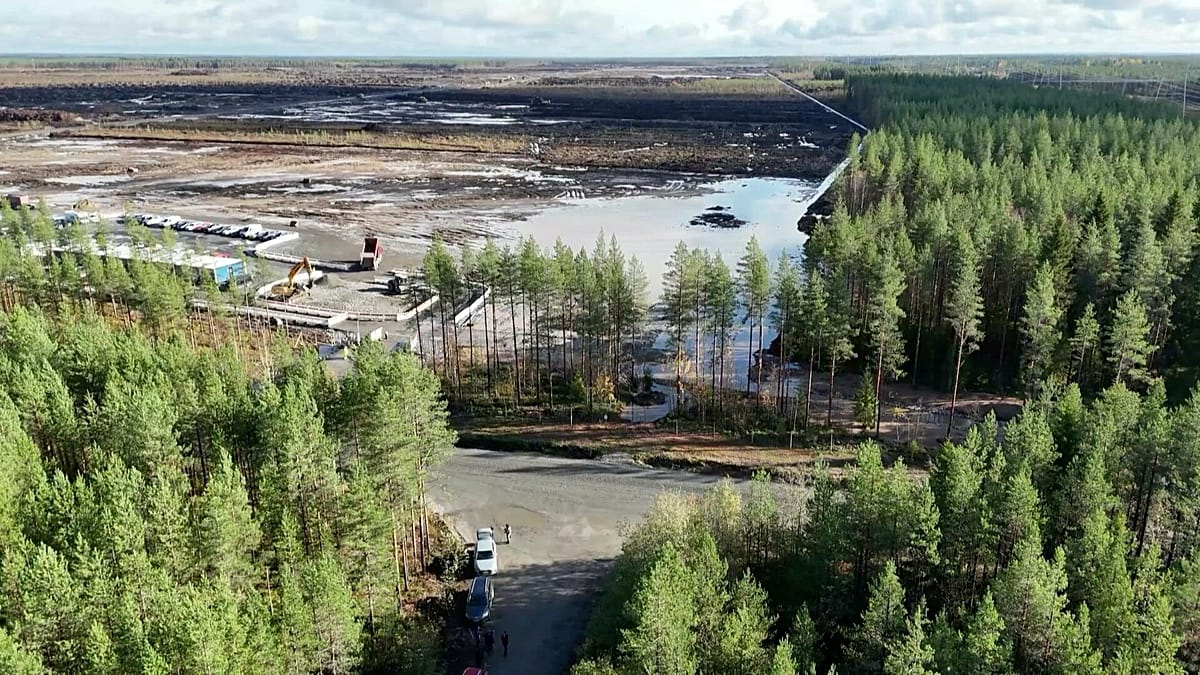
The quiet municipality of Muhos, in northern Finland, is bracing for a profound transformation as Google begins constructing a sprawling data centre complex nearby. The US tech giant has committed €13 billion to its Finnish operations over the next two years, according to Mayor Kimmo Hinno, a sum that dwarfs the town's annual budget and promises to reshape its future.
For many residents, the investment is a lifeline. Joni Pitkänen, a local farmer and entrepreneur, captures the prevailing mood: "The project is so huge that it's basically hard to really grasp it, even though we're right here on the sidelines. But so far, I have been fairly positive: that we're getting life, and this kind of large-scale business activity, to the countryside. That might, and hopefully will, attract other businesses around it as well. And of course, for a small municipality like this, it feels like a real boost."
Economic promise versus environmental cost
The promise of jobs and ancillary investment is tangible. Muhos, like many rural Finnish towns, has seen its population age and its traditional industries struggle. A project of this scale could reverse that decline, drawing younger workers and spin-off enterprises. Yet the environmental price is already being paid. Hanna Halmeenpää, chair of the board of the Finnish Association for Nature Conservation, points to the cleared land: "Already last winter, more than 300 hectares of logging was carried out in this area where we're standing on the edge."
The loss of forest is not merely aesthetic. Finland's boreal woodlands are a critical carbon sink and a haven for biodiversity. Environmental groups argue that the data centre's construction, and the energy it will consume, undermine the country's climate commitments. The facility will require vast amounts of electricity, likely from the Nordic grid, which, while relatively clean, is not without its own pressures.
This tension is not unique to Muhos. Across Europe, the race to build digital infrastructure is colliding with environmental protections. In Sweden, EU funds are helping rural communities switch from petrol to electric vehicles, but the energy demand from data centres could strain those very grids. Google's own experiments with AI chips in orbit hint at the lengths companies will go to find sustainable solutions, but on the ground, the immediate impact is deforestation.
The Finnish government has been a vocal supporter of the project, seeing it as a strategic investment in the country's digital future. Yet the political landscape is delicate. Finland's government recently survived a confidence vote over its foreign policy, and environmental issues could prove equally divisive. The debate in Muhos echoes a broader European question: how to balance economic development with the urgent need to protect natural habitats.
For now, construction continues. The cranes and earthmovers are a constant presence on the outskirts of town, a symbol of both progress and disruption. Mayor Hinno remains optimistic, insisting that the municipality is working closely with Google to mitigate environmental damage. But the scale of the project makes such assurances difficult to verify.
As the data centre rises, Muhos finds itself at the frontline of a continental dilemma. The jobs and investment are real, but so are the felled trees and the looming energy demands. The town's balancing act is a microcosm of Europe's own struggle to reconcile technological ambition with ecological responsibility. Whether Muhos emerges as a model of sustainable development or a cautionary tale will depend on the choices made in the coming years.