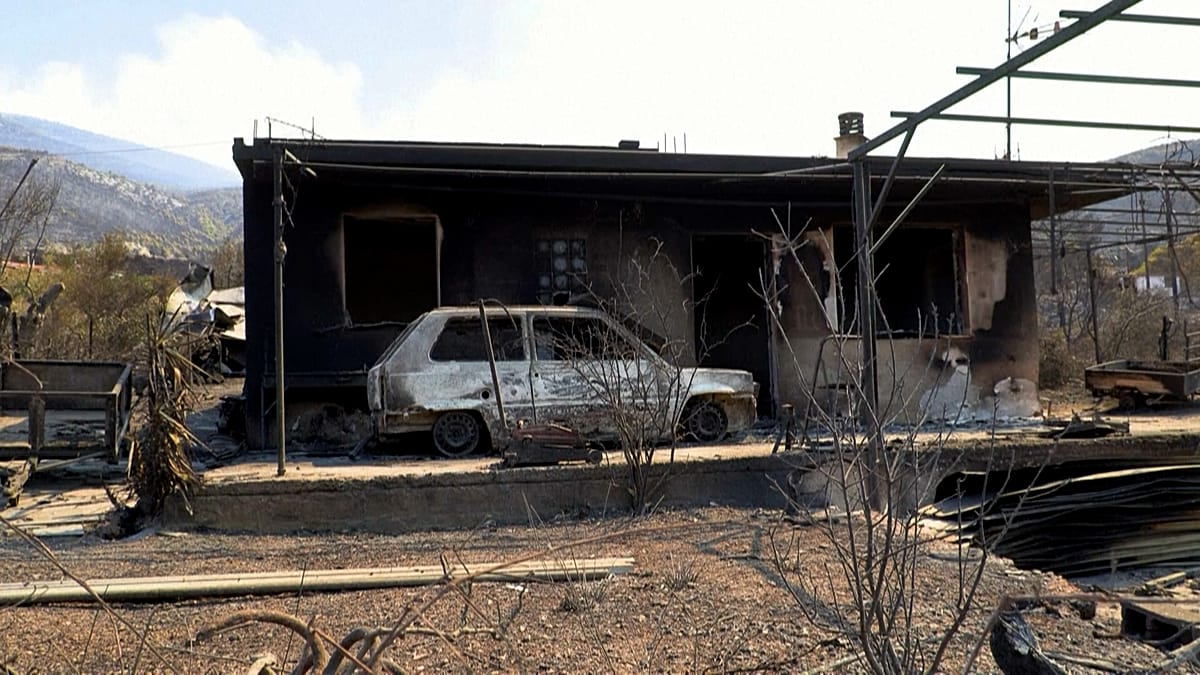
The coastal village of Porto Germeno, west of Athens, has become the latest frontline in Greece's battle against a series of wildfires that have now entered their second week. The fires have left a trail of destruction, with homes reduced to charred shells and cars melted into blackened metal. Firefighters remain deployed across the region, but the scale of the blazes has stretched resources to the limit.
At least five people have died since the fires intensified, according to Greek authorities. The victims include residents who were unable to flee in time, as well as a firefighter who was injured while battling the flames. The exact circumstances of each death are still being investigated, but the toll underscores the human cost of a fire season that has become increasingly severe across southern Europe.
A second week of relentless fires
The wildfires in Porto Germeno are part of a broader pattern of blazes that have erupted across Greece, from the Peloponnese to the islands of the Aegean. Strong winds, high temperatures, and dry vegetation have created ideal conditions for the fires to spread rapidly, often outpacing the efforts of ground crews and water-dropping aircraft.
In Porto Germeno, residents described scenes of panic as flames approached their homes. Many were forced to evacuate at short notice, grabbing only essential belongings. "We had minutes to leave," said one local resident, who asked not to be named. "The fire came over the hill so fast. Now we have nothing left."
The Greek government has declared a state of emergency in several affected areas, and Prime Minister Kyriakos Mitsotakis has called for international assistance. European Union member states have responded by sending firefighting aircraft and personnel through the EU's Civil Protection Mechanism, a system designed to pool resources during major disasters.
Climate change and fire risk
Scientists and fire experts have long warned that climate change is increasing the frequency and intensity of wildfires in the Mediterranean region. Greece, like other southern European countries, has experienced hotter and drier summers, extending the fire season and making it harder to contain blazes.
"The conditions we are seeing are unprecedented in many areas," said Dr. Elena Papadimitriou, a fire ecologist at the National Observatory of Athens. "The combination of prolonged drought and extreme heat means that even well-prepared communities are at risk."
In recent weeks, record heat has fueled fires from Albania to Spain, with Portugal and Italy also reporting significant outbreaks. The situation has prompted calls for a coordinated European approach to wildfire prevention and response, including better land management and investment in firefighting infrastructure.
Community resilience and recovery
Despite the devastation, there are signs of resilience in Porto Germeno. Neighbors have banded together to help clear debris, and local businesses have offered shelter to those who lost their homes. The Greek Red Cross has set up a relief center in a nearby school, providing food, water, and psychological support.
"We are a small community, but we will rebuild," said Maria Katsouli, a shop owner whose store was spared. "The fire took many things, but not our spirit."
Authorities have begun assessing the damage, with early estimates suggesting that dozens of homes have been destroyed and hundreds of hectares of land burned. The Greek government has promised compensation for affected residents, but the process is likely to take months.
As the fires continue to burn, the immediate priority remains containing the blazes and ensuring the safety of residents and firefighters. But the longer-term challenge of adapting to a hotter, drier climate is becoming increasingly urgent for Greece and the rest of Europe.