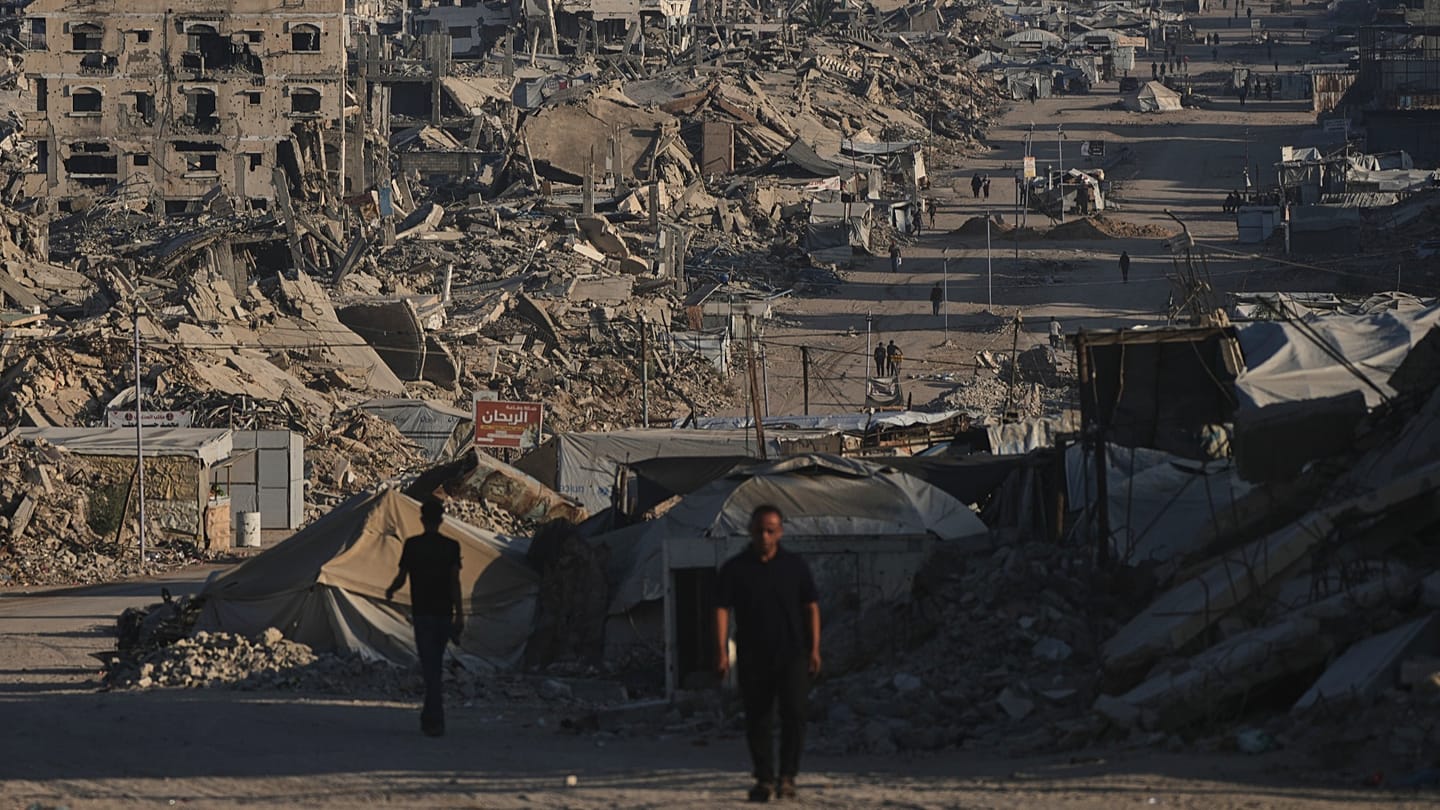
In a significant political development, Hamas has announced the dissolution of the administrative body that has governed the Gaza Strip since 2007. The move, confirmed by senior Hamas officials in Gaza City, clears the path for the establishment of a technocratic committee to oversee civilian affairs in the enclave.
This decision marks a notable shift in Hamas's approach to governance, which has been characterized by its direct control over Gaza since the group's fighters ousted the rival Fatah movement nearly two decades ago. The announcement comes amid ongoing international efforts to stabilize the region and explore post-war governance models.
Implications for Palestinian Unity
The dissolution of the Gaza governing body is widely seen as a concession to demands for a unified Palestinian administration. The technocratic committee, expected to be composed of independent experts rather than political appointees, would assume responsibility for public services, infrastructure, and economic management.
European diplomats have long advocated for a unified Palestinian government as a prerequisite for meaningful peace negotiations. The Cyprus talks on post-war Gaza governance, which were described as 'highly productive' by the Palestinian committee involved, have provided a framework for such transitions.
Analysts in Brussels note that the move could facilitate renewed engagement between the European Union and Palestinian authorities, particularly in areas of humanitarian aid and reconstruction. The EU has consistently called for a single, legitimate Palestinian government capable of representing both the West Bank and Gaza.
Regional and International Reactions
The announcement has drawn cautious optimism from several European capitals. In Paris, the Élysée Palace issued a statement welcoming the development as a potential step toward stability. Berlin's Bundestag has scheduled a debate on the implications for German foreign policy in the Middle East.
Meanwhile, in London, Foreign Office officials are reviewing the impact on UK aid programs in Gaza. The British government has maintained that any future support must be channeled through a transparent and accountable administration.
The United States, which has been a key mediator in the region, has not yet issued an official response. However, diplomatic sources in Washington indicate that the Biden administration views the move as a positive, if tentative, sign.
Challenges Ahead
Despite the political shift, significant hurdles remain. The technocratic committee will need to navigate the complex security environment in Gaza, where Hamas retains a substantial military presence. Questions also persist about the committee's funding and its relationship with the Palestinian Authority in Ramallah.
European observers point to the need for a comprehensive ceasefire and a clear timeline for elections. The recent resignation of Serbia's Vučić and the call for snap elections in that country highlight how political transitions can reshape regional dynamics, though the contexts differ markedly.
For now, the dissolution of the Gaza governing body represents a tactical retreat by Hamas, but whether it leads to lasting change depends on the willingness of all parties to engage in a genuine political process. As one EU official put it, this is a door opening, not a guarantee of what lies beyond.