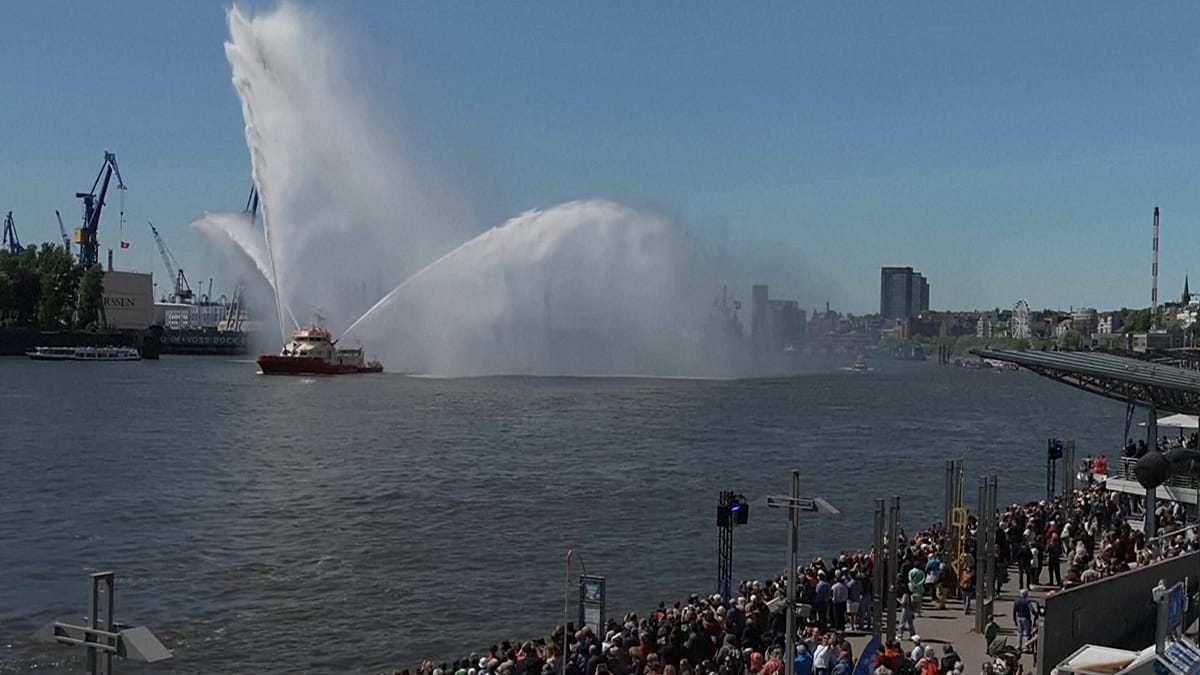
Hamburg, Germany's largest port city, marked the 837th anniversary of its harbour on Sunday with a grand maritime parade that drew thousands of spectators along the Elbe River. The procession featured approximately 250 vessels, ranging from meticulously restored historic sailing ships to contemporary coast guard and police boats, underscoring the port's evolution from a medieval trading hub to a modern logistics powerhouse.
A Floating Tribute to Maritime Heritage
The parade, organized by the Hamburg Port Authority and local maritime associations, included iconic vessels such as the Rickmer Rickmers, a three-masted sailing ship built in 1896 that now serves as a museum, and the Cap San Diego, a cargo ship from the 1960s. Smaller boats, like traditional fishing cutters and tugboats, also joined the flotilla, creating a moving tableau of the city's nautical history.
Spectators lined the banks of the Elbe and crowded bridges to watch the ships pass, with many waving flags and cheering. The event also featured a flyover by a vintage aircraft and a fireworks display in the evening, adding to the festive atmosphere. Local authorities estimated that over 100,000 people attended the celebrations, which included food stalls, live music, and guided tours of the port.
Hamburg's harbour, first mentioned in a charter from 1189, has been a cornerstone of the city's economy for centuries. Today, it is the third-busiest container port in Europe, after Rotterdam and Antwerp, handling millions of TEUs (twenty-foot equivalent units) annually. The anniversary parade serves as a reminder of the port's resilience, having weathered wars, economic crises, and the shift to containerization.
The event also highlighted the port's role in European maritime security. Among the participants were vessels from the German Federal Police and the Hamburg fire department, which regularly patrol the Elbe to ensure safety. This aspect resonates with broader European discussions on maritime security, such as the ongoing debates about naval presence in the Strait of Hormuz. As France sees the US Hormuz coalition as complementary to European-led maritime missions, Hamburg's parade subtly underscored the importance of maintaining robust maritime capabilities close to home.
For many Hamburg residents, the parade is a cherished tradition that connects them to their city's identity. "It's a day when we celebrate not just the port, but the people who work on the water," said Klaus-Dieter Peters, a retired harbour pilot who watched from the Landungsbrücken piers. "My father was a sailor, and I spent my whole career on these ships. Seeing them all together brings back memories."
The anniversary also comes at a time when European ports are grappling with challenges such as decarbonization and digitalization. Hamburg has invested heavily in green technologies, including shore-side power for cruise ships and automated container handling. The parade included a demonstration of an electric tugboat, signaling the port's commitment to reducing emissions.
Beyond the festivities, the event served as a platform for cultural exchange. A delegation from the port of Shanghai, a sister city of Hamburg, participated in the parade, reflecting the global connections that make the harbour a vital link in international trade. Similarly, the Kyrenia II replica set sail again to showcase Cyprus's ancient maritime heritage, highlighting how European ports share a common legacy of seafaring.
As the last ships docked and the crowds dispersed, the message was clear: Hamburg's harbour is not just a relic of the past but a living, breathing entity that continues to shape the city's future. The 837th anniversary was a testament to its enduring significance in a continent that depends on maritime trade for prosperity.