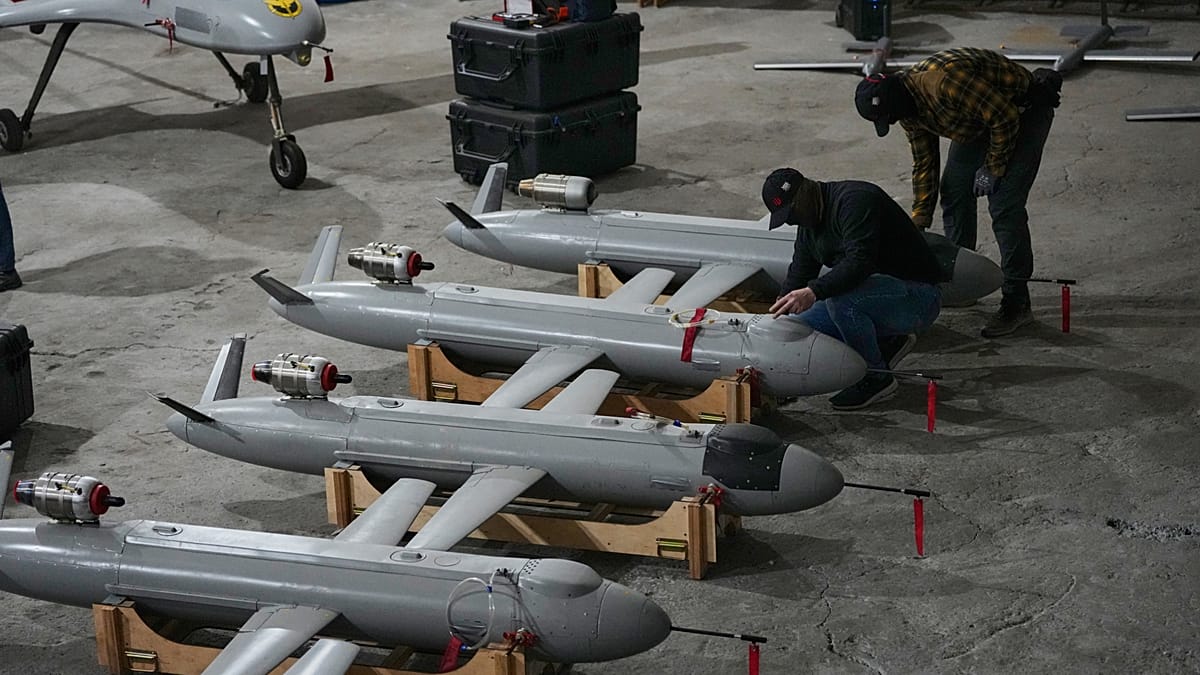
Honduras is set to acquire drones from Ukraine as part of a broader strategy to combat drug trafficking and strengthen border security, President Nasry Asfura confirmed on Monday. The announcement follows a meeting with Ukrainian President Volodymyr Zelenskyy in Kyiv last week, where the two leaders discussed military technology cooperation.
Speaking to AFP on the sidelines of the Organization of American States General Assembly in Panama City, Asfura said the unmanned systems would be used to monitor remote areas and disrupt criminal networks. “We are talking about drones to protect our borders, to efficiently guard our borders, to fight against organized crime with high-tech equipment,” he stated. He described the drug trafficking challenge as “a matter of national security” and emphasised that Ukraine “can help us a lot to further secure our borders.”
Ukraine has emerged as a global leader in drone warfare since Russia's full-scale invasion in 2022. Its forces have relied heavily on unmanned systems for surveillance, targeting, and long-range strikes, driving rapid innovation in the field. Zelenskyy pointed to this expertise during the meeting, saying: “In terms of security today, in military and drone technologies, Ukraine is one of the strongest in the world. And I know this interests you.”
Honduras's Drug Problem
Honduras has long served as a transit corridor for cocaine shipments from South America to North America. In recent years, authorities have uncovered coca plantations and cocaine-processing laboratories in remote regions, raising concerns that the country is evolving from a trafficking route into a more active part of the narcotics production chain. The drug trade operates alongside powerful criminal groups, including MS-13 and Barrio 18, which are linked to extortion, violence, and territorial control.
The country's homicide rate stands at around 24 per 100,000 inhabitants—nearly four times the global average. Last month alone, 19 people were killed in a community affected by disputes over drug routes, and five police officers were killed near the Guatemalan border in an attack blamed on suspected narcotraffickers.
This deal also reflects Ukraine's broader push to expand its defence partnerships beyond Europe. While Kyiv has focused on securing support from allies during the war, it is increasingly showcasing its homegrown drone technology to potential buyers in Latin America and other regions. The agreement with Honduras could serve as a template for similar deals with other countries facing organised crime challenges.
For European observers, the transaction underscores how Ukraine's wartime innovations are reshaping global security markets. It also highlights the interconnected nature of drug trafficking, which the EU has recently targeted with a €31 billion drug strategy to combat rising deaths and trafficking. Meanwhile, the use of drones in law enforcement mirrors trends in Europe, where unmanned systems are increasingly deployed for border surveillance and anti-crime operations.
Asfura did not specify the number of drones or the financial terms of the deal, but he indicated that the technology would be used primarily for surveillance and intelligence gathering. The agreement is expected to be finalised in the coming months, pending regulatory approvals in both countries.