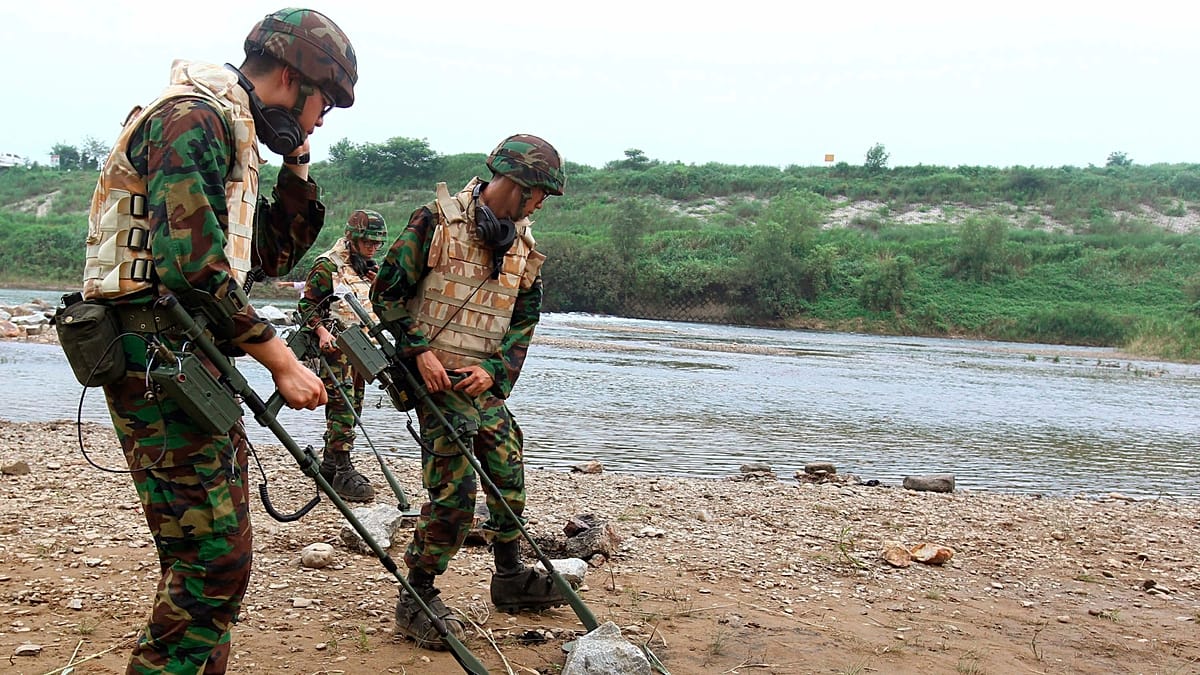
South Korean authorities have recovered 15 landmines believed to have been carried across the inter-Korean border by monsoon rains, raising fresh concerns about the safety of coastal communities near the Demilitarised Zone (DMZ).
The devices were discovered along the shores of Ganghwa County, an archipelago at the mouth of the Han River estuary, between 23 July and 3 August, according to Choi Young-ran, the county's head of civil defence. Speaking to AFP, she said the mines were "believed to have been washed away during the monsoon season and recent torrential rains" and confirmed that "we have recovered all 15."
The DMZ, which has divided the Korean Peninsula since the 1950-53 war ended in an armistice, remains one of the most heavily mined regions on Earth. Military data cited by the Yonhap news agency estimates that around 800,000 mines are buried in the area, many dating from the conflict, though mine-laying has continued in recent years.
Rising flood risks along the border
Seoul's military had warned last month that heavy rainfall could wash explosives into rivers crossing the border, potentially causing "serious damage" if they detonated downstream. The warning proved prescient as the recent floods swept munitions into South Korean territory.
Ganghwa County issued alerts to residents in late July, advising them of the danger of North Korean mines along the coast. County officials said on Wednesday that they had "not ruled out the possibility that more could arrive."
The incident echoes a 2015 episode when two South Korean soldiers patrolling the western DMZ lost limbs after stepping on a North Korean mine. That event had a lasting impact on local tourism, a concern echoed by Ganghwa resident Park Heung-yeol. "Despite the heat, there are still around 300 people who dig for clams by hand," he told AFP. "It seems like a dangerous activity for them," he added, given the risk from mines.
Natural disasters tend to hit North Korea harder due to its weak infrastructure and widespread deforestation, which exacerbates flooding. Specialist outlet NK Pro reported on Thursday that satellite imagery showed at least 380 single-story row houses at a large North Korean border military base had been completely swept away by heavy rains in late July, apparently after a dam collapse. The site is reportedly a key artillery command.
For South Koreans living along the high-security border, such incidents are part of a broader pattern of disruption and danger. In recent months, Pyongyang has sent balloons carrying trash across the border and broadcast unsettling noises over loudspeakers, adding to the tension.
While the immediate recovery of the 15 mines is a relief, the episode underscores the persistent risks posed by the heavily fortified frontier, especially as climate change intensifies monsoon rains in the region.