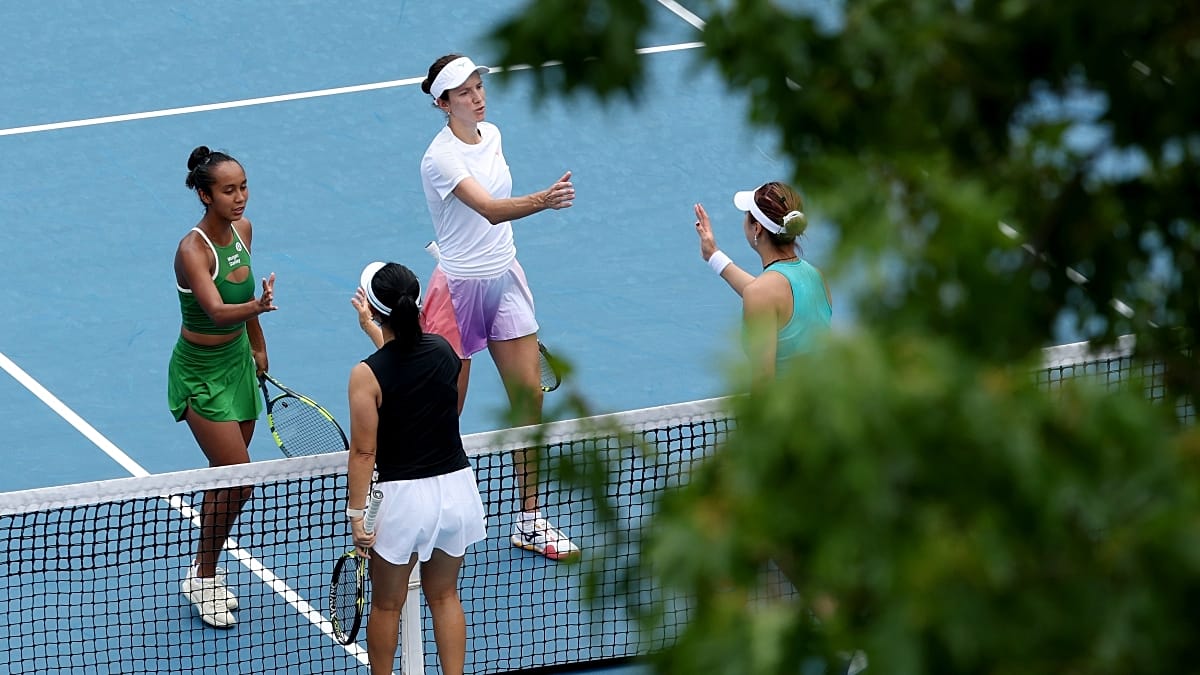
When Elena Rybakina lifted the US Open trophy this year, she didn't just win a Grand Slam—she made history for Kazakhstan, becoming the country's first world No. 1 in tennis. Her victory over Aryna Sabalenka capped a season in which she also won the Australian Open, sweeping both hard-court majors. For a nation with no deep tennis tradition, the achievement marks a remarkable transformation.
Kazakh President Kassym-Jomart Tokayev was quick to congratulate Rybakina, noting that her success could inspire a new wave of players. "It's history, and I'm very proud representing Kazakhstan," Rybakina said in New York. "Every time I come back to Kazakhstan, no matter which city I go, it's always so many kids."
The numbers behind this rise are striking. In 2007, Kazakhstan had just 55 tennis courts, mostly in Almaty, and around 500 players across Almaty, Astana, Karaganda and Shymkent. Today, the country boasts 400 courts and nearly 45,000 active players. The Kazakhstan Tennis Federation (KTF) has invested more than $200 million since 2007, a figure that includes infrastructure, academies, and tournament hosting.
Dias Doskarayev, KTF Vice President, acknowledges the scale of the challenge. "We are competing against countries where tennis has been prospering for more than 100 years and they have more than 40,000 courts," he said. "Germany has more than 50,000 courts. Even Japan has more than 40,000 courts, while we have only 400 and our population is smaller. That is why we have to work on quality."
That quality-first approach is visible in the country's professional academies. Team Qazaqstan, established in 2008 at the initiative of KTF President Bulat Utemuratov, brings together the most promising juniors. A commission of seven specialists—covering tennis, psychology, and fitness—travels across the country to scout talent at tournaments and training sessions. The academy has partnered with the Gorin Tennis Academy in Northern California, the Sergio Bruguera Academy, and renowned coach Riccardo Piatti in Bordighera, known for his work with Novak Djokovic and Jannik Sinner.
Grassroots growth and affordability
One of the most significant shifts has been in accessibility. "The stereotype that tennis is a rich man's sport no longer exists," Doskarayev said. In 2007-2008, renting a court cost around $100 per hour; today, monthly training fees for children are about $50. The federation has also partnered with more than 145 kindergartens, providing equipment and certifying instructors to introduce tennis to the youngest children.
The number of certified coaches has doubled in five years to over 400, and tennis centres now operate in every region of the country. The under-14 national team ranks fourth in the world junior team competition, and two Kazakh juniors have cracked the world top 10. Zangar Nurlanuly reached the US Open junior semi-finals twice, while Amir Omarkhanov finished in the top five at the Australian Open juniors and made the quarter-finals.
At the senior level, Kazakhstan fields a strong contingent including Alexander Bublik, Yulia Putintseva, and Anna Danilina. The country hosts around 250 tournaments annually, including more than 50 international events—ITF, ATP Challenger, Tennis Europe, and Asian Tennis Federation competitions. The men's Davis Cup team faces Thailand in September, and the women's Billie Jean King Cup team takes on Spain later that month.
Kazakhstan's tennis boom is part of a broader push to raise its international profile, from courting global investors to celebrating achievements in other sports, such as boxing champion Nazym Kyzaibay. The country's success in tennis offers a model for other emerging nations: strategic investment, a focus on quality over quantity, and a long-term vision.
As Rybakina's star continues to rise, the next generation is already on court. "We are working with children's programmes in kindergartens," Doskarayev said. "We are giving equipment to the kindergartens, certifying the instructors and making sure that the kids get involved in tennis." With 45,000 players and growing, Kazakhstan's tennis revolution shows no signs of slowing down.