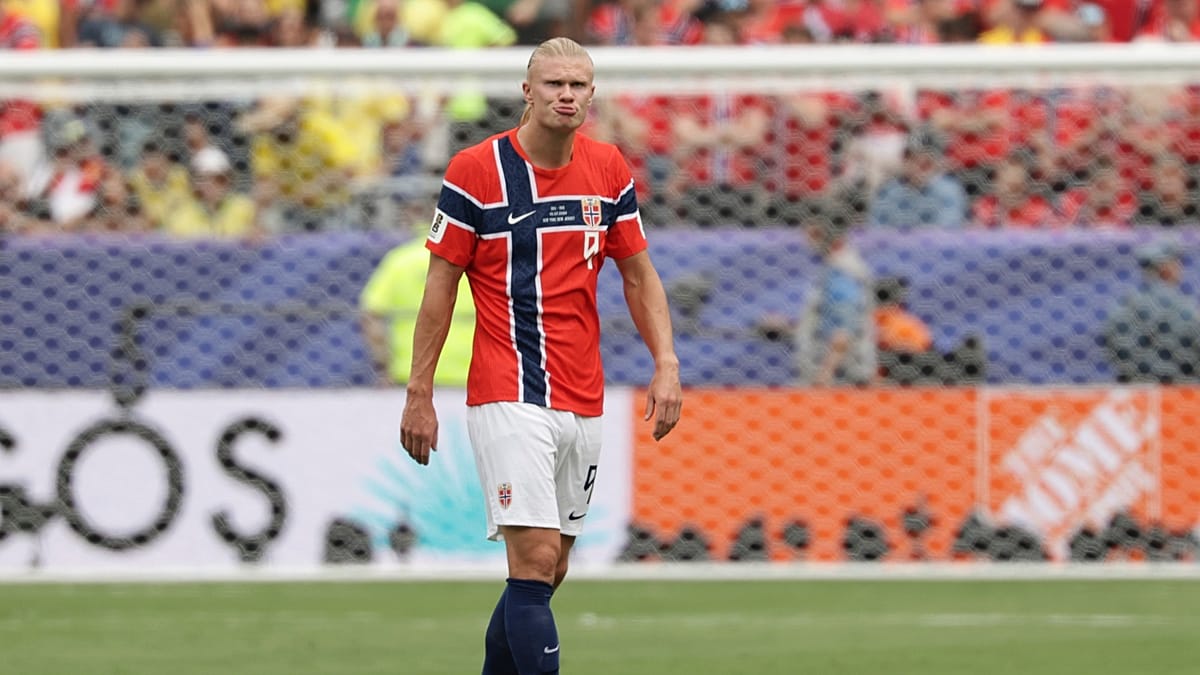
Norway's run at this year's World Cup has done more than thrill football fans—it has measurably boosted the country's tourism appeal. Data from Google Trends, Kiwi.com, and Airbnb show a clear spike in interest, driven by the national team's star striker Erling Haaland and a viral fan phenomenon that spread across social media.
According to Google Trends, searches for the keyword "Norwegia" from Poland rose by 200 percent year on year. Kiwi.com, the flight comparison platform, reports that the average daily number of searches for flights from Poland to Norway between 1 and 20 July was 32.3 percent higher than the same period in 2023. Globally, English-language searches for "Norway" on Google increased by 300 percent, while Airbnb recorded a 15 percent rise in accommodation searches for the country between 11 June and 12 July.
Haaland's authentic appeal
The surge is largely attributed to Erling Haaland, whose Instagram following grew by 31.9 million during the tournament—the largest increase of any player. He now ranks as the fourth most popular active footballer on social media, behind only Cristiano Ronaldo, Lionel Messi, and Kylian Mbappé. In terms of interactions generated on Instagram during the World Cup, he placed third.
Experts point to Haaland's communication style as a key factor. Rather than polished, choreographed content, he posted short behind-the-scenes videos from the national team camp, showing everyday moments and adopting a relaxed, self-deprecating tone. "An increase of almost 32 million followers in such a short time is above all the result of the Norwegian's sense of humour and authenticity," says Tomasz Lubieniecki, head of the Media Reports Department at the Institute of Media Monitoring. "Internet users reward organic virality, behind-the-scenes access and people who keep a healthy distance from themselves."
This authenticity resonated far beyond football fans. Haaland's content was shared widely, generating what Lubieniecki calls "spectacular reach" that translated into tangible interest in Norway as a destination.
The Viking rowing chant goes viral
The second driver of Norway's tourism boost was the behaviour of its fans. The collective "rowing" gesture, performed by thousands of supporters sitting in rows and mimicking the motion of oars, became one of the tournament's most recognisable symbols. Videos of the chant spread across TikTok, Instagram, and X, with players joining in. The trend soon spilled out of stadiums onto city streets and public transport.
Norway's visual identity reinforced the effect. Shirt numbers styled as Nordic runes, a dominant red colour scheme, and constant references to Viking symbolism created a cohesive brand that matched the team's on-pitch energy and Haaland's persona. The combination proved potent: Wikipedia traffic for Norway peaked on 11 July, the day of the quarter-final against England.
The data suggests that online virality is now directly influencing travel decisions. "We can see a clear link here between the sporting event and consumers' purchasing and travel decisions," Lubieniecki notes. "The spikes in search engines and on Wikipedia were reflected in Airbnb's business data and in analyses of the Polish tourism market. This shows how online virality can build reach that has real value for the image and economy of an entire country."
Norway's experience mirrors trends seen elsewhere in Europe. Spain's World Cup win similarly drove a 33-fold surge in Chinese flight searches, while several European nations have seen significant tourism gains since 2019. The Norwegian case, however, underscores how a single charismatic athlete and a grassroots fan movement can amplify a country's global profile.
For Norway, the challenge now is to convert this surge in interest into sustained tourism growth. The country has long been known for its fjords, northern lights, and outdoor activities, but the World Cup has introduced it to a younger, digitally native audience. Whether the Viking rowing chant and Haaland's Instagram stories can keep drawing visitors remains to be seen, but for now, the numbers are clear: Norway's brand has never been stronger.