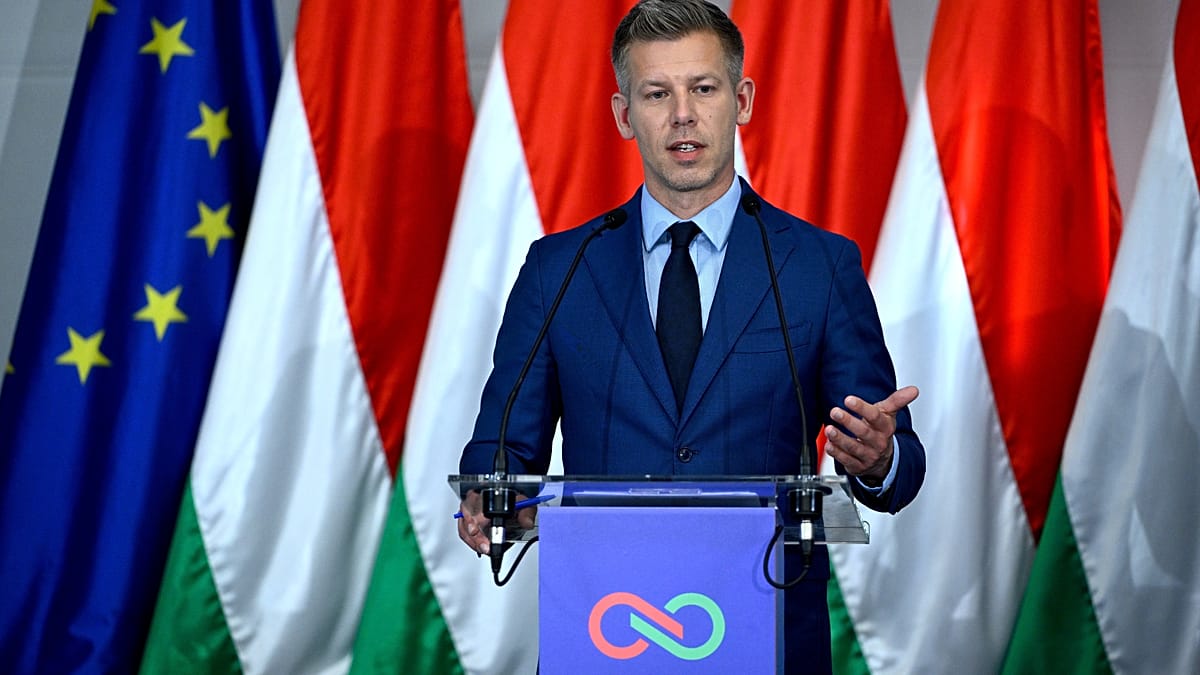
Hungary's incoming prime minister, Péter Magyar, is scheduled to meet European Commission President Ursula von der Leyen in Brussels on Wednesday for what sources describe as informal but urgent discussions. The meeting aims to unlock billions of euros in EU funding that were suspended during the tenure of outgoing Prime Minister Viktor Orbán.
Magyar, who won a landslide victory earlier this month, will not address the media during his visit. People familiar with his thinking indicate he is eager to move quickly on files related to the frozen payments, which amount to roughly €10 billion. The funds were blocked over concerns about the rule of law, and Budapest faces an August deadline to secure them or risk losing the money.
The incoming prime minister will also meet EU Council President António Costa, following a period of strained relations between Budapest and other EU leaders, largely due to Orbán's frequent use of vetoes. As Kaja Kallas recently noted, such tactics have undermined EU democracy, but there is hope for a reset with the new government.
Urgent Talks Before Swearing-In
Magyar's trip to Brussels comes before his formal swearing-in ceremony in Budapest on 9 May, a symbolic date that also marks Europe Day. Initially, he had planned a European tour with stops in Vienna and Warsaw before visiting Brussels in mid-May. However, the meeting was moved forward due to what a Tisza Party official called “exceptional circumstances that necessitate speed.”
Technical-level talks have already taken place between Commission officials and representatives of Magyar's Tisza Party. Ursula von der Leyen's chief of staff, Björn Seibert, held discussions earlier this month, where both sides agreed to work together at speed. Additionally, Magyar's incoming foreign minister, Anita Orbán, was in Brussels last weekend. Hosting talks with a government yet to take office underscores both the urgency of the situation and a renewed political willingness on both sides.
Magyar's approach marks a sharp contrast with the permanent confrontation that characterized relations under Viktor Orbán. The outgoing prime minister repeatedly clashed with EU institutions, using vetoes to block key decisions, such as the €90 billion Ukraine loan until a last-minute compromise was reached.
Balancing Act Ahead
Magyar made resetting relations with European partners a central theme of his campaign, along with securing access to funds that he says “belong to Hungarians.” His landslide victory gave him a supermajority, which should allow him to fast-track reforms needed to unlock the cash. However, he faces a delicate balancing act: he must make overtures to Brussels while maintaining the image of a politician who is not simply taking orders from the EU.
“Europe must now be the friend on the side of Hungary, of this new government, delivering on the expectations of citizens,” said Manfred Weber, the German head of the European People's Party, which counts Magyar's Tisza among its members. Speaking to reporters in Strasbourg, where the European Parliament is holding a plenary session, Weber added: “The main message is to help them. This is what we have to do. Not to criticise, or make detailed discussions, but help them and be supportive.”
Magyar's government will also scrutinize Orbán-era policies for potential corruption risks, as seen in the defence plan review. Meanwhile, misinformation has already targeted Magyar despite his election victory, as reported in this analysis.
The incoming prime minister has little choice if he wants to revive the Hungarian economy, which has suffered from the frozen funds. Unlike Orbán, he is likely to find fresh momentum in Brussels, where leaders are eager to turn the page on years of friction. The success of this meeting will be a key test of whether a new chapter in EU-Hungary relations is truly possible.