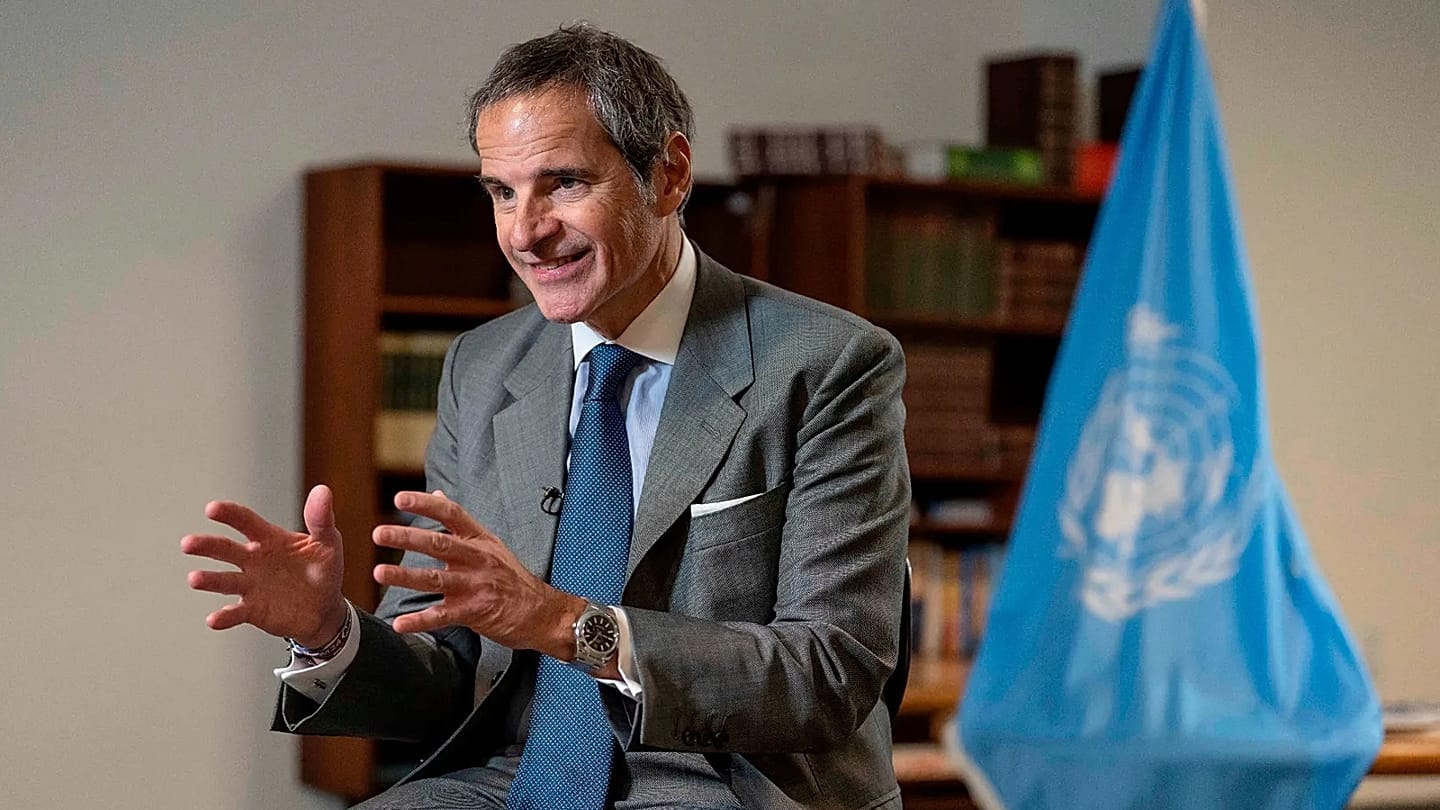
Rafael Mariano Grossi, the Director General of the International Atomic Energy Agency (IAEA), has firmly stated that inspections of Iran's nuclear enrichment sites will take place, directly contradicting recent claims from Tehran that certain facilities damaged in bombings are exempt from international oversight.
Speaking to reporters in Vienna, Grossi referenced a signed memorandum of understanding between the United States and Iran, which he argued provides a clear legal framework for the IAEA's access. “The inspections are going to happen,” Grossi said, pushing back against what he described as unilateral interpretations by Iranian authorities. The IAEA chief emphasized that the agency's mandate under the Nuclear Non-Proliferation Treaty (NPT) remains unchanged, and that any attempt to restrict access would undermine global non-proliferation efforts.
The dispute comes amid heightened tensions following a series of airstrikes on Iranian nuclear facilities, which Tehran attributes to Israel. Iranian officials have since argued that the damaged sites are no longer subject to routine inspections, a position that Grossi rejected as inconsistent with international agreements. The IAEA has long maintained that all nuclear material and activities in Iran must be verifiable, regardless of operational status.
This development carries significant implications for European capitals, which have been closely monitoring the nuclear file. The EU has consistently advocated for a diplomatic resolution, and the IAEA's insistence on inspections aligns with the bloc's stance on non-proliferation. The issue is likely to feature prominently in upcoming discussions among EU foreign ministers, particularly as the bloc seeks to maintain a unified position on Iran.
The memorandum cited by Grossi was signed during recent US-Iran talks in Switzerland, which also addressed broader regional issues such as the Hormuz Strait and a potential ceasefire in Lebanon. These negotiations, while separate from the nuclear track, have created a fragile diplomatic channel that European diplomats hope to leverage. The IAEA's role as an impartial arbiter is seen as critical to preserving this momentum.
European leaders have expressed concern that any breakdown in inspections could accelerate Iran's nuclear program, potentially triggering a new crisis. The EU has invested heavily in the Joint Comprehensive Plan of Action (JCPOA), and while the deal remains in limbo, the bloc continues to support the IAEA's verification work. The agency's latest stance may also influence discussions at the upcoming EU defence chiefs' meeting in Berlin, where broader security threats, including those from Iran, are on the agenda.
Grossi's comments come as the IAEA prepares to release its quarterly report on Iran's nuclear activities. The report is expected to detail the status of enrichment levels and stockpiles, which have grown since the US withdrawal from the JCPOA in 2018. European intelligence agencies have warned that Iran now possesses enough enriched uranium for multiple nuclear devices, though Tehran insists its program is peaceful.
The standoff underscores the challenges facing the IAEA in a region marked by conflict and mistrust. While Grossi's statement reaffirms the agency's commitment to inspections, the practical implementation remains uncertain. Iranian officials have not yet publicly responded to his remarks, but past patterns suggest a period of diplomatic maneuvering may follow.
For European policymakers, the IAEA's position offers a rare point of consensus in an otherwise fractured landscape. The bloc's ability to influence events will depend on its willingness to back the agency's demands with concrete measures, including potential sanctions or incentives. As the situation evolves, the EU's role as a mediator between Washington and Tehran could prove decisive.