The head of the United Nations nuclear watchdog has confirmed that North Korea is expanding the uranium enrichment facility at its main Yongbyon complex, the latest indication that Pyongyang is pressing ahead with its stated goal of bolstering its nuclear arsenal.
Rafael Grossi, Director General of the International Atomic Energy Agency (IAEA), told the agency's board of governors that construction on a further extension to the original enrichment hall began in mid-September 2026 and was externally complete by late October. "The ongoing expansion of the DPRK's uranium enrichment program remains a cause for serious concern," he said, using the acronym for the Democratic People's Republic of Korea.
The IAEA has had no access to Yongbyon or any other North Korean nuclear site since Pyongyang expelled its inspectors in 2009. The agency now relies on satellite imagery and open-source information to track developments, a method that has limitations but has nonetheless provided clear evidence of the new construction.
Yongbyon: the heart of the programme
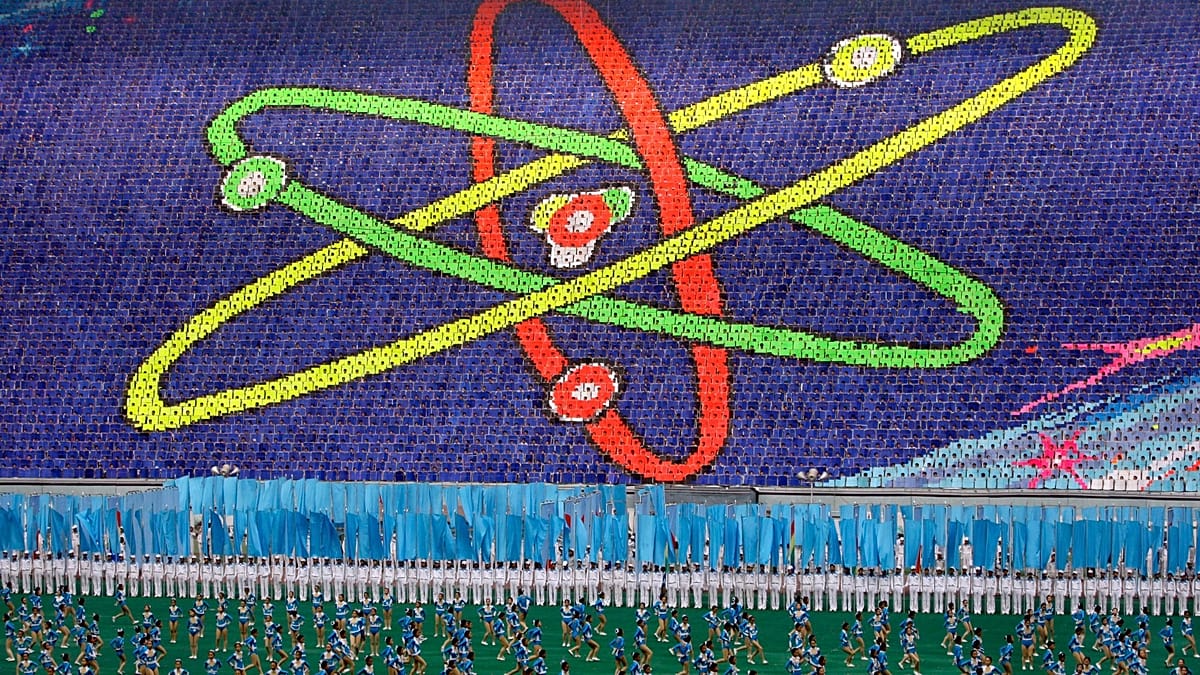
North Korea has long described Yongbyon as the heart of its nuclear programme. The complex houses both a uranium enrichment facility and a plutonium production reactor, giving Pyongyang two potential routes to building nuclear weapons. Highly enriched uranium and weapons-grade plutonium can both be used in warheads, and Yongbyon is capable of producing both.
The expansion comes as US President Donald Trump has expressed interest in meeting North Korean leader Kim Jong-un during his upcoming trip to Asia for a summit in China. Trump's overture, however, has not yet resulted in a scheduled meeting. US Secretary of State Marco Rubio said no talks were planned for the China visit, but stressed that the president is ready to open a new dialogue with Pyongyang.
North Korea has not publicly responded to Trump's latest outreach. In the past, Kim has said he would return to negotiations only if Washington abandons what he calls its "hostile policy" and accepts the North's status as a nuclear state.
The collapse of the first Trump-Kim summitry in 2019, which broke down over sanctions relief and denuclearisation steps, has left a diplomatic vacuum. Since then, observers say, North Korea has taken steps to build additional enrichment facilities both at Yongbyon and elsewhere. Last year, South Korea's Unification Minister Chung Dong-young stated that the North was operating four uranium enrichment sites, running them on a daily basis.
The IAEA's Grossi did not specify the purpose of the new extension, but analysts note that expanding enrichment capacity would allow North Korea to produce more fissile material for weapons, potentially increasing its nuclear stockpile. The agency's monitoring role in North Korea remains severely constrained, and its ability to verify any future agreement would depend on renewed access.
The development also has broader implications for non-proliferation efforts worldwide. The IAEA's inability to inspect North Korean facilities stands in contrast to its work in other countries, such as Iran, where inspectors continue to monitor nuclear activities despite political tensions. The contrast highlights the challenges of enforcing international nuclear norms when a state withdraws from cooperation.
For European policymakers, the North Korean nuclear programme is a distant but persistent concern. The EU has repeatedly condemned Pyongyang's missile and nuclear tests and maintains sanctions in line with UN resolutions. The expansion at Yongbyon is likely to reinforce calls for continued vigilance and diplomatic engagement, even as attention focuses on other crises closer to home.
The IAEA's findings come at a time of heightened nuclear tensions globally, with discussions on Iran's nuclear programme also in the spotlight. The agency's role as a watchdog is more critical than ever, even as its access to some of the world's most sensitive sites remains limited.