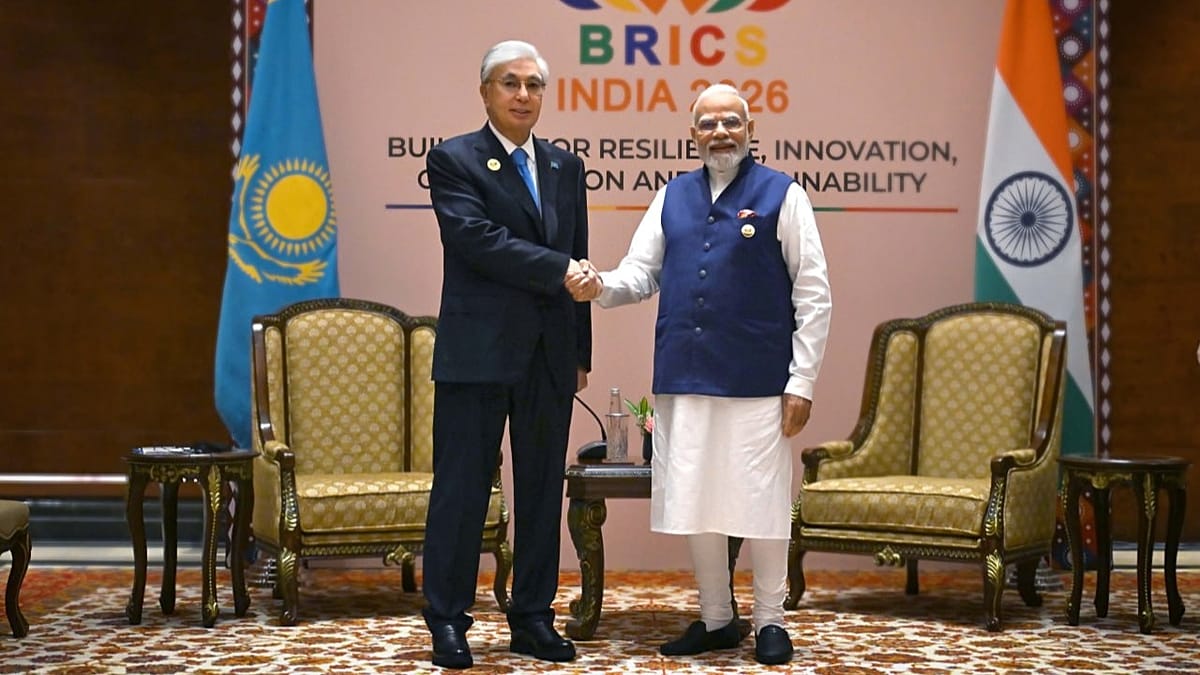
On the sidelines of the BRICS summit in New Delhi, negotiators from India and the Eurasian Economic Union (EAEU) — comprising Kazakhstan, Kyrgyzstan, Belarus, Armenia, and Russia — agreed to accelerate talks on a comprehensive free trade agreement. The decision was announced after a meeting between Andrey Slepnev, the EAEU's trade minister, and India's commerce minister, Piyush Goyal.
Both officials expressed satisfaction with the progress made so far and confirmed that the third full round of negotiations will take place in November. Previous rounds were held in November 2025 and June 2026, indicating a steady but deliberate pace that now appears set to quicken.
The push for speed reflects a mutual interest in finalising a deal that has been under discussion for over a year. While the specifics — including tariff schedules and the list of goods to be covered — remain undisclosed, the strategic significance is clear. For India, the agreement would open access to a market of more than 180 million consumers and to Eurasia's transport and logistics networks. For the EAEU, it would reduce non-tariff barriers and transaction costs while granting entry to one of the world's fastest-growing major economies.
Kazakhstan's role as EAEU chair
Kazakh President Kassym-Jomart Tokayev, whose country holds the EAEU chairmanship for 2026, reinforced the urgency in his address to the BRICS summit. "As chair of the Eurasian Economic Union, Kazakhstan advocates for expanding economic cooperation with BRICS and advancing work on concluding a free trade agreement with India," he said.
His remarks carry particular weight given that no Kazakh president had made an official visit to India since 2009. The renewed diplomatic engagement signals a shift in priorities for Astana, which has increasingly sought to diversify its economic partnerships beyond traditional allies.
Manarbek Kabaziyev, deputy chair of the Foreign Policy Research Institute under the Kazakh foreign ministry, said the agreement would be especially beneficial for Kazakhstan. "Such an agreement could lower trade barriers, expand access to the Indian market for Kazakhstani and other Eurasian producers, and, consequently, create additional opportunities for the growth of trade, investment, and cooperation," he explained.
Transport corridors and European interest
One of the most significant potential outcomes of the deal is its impact on overland trade routes. Kabaziyev noted that increased trade with India would naturally drive demand for reliable land and multimodal connections, including the Trans-Caspian International Transport Route (TITR) and other corridors linking Central Asia with Europe.
Connecting the TITR with the International North-South Transport Corridor would also allow India to bypass geographical bottlenecks such as Iran, offering a more direct path to European markets. This, Kabaziyev argued, creates an indirect but substantial European interest: "The greater the freight flows between India, Central Asia, and Europe, the stronger the economic incentive to develop infrastructure, reduce logistics costs, and increase the capacity of these routes."
Tokayev also welcomed India's proposal for a BRICS framework on logistics and supply chains, which could further complement the trade agreement. However, Kabaziyev cautioned that the deal alone would not automatically speed up deliveries to Europe. "While the agreement generates economic demand, the speed of transport depends on infrastructure, border procedures, digitalisation, tariff harmonization, and the efficiency of the Trans-Caspian International Transport Route itself," he said.
For European policymakers, the development is worth watching. A successful India-EAEU trade pact could reshape supply chains and reduce reliance on maritime routes, which have faced disruptions in recent years. The EU has been actively pursuing its own trade agreements across Asia, including a recent push to finalise a deal with the Philippines, as seen in the EU trade chief's visit to Manila. A more integrated Eurasian land bridge would complement these efforts, though it also raises questions about competition for influence in Central Asia.
The next round of negotiations in November will be closely watched for signs of concrete progress. If the momentum holds, the agreement could be concluded within the next year, potentially transforming trade dynamics from the Indian Ocean to the heart of Europe.