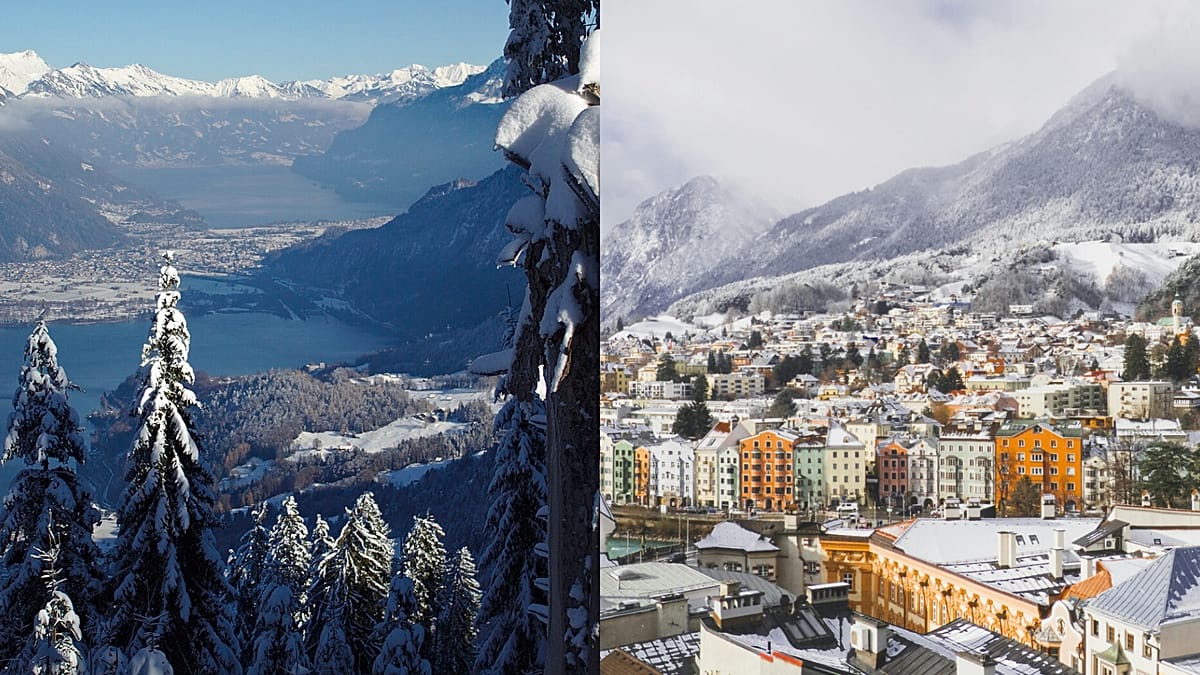
When winter settles over the Alps, two names consistently rise to the top of adventure travel lists: Interlaken in Switzerland and Innsbruck in Austria. Both are gateways to world-class skiing, snowboarding, and snow-dusted hiking, yet they deliver surprisingly different experiences. Choosing between them depends on what kind of winter escape you're after.
Interlaken: Lakes, Trails, and Swiss Precision
Nestled between Lake Thun and Lake Brienz in the Bernese Oberland, Interlaken is a year-round resort that refuses to slow down when temperatures drop. The region's five ski areas—Beatenberg-Niederhorn, Brienz-Axalp, Diemtigtal, Habkern, and Aeschi-Aeschiried—offer a mix of broad pistes and challenging runs. Habkern, with its single lift serving four slopes of varying difficulty, is a favourite in snowy winters, while Aeschi-Aeschiried rewards skiers with views over Lake Thun and the pyramid-shaped Niesen peak.
But Interlaken's winter appeal extends far beyond skiing. The town's bike-friendly infrastructure makes it possible to explore on two wheels even in the cold season. Winterlaken, a guided e-bike tour by Yellow Velo, takes riders on a relaxed two-hour loop through the old town, past 13th-century castle ruins, and into the traditional village of Bönigen. For hikers, the region maintains 220 kilometres of winter trails, including the circular Aeschi hike that keeps the Niesen in constant view.
On Lake Brienz, adventurous travellers can kayak or surf ski across turquoise waters surrounded by snowy peaks. Half-day tours provide dry suits, making the experience comfortable despite the chill. Accommodation ranges from high-altitude wellness hotels to campsites with bungalows and camper vans, catering to every style of traveller.
Getting to Interlaken is straightforward by train—connections run every 30 minutes from Bern, Zürich, Geneva, and Basel—or by car via the national road network. The nearest airports are Bern (50 km) and Zürich (135 km), so most visitors will need to factor in a scenic transfer.
Innsbruck: Urban Energy and Alpine Thrills
Innsbruck, the capital of Austria's Tyrol region, wears the unofficial title "Capital of the Alps" with confidence. Its winter offering is anchored by the Kühtai ski resort, home to Tyrol's highest toboggan run. At 2,127 metres above sea level, the 2,020-metre-long track takes about 45 minutes to ascend before a swift, floodlit descent that can continue well into the night.
The city itself adds a cultural layer to the adventure. The Bergisel Ski Jump, a 50-metre-high landmark designed by Zaha Hadid, offers a viewing terrace and the glass-walled Bergisel Sky restaurant, where diners can enjoy panoramic mountain views. For cross-country enthusiasts, nearly 40 trails wind through the surrounding valleys; the free Panoramaloipe in Rinn is a standout, with a diagonal and skating track leading to Judenstein at 900 metres.
After a day on the slopes, the Graf Ferdinand Haus mountain hut serves hearty Tyrolean fare, including hot-stone dining, fondue, and spare ribs, with a sun terrace for soaking in the scenery. Accommodation options range from farm stays that immerse visitors in rural life to mountain lodges at various altitudes.
Innsbruck has a distinct logistical advantage: its own airport, served by around 50 airlines including Lufthansa, easyJet, and British Airways. A dedicated coach terminal also connects the city to German, Italian, and other European destinations, making it an easy hub for a winter break.
Ultimately, the choice comes down to atmosphere. Interlaken offers a serene, lake-centred retreat with gentle trails and a slower pace, while Innsbruck combines high-octane tobogganing and ski jumping with urban convenience. Both are quintessential Alpine experiences, but they cater to different moods. For those planning ahead, new Alpine ski lodges are already emerging for future seasons, and travel trends suggest shorter, nature-focused trips are on the rise. Whichever you pick, the Alps deliver.