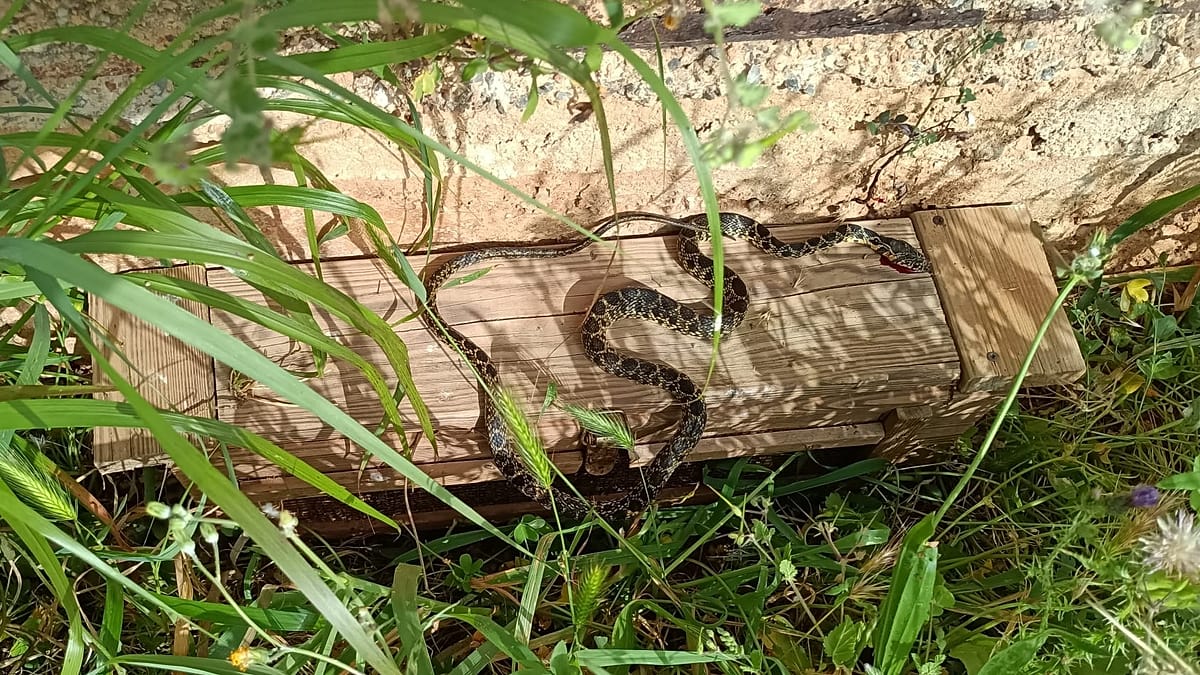
In the Balearic Islands, a silent ecological crisis is unfolding. Up to four species of non-venomous snakes, accidentally introduced from mainland Spain, are ravaging the archipelago's native fauna. The most aggressive invader, the horseshoe whip snake (Hemorrhois hippocrepis), has colonised vast swathes of Ibiza and Formentera, and has even been observed swimming between islets to hunt. Its arrival, linked to the trade in ornamental olive trees, is driving the Pityusan wall lizard (Podarcis pityusensis) toward local extinction.
How the Invasion Began
The first horseshoe whip snake was sighted on Ibiza in 2003, but the Balearic government did not treat the threat seriously until 2010, when studies confirmed its spread. By then, the snake had already reached Mallorca (2006) and Formentera (2010). Research published by the regional biodiversity department pointed to a clear culprit: large olive trees imported from the Iberian Peninsula for landscaping. A 2010 study noted that residents of Capdepera, Mallorca, linked the snakes' arrival to these trees, which originated in regions where the reptiles are common.
Instead of planting local olive trees and waiting for them to mature, estate owners and landscaping firms opted for fully grown imports, inadvertently transporting snakes hidden in the root balls. The government singled out a gardening company in Sant Llorenç de Balàfia, Ibiza, where horseshoe whip snakes were recorded among exports on two occasions. Environmental groups have also criticised authorities for repopulating areas with imported tree species.
Apex Predator in a Fragile Ecosystem
The horseshoe whip snake, harmless to humans, behaves as an apex predator in the Balearics, facing no natural competitors. It feeds on small mammals, other snakes, and especially the Pityusan wall lizard, a species listed as vulnerable and found only on Ibiza, Formentera, and surrounding islets. Each islet hosts a distinct subspecies with unique colours, making local extinctions particularly damaging.
In 2024, scientists from the Centre for Ecological Research and Forestry Applications (CREAF) filmed a horseshoe whip snake swimming across the Balearic Sea to reach new prey. They confirmed the extinction of Podarcis pityusensis on about ten islets, including Santa Eulària. The lizards, known locally as sargantanas, play a vital role in controlling insect populations, dispersing seeds, and pollinating plants.
Belated and Ineffective Measures
Three years ago, the regional government restricted certain tree imports during the snake's egg-hatching season, but the action came too late. Efforts to capture the snakes—around 12,000 have been caught since 2016—have proven futile. The invasion appears irreversible, compounding the pressure on an ecosystem already strained by mass tourism.
The horseshoe whip snake is not alone. Other introduced species include the ladder snake (Zamenis scalaris), the viperine snake (Natrix maura), and the Montpellier snake (Malpolon monspessulanus). None are venomous to humans, unlike the asp viper, nose-horned viper, and Cantabrian viper found elsewhere in Spain.
The Balearic Islands' biodiversity crisis echoes similar challenges across the Mediterranean, where invasive species threaten unique ecosystems. For now, the horseshoe whip snake's relentless advance serves as a stark reminder of the unintended consequences of global trade and landscaping trends.