Tehran's military leadership on Monday insisted that the Islamic Republic retains full command over the Strait of Hormuz, even as the country's currency spirals to unprecedented depths and Washington claims that not a single barrel of Iranian crude was loaded onto tankers in September.
Brigadier General Aziz Jafari, commander of the Khatam al-Anbiya Joint Air Defence Headquarters, said in a statement that “all movements” through the strategic waterway remain under the control of Iran's armed forces. His remarks came amid heightened tensions with the United States and Israel, and just hours before the resignation of Oil Minister Mohsen Paknejad was announced.
Paknejad, who had been in office only since August, was officially said to be stepping down for “family and personal matters.” However, speculation is rife that the real reason is the collapse of oil revenues, which have fallen so low that they no longer cover the state's financial obligations. In a video released by Iranian media before his departure, Paknejad insisted that revenue from oil already sold would be collected and that the process would continue.
The United States has intensified its pressure campaign. Treasury Secretary Scott Bessent wrote on X on Thursday: “Iran did not load any crude oil onto tankers in September. The Trump administration is cutting off the Iranian regime's most vital source of revenue.”
President Masoud Pezeshkian had already acknowledged in August that the blockade was disrupting exports. “We used to sell oil; now we cannot sell it,” he said. The newly appointed acting oil minister has pledged to maximise production and continue exports through new strategies, though details remain vague.
Ship-tracking firm Kpler reported that crude exports from the region excluding Iran averaged between 19.5 and 22.5 million barrels per day in the final week of September, above the pre-war regional average of 18 million barrels per day. This suggests that while Iran's exports have dried up, other producers have stepped in to fill the gap, a development that has kept global markets relatively stable.
Currency collapse and domestic strain
The economic strain is increasingly visible on Iran's streets. On the informal market, the euro broke through 300,000 tomans, while the US dollar hit a record 270,000 tomans—more than double its level at the start of the year, when it stood at around 135,000 tomans. At the time of the 1979 Islamic revolution, the dollar was worth approximately 7 tomans. The rial is Iran's official currency; one toman equals ten rials.
The currency's freefall has stoked public anger and added to the pressure on the government, which is already grappling with inflation and unemployment. The situation has also drawn attention to the broader economic impact of the sanctions, which have cut off Iran from international banking and shipping networks.
Meanwhile, the UK Maritime Trade Operations agency has reported at least one attack per day in the Strait of Hormuz or the Gulf of Aden since 2 October, underscoring the continued volatility in the region's waters.
Military rhetoric and diplomatic overtures
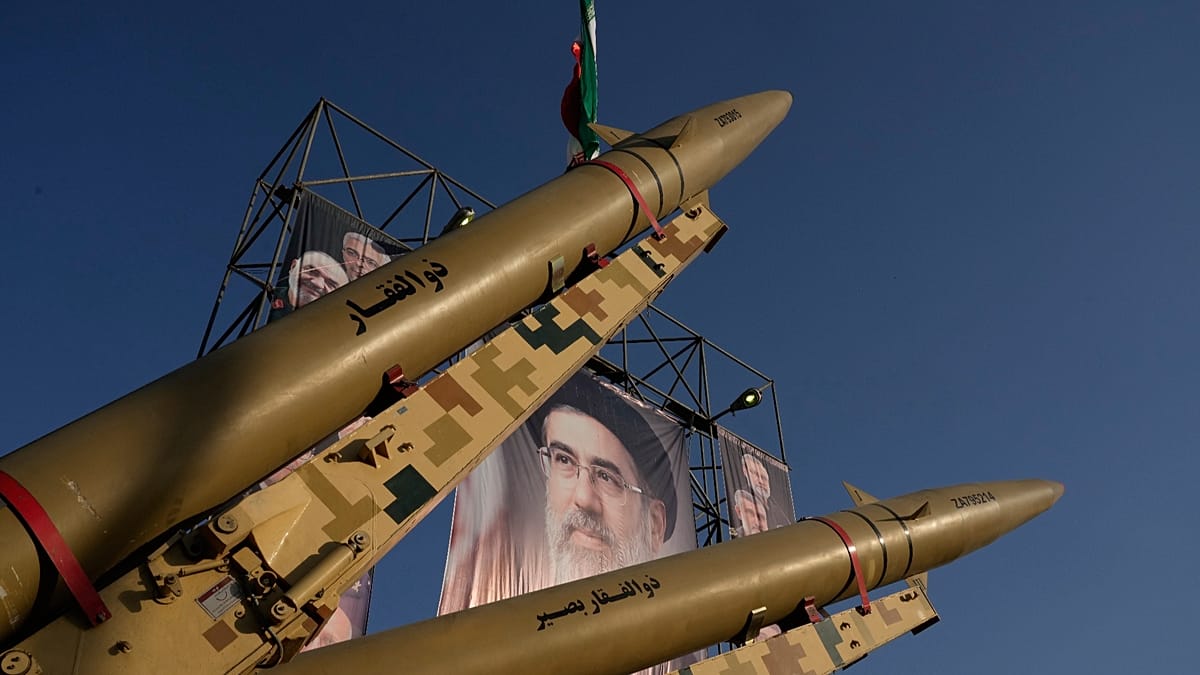
Major General Ali Abdollahi, chief of the armed forces general staff, issued a stark warning to international organisations and responded to Israeli Prime Minister Benjamin Netanyahu's recent visit to the United Arab Emirates. “If for any reason Israel once again commits a miscalculation and starts another war, the fury of the armed forces will shatter its hopes and dreams,” he said. “Be aware that if a new war against Iran begins, its flames will engulf everyone.”
Foreign Minister Abbas Araghchi, addressing foreign ambassadors in Tehran, said the conflict had no military solution. “If our enemies once again choose the path of military confrontation, our response will be firmer than before,” he said. “Only negotiations founded on justice and fairness can offer a way to end this conflict.” He added that the Strait could be fully reopened and shipping restored within seven days if Tehran's conditions were met and hostile measures lifted.
Parliament speaker Mohammad Bagher Ghalibaf said Iran had received proposals from Washington through intermediaries but would not accept one-sided demands. “The position of the Islamic Republic of Iran is completely clear and definitive, and until our seven conditions based on the Islamabad memorandum are met, the Strait of Hormuz will not be opened,” he said.
The standoff has significant implications for global energy markets and for European economies that rely on Gulf oil. The European Union has been tightening its own border controls and diversifying energy sources, but the closure of Hormuz would still send shockwaves through the continent's economy. As the crisis deepens, European diplomats are watching closely, aware that any military escalation could have far-reaching consequences.