Iranian forces struck two commercial tankers outside the Strait of Hormuz within 24 hours this week, in what appears to be a deliberate broadening of their maritime campaign beyond the strategic waterway. The attacks come as Tehran issues fresh warnings to Washington and its allies, raising fears of a wider conflict in the Gulf region.
The UK Maritime Trade Operations (UKMTO) agency reported that several projectiles hit the Antigua and Barbuda-flagged oil and chemical tanker Acers on Wednesday, approximately 51 nautical miles north of Madinat ash Shamal in Qatar. Casualties were reported, though the exact number has not been confirmed. Maritime intelligence firm Vanguard identified the vessel and said it was heading toward the Strait of Hormuz. This marks the first attack in that area in more than six months.
In a separate incident on Thursday, Vanguard reported a fire on a tanker about 40 kilometres off Fujairah in the Gulf of Oman, which it identified as likely the Marshall Islands-flagged Dhalgout. The UKMTO had not recorded the incident, and the cause of the fire was not immediately clear. NASA's FIRMS fire-detection system confirmed the blaze, and US military aircraft—including two KC-46 tankers, a KC-135, a P-8A maritime patrol aircraft, and several helicopters—were over the area at the time.
Expanding the battlefield
Neither Iran nor media affiliated with the Islamic Revolutionary Guard Corps (IRGC) officially claimed responsibility for either attack. However, IRGC-affiliated outlets implicitly suggested that Tehran had "extended the scope of its operations against commercial vessels that violate Iranian laws and regulations in the Strait of Hormuz to waters beyond the strait."
Both incidents fall outside the Strait of Hormuz, through which roughly one-fifth of global oil and gas shipments normally pass. The strait has been effectively closed since the war began in late February, after Iran and the US imposed concurrent naval blockades. This closure has already disrupted global energy markets and raised concerns in European capitals, which rely heavily on Gulf oil imports.
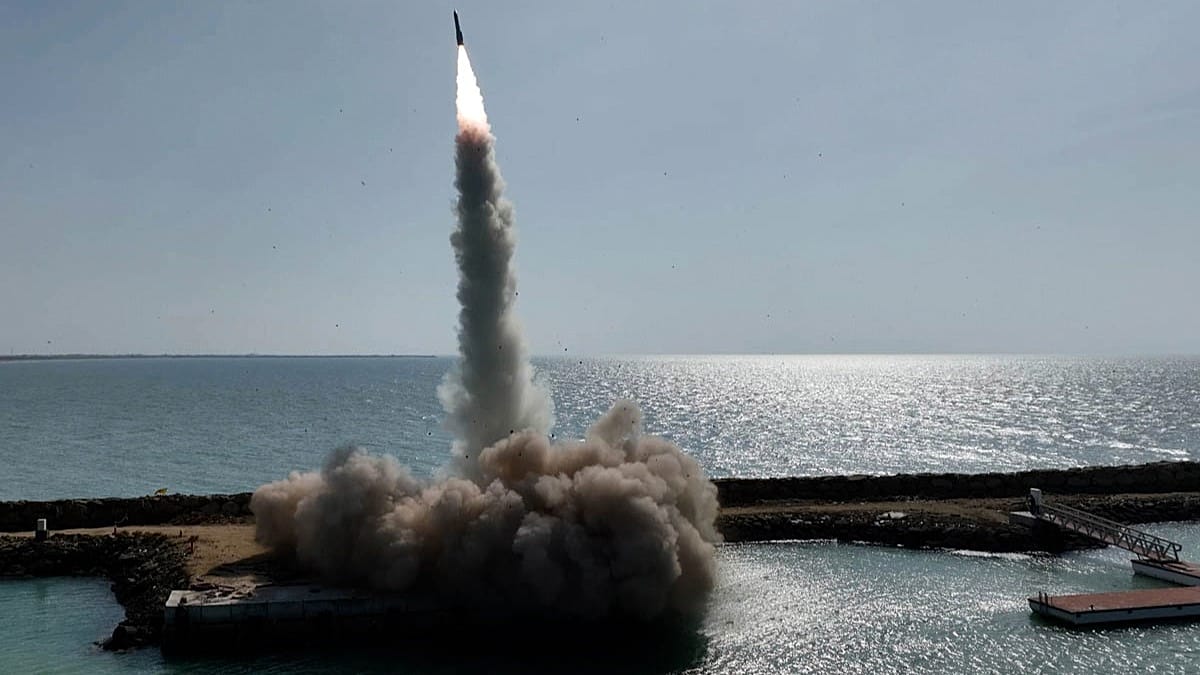
Acting Defence Minister Majid Ebn ol-Reza took to X on Thursday to issue a stark warning: "The distance between you and us is determined by our missiles." He added, "Yesterday the Gulf of Oman, today the Indian Ocean and tomorrow the Bay of Pigs. If you make a mistake, you will see a new set of dividing lines." The reference to the Bay of Pigs—the failed US-backed invasion of Cuba in 1961—underscores Tehran's defiance.
Yahya Rahim Safavi, a senior military adviser to Ayatollah Mojtaba Khamenei, had earlier warned that if the US or Israel attacked Iran again, Tehran could extend the war "as far as the Indian Ocean or other places," adding that Iranian forces had prepared contingency plans for worst-case scenarios.
Ebn ol-Reza was appointed acting minister after Aziz Nasirzadeh, Iran's then defence minister, was killed on 28 February—the first day of the war—alongside several other military commanders. Iranian President Masoud Pezeshkian has nominated Mehrdad Akhlaqi as a permanent replacement, and parliament is due to hold a confidence vote on 18 October.
Iran's army spokesman said separately that its forces were ready to carry out pre-emptive operations, if necessary, to prevent what he described as "any aggression or attack by the enemy."
The escalation comes as Iran claims control over Hormuz while its currency collapses and oil exports vanish, adding economic pressure to the military confrontation. European observers are closely monitoring the situation, given the potential for further disruption to global shipping and energy supplies.
In the United States, President Donald Trump defended the decision to go to war with Iran at a midterm election campaign rally in Nebraska. "This is a small price to pay for keeping the world and our country safe. They can destroy a city. Let them destroy it. Let them destroy Los Angeles, let them destroy San Diego," he said. However, at a separate rally in Texas on Wednesday night, Trump walked back those remarks after criticism, stating, "We protect our own cities. We will not allow such a thing to happen."
The attacks outside Hormuz signal a new phase in the conflict, with Iran demonstrating its ability to strike beyond the strait. For Europe, which has been grappling with gaps in maritime defence exposed by drone strikes in the Black Sea, the developments in the Gulf add another layer of strategic concern. The EU has called for restraint and de-escalation, but with Tehran showing no signs of backing down, the risk of a broader regional war remains high.