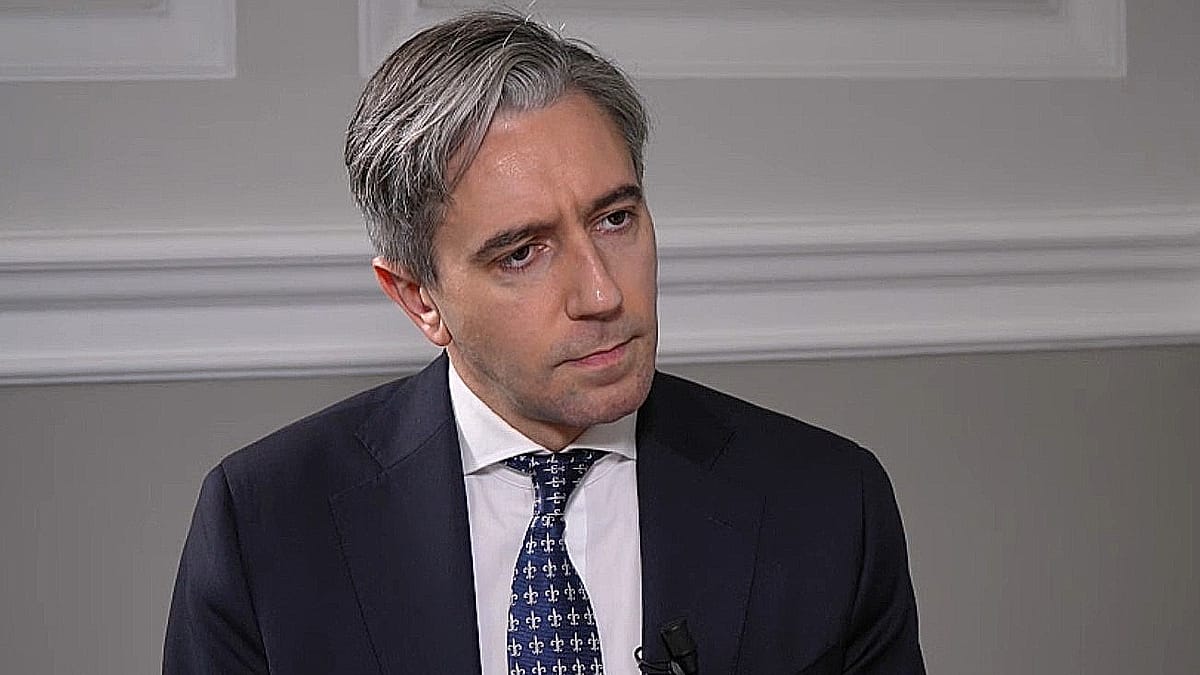
Irish Finance Minister Simon Harris has sought to reassure Washington that the European Union's proposed associate membership for Canada is not aimed at any third country, even as President Donald Trump threatens new tariffs on European goods.
Speaking to reporters in Dublin, Harris said the details of the new partnership with Ottawa are "yet to be determined," but he welcomed the EU's signal of intent to forge a "much closer relationship" with Canada. He insisted the move is "not a hostile act towards anybody," and rejected the notion that Brussels is forcing a choice between Canada and the United States.
"This isn't either-or," Harris said, addressing concerns that the EU's outreach to Canada could be seen as a snub to Washington. His comments come as the Trump administration has floated fresh tariffs on European imports, adding to transatlantic trade tensions.
EU-Canada Ties Deepen Amid Trade Uncertainty
The proposed associate membership would build on the existing Comprehensive Economic and Trade Agreement (CETA) between the EU and Canada, expanding cooperation beyond trade into areas like research, digital policy, and climate action. European Commission President Ursula von der Leyen has championed closer ties with Ottawa, framing the partnership as a strategic alignment of like-minded democracies.
Harris's remarks echo those of European Parliament President Roberta Metsola, who recently defended the Canada plan during a visit to Strasbourg. Metsola argued that deepening ties with Canada strengthens Europe's economic resilience and its ability to navigate global challenges, without alienating traditional allies.
The Irish minister's comments also align with the broader reshaping of transatlantic ties under Trump's pressure. While the US remains Europe's most important security partner, the EU is increasingly looking to diversify its economic relationships.
No Third Country in the Crosshairs
German MEP David McAllister, who chairs the European Parliament's foreign affairs committee, has stressed that the associate membership is not designed to target any specific nation. "This is about building a stronger Europe, not about undermining the United States," he said in a recent debate.
Harris echoed that sentiment, noting that Ireland, as a small open economy, benefits from stable and predictable international partnerships. He pointed to the deep historical and cultural ties between Ireland and Canada, which have long been a bridge across the Atlantic.
The proposed agreement has also drawn attention to what the associate status would mean in practice. While full EU membership is not on the table, associate membership could grant Canada participation in certain EU programs and agencies, such as Horizon Europe research funding or the Erasmus+ education exchange.
For European industry, the closer partnership could open new doors for investment and trade. Canadian firms already have significant stakes in European markets, and a deeper relationship could facilitate smoother regulatory cooperation and reduce non-tariff barriers.
Harris's comments come as EU leaders prepare to discuss the next steps in the Canada partnership at an upcoming summit. The Irish minister expressed optimism that the details would be finalized in a way that benefits both sides, while maintaining the EU's commitment to multilateralism.
"We are building a network of partnerships that strengthen our economies and our values," Harris said. "Canada is a natural partner, and this is good news for Europe and for the wider world."