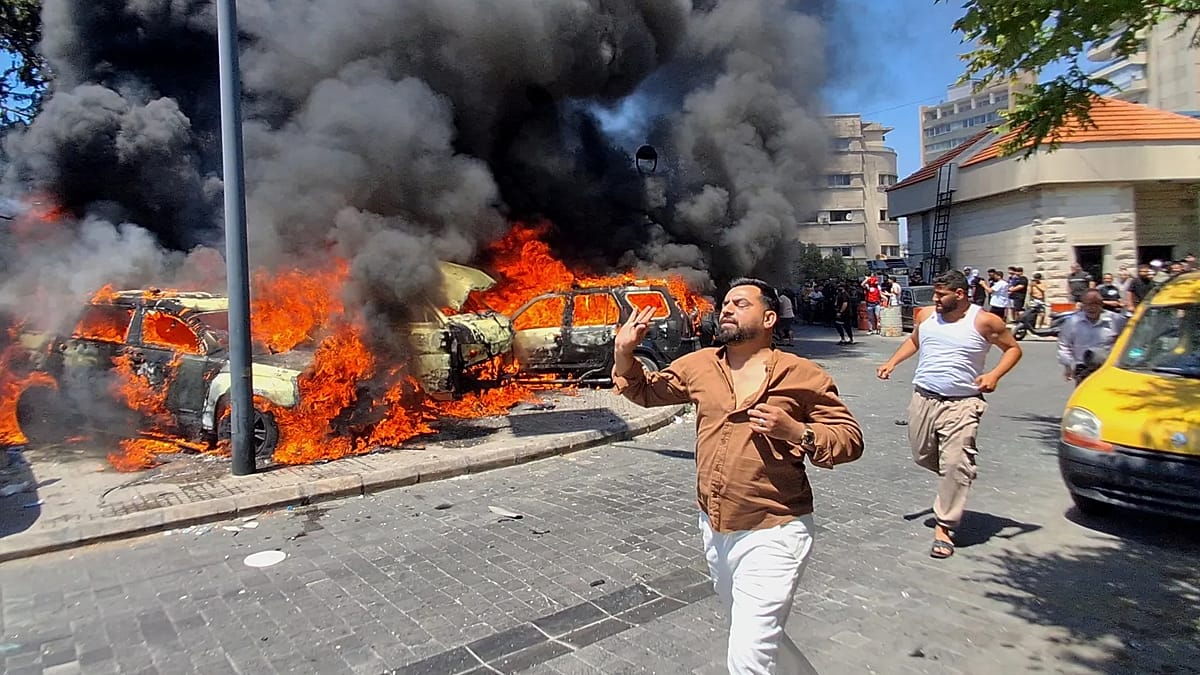
Israeli warplanes carried out a strike in the Nabatiyeh area of southern Lebanon on Friday morning, sending a plume of smoke over the horizon as the military campaign against Hezbollah intensifies. The attack followed a chaotic Thursday that saw the United States and Iran exchange direct fire for a second consecutive day, triggered by US President Donald Trump's warning that Tehran would pay a heavy price for stalled negotiations.
The Friday morning strike capped a week of escalating regional violence that has devastated communities along the border. In towns such as Marjayoun and Qlayaa, residents continue to endure the effects of sustained military operations. According to reports from the Associated Press, streets are nearly deserted, with only a few vehicles passing and a handful of residents venturing outside. Every few metres, a destroyed building or burned-out car serves as a stark reminder of the immediate danger.
Christian families who chose to remain in the border area report living in constant fear, with many too afraid to step outside for daily errands. The relentless bombardment has left the southern Lebanese border largely empty, a ghost landscape of abandoned homes and shattered infrastructure.
Heavy Casualties in Sidon and Tyre
On Thursday, an Israeli strike wounded ten staff members of a hospital in the city of Tyre as air campaigns targeted several areas in southern Lebanon and a village in the Baalbek region in the east, far from the Israeli border. All three hospitals in the area have been damaged by similar strikes since the start of the latest war between Hezbollah and Israel in early March.
The escalation built on a wave of lethal strikes on Wednesday, which began shortly after the Israeli military warned residents to leave specific border zones. A large plume of smoke was seen rising over the southern Lebanese village of Houmin following targeted strikes on what the Israeli military described as Hezbollah infrastructure. The operation turned deadly further west, where an airstrike on a village east of Tyre killed at least six people, according to Lebanon's state-run National News Agency. Two additional people were killed by an Israeli drone strike targeting a car in the southern city of Sidon.
The Israel Defence Force (IDF) claimed that the Wednesday attacks had all struck Hezbollah infrastructure sites and killed militants in Tyre and other areas. In a video message, Israeli Prime Minister Benjamin Netanyahu said the IDF had taken out nearly 10,000 Hezbollah militants and that the military has been systematically clearing out Iranian-backed forces.
Stalled Diplomacy Drives Military Surge
The surge in military operations comes as diplomatic tracks remain deadlocked. Tehran has continued to insist that any comprehensive deal to end the war between Iran, the US and Israel must also include an immediate end to the fighting between Israel and its Lebanese ally, Hezbollah. Instead, Israel has intensified its campaign, rejecting the linked ceasefire demands.
The conflict, which escalated in March, has resulted in more than 3,500 reported deaths and the displacement of approximately one million people in Lebanon, according to available figures. The humanitarian toll is mounting as the international community watches with growing concern. The European Union has repeatedly called for de-escalation, but with little effect on the ground.
For European readers, the crisis underscores the fragility of the Middle East and its ripple effects on energy markets, migration flows, and diplomatic alignments. The European Central Bank, under Christine Lagarde, has already factored in the instability when defending its rate hikes, as seen in the ECB's robust scenarios. Meanwhile, the displacement of civilians in Lebanon echoes patterns seen in other conflict zones, raising questions about regional stability and the EU's role in humanitarian response.
As the fighting continues, the prospect of a broader regional war looms larger. The US-Iran exchange of fire on Thursday marked a dangerous escalation, and Israel's rejection of a linked ceasefire suggests that the violence in southern Lebanon will persist. For the residents of Nabatiyeh, Tyre, and Sidon, the immediate future holds only more uncertainty and fear.