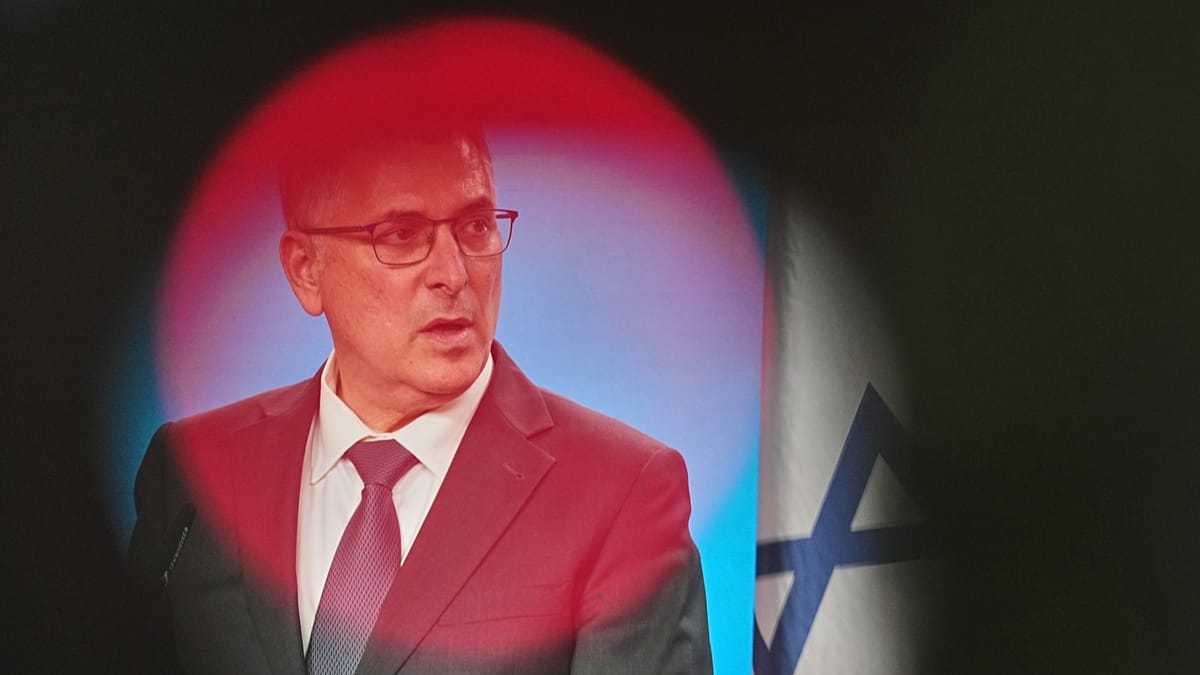
Israeli Foreign Minister Gideon Sa'ar has called for a more balanced dialogue with the European Union, implicitly criticising EU foreign policy chief Kaja Kallas after a reported diplomatic incident. Speaking alongside European Commissioner for the Mediterranean Dubravka Šuica in Jerusalem on Monday, Sa'ar stressed that dialogue must be a two-way street.
“We believe in the importance of comprehensive, honest and open dialogue with the EU,” Sa'ar said. “But dialogue cannot just be one side dictating its political positions to the other side. Certainly not when it comes to issues at the very heart of our existence.”
The remarks follow a report that Kallas, during a private trip to Mexico last month, compared Israel's treatment of Palestinians to South Africa's apartheid regime. Sa'ar responded by cutting off all diplomatic contact with Kallas until she provides an explanation. Kallas has since said she values “dialogue and engagement” with Israel but did not address the apartheid comment directly.
The spat has exposed deeper divisions within the EU over Middle East policy, as explored in our analysis here. While some member states, notably Hungary and the Czech Republic, maintain close ties with Israel, others like Ireland and Belgium have pushed for tougher measures, including trade restrictions on settlements.
Šuica's Visit and the Settlement Trade Question
Šuica's two-day visit to Israel and the occupied West Bank was part of a broader Middle East tour. She met with Sa'ar and is expected to hold talks with Israeli President Isaac Herzog in Jerusalem, focusing on bilateral relations and the situation in Gaza.
During the press point, Šuica emphasised that partnerships require “open and honest dialogue,” but neither she nor Sa'ar mentioned Kallas by name. A European diplomat, speaking on condition of anonymity, told Euronews that it was “not a good look” for Šuica to stand beside Sa'ar without addressing “the boycott of her colleague.”
The EU executive is under pressure from most member states to propose options for restricting trade with Israeli settlements, which are considered illegal under international law. An informal deadline of 13 July has passed without a formal proposal, leaving the matter in limbo. The European Commission's spokesperson Paula Pinho clarified that Šuica's meeting was “long-planned” and coordinated with the European External Action Service.
Commission spokesperson Markus Lammert added: “We will continue saying this respectful and constructive dialogue and engagement is important with all our partners, even more so when there are differences.”
The row with Kallas and the stalled settlement trade measures highlight the EU's ongoing struggle to forge a unified Middle East policy. As the bloc's 27 member states grapple with divergent national interests, the question of how to engage with Israel—and whether to impose consequences for settlement expansion—remains deeply contentious.
Meanwhile, the situation on the ground remains volatile. Recent Israeli warnings sparked a mass evacuation of Tyre, as reported here, and a brief ceasefire in southern Lebanon collapsed after renewed Israeli strikes killed five people. The UNIFIL deputy has warned that no quick peace is possible without political will from both sides here.