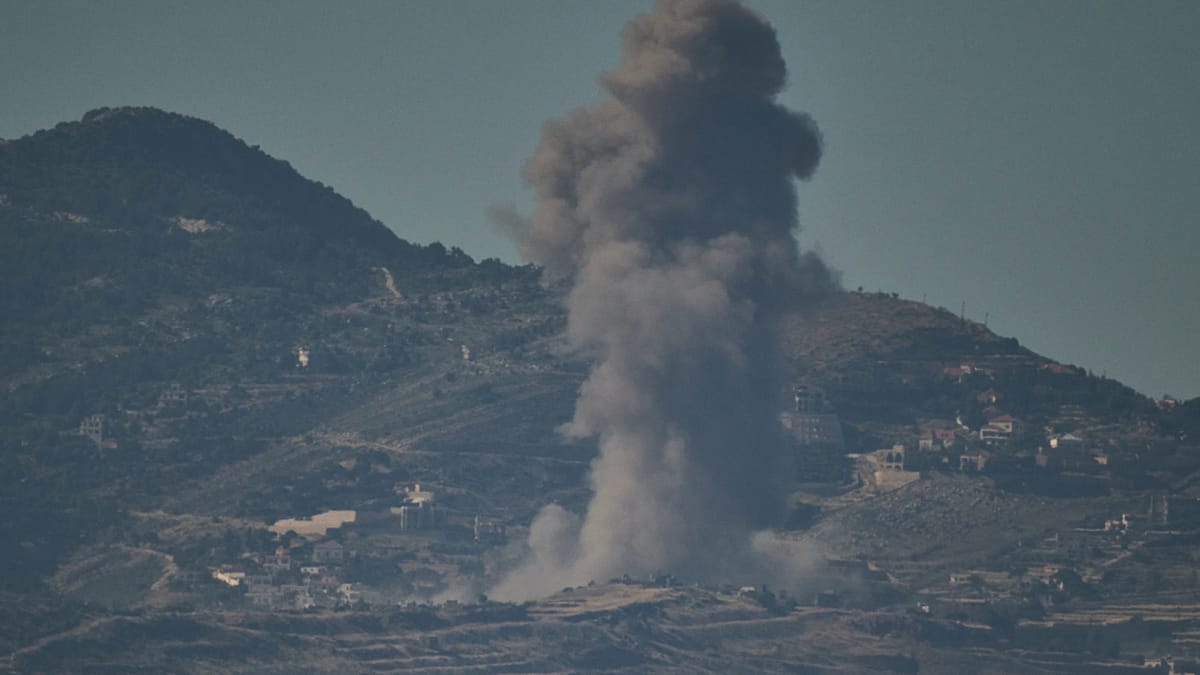
Israeli airstrikes resumed across southern Lebanon early Saturday, killing at least five people and shattering a fragile ceasefire that had been agreed just hours earlier, according to Lebanese state media. The renewed violence underscores the volatility of the region and the difficulty of sustaining diplomatic efforts between Israel and Hezbollah.
Lebanon's National News Agency reported that Israeli warplanes hit the town of Nabatieh al-Fawqa shortly after midnight. Later in the morning, strikes on Arabsalim killed three people, while drone attacks on Deir al-Zahrani and Doueir claimed two more lives. The attacks came less than a day after US officials confirmed that Israel and the Iran-backed militant group had agreed to a renewed ceasefire.
Ceasefire Collapses Amid Rising Rhetoric
The latest escalation follows a series of exchanges between the two sides from Thursday night into Friday, which had threatened to undermine the provisional peace agreement brokered by Washington. The US had been pushing for a de-escalation to prevent a broader regional conflict, but the renewed strikes suggest that the truce remains extremely fragile.
On Friday, Israel's national security minister, Itamar Ben-Gvir, made inflammatory remarks on social media, stating that “all of Lebanon must burn” after the Israeli military reported that four of its soldiers had been killed in southern Lebanon. “For every tear of an Israeli mother, a thousand Lebanese mothers must weep,” he wrote, drawing widespread condemnation.
The comments and the subsequent strikes have raised concerns in European capitals, where diplomats have been working to support the US-led mediation. The European Union has long called for restraint on both sides, but internal divisions over Middle East policy have hampered a unified response. A recent spat between EU foreign policy chief Kaja Kallas and Israel highlighted the bloc's difficulty in crafting a coherent stance.
Humanitarian Toll and Regional Implications
The renewed violence has already triggered mass displacement in southern Lebanon. Earlier this week, Israeli warnings sparked a mass evacuation of Tyre, with thousands of civilians fleeing northward. The United Nations Interim Force in Lebanon (UNIFIL) has warned that a lasting peace will require genuine political will from both sides. In a recent interview, a UNIFIL deputy noted that no quick peace is possible without political commitment.
The strikes also come at a delicate moment for Iran, which backs Hezbollah. The US had been seeking to stabilize its provisional agreement with Tehran, but the renewed clashes risk derailing those efforts. For Europe, the instability on its southern flank has direct consequences for energy security and migration flows. As the continent accelerates its transition away from Russian gas, energy security has become a new benchmark for European policy, making stability in the Eastern Mediterranean all the more critical.
The situation remains fluid, with both sides showing little willingness to de-escalate. International mediators, including EU officials, are expected to intensify their efforts in the coming days to prevent a full-blown war that could draw in multiple actors and destabilize the region further.