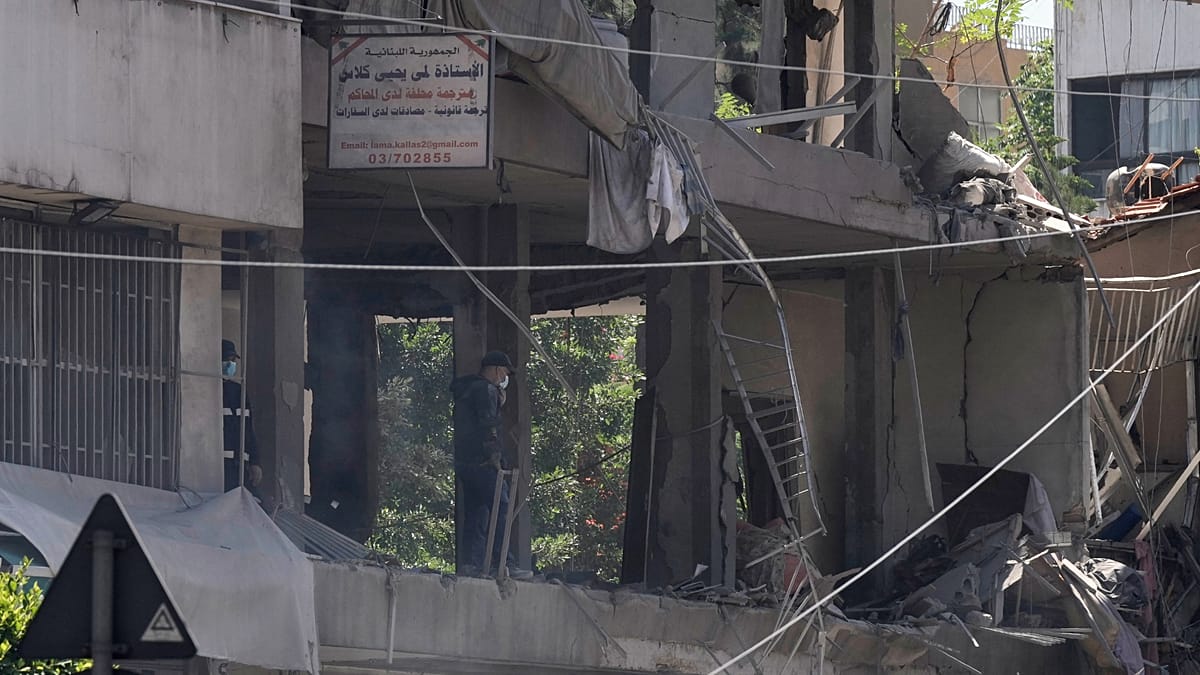
Israeli warplanes carried out fresh airstrikes on Beirut's southern Dahiyeh district on Sunday, hitting the Ghobeiry neighbourhood, Lebanon's National News Agency (NNA) reported. The Israeli military described the strikes as "precise" and aimed at a Hezbollah command centre used to coordinate attacks against Israeli civilians and soldiers in southern Lebanon.
Prime Minister Benjamin Netanyahu's office confirmed the operation, stating that all targets belonged to Hezbollah and were a response to the group's rocket fire toward Israeli territory. The Israel Defense Forces (IDF) added in a social media post that precautions were taken to "mitigate harm to civilians" before the strikes.
The IDF also reported that Hezbollah projectiles landed near the communities of Shomera and Shlomi in northern Israel, adding to two earlier projectiles that crossed the border over the weekend. This marks the second wave of Israeli strikes in as many days; Saturday's attacks killed at least five people, including Ali Badie, the mayor of Ar-Rihan municipality in the Jezzine district, and three others in the towns of Deir al-Zahrani and Kafr Reman in Nabatieh district. One person died in an airstrike on the town of Maarakeh near Tyre.
Lebanese President Warns of Existential Choice
Lebanese President Joseph Aoun addressed the nation on Saturday, describing the moment as a "fateful juncture." He framed the choice before the country as between becoming "a sovereign state that monopolises arms and upholds the rule of law" or remaining "hostage to the logic of militias and the culture of exclusion." Speaking on the anniversary of the 1978 assassination of former minister Tony Suleiman Frangieh, Aoun stressed that national unity is an "existential necessity" and warned against "sectarian luxury" and "regional tug-of-war."
The renewed escalation between Israel and Hezbollah threatens to derail a potential agreement between Washington and Tehran. Iran, Hezbollah's primary backer, has insisted that any US-Iran ceasefire deal must include a halt to Israeli strikes on Lebanon. The last time Israel struck the Beirut suburbs, a week earlier, Iran responded with direct strikes on Israel.
Hezbollah entered the conflict in early March, following the killing of Iran's Supreme Leader Ayatollah Ali Khamenei, which triggered a broader regional war. The situation remains volatile, with the US and Iran reportedly close to a deal that mediators—including Pakistan and US President Donald Trump—claim could be signed as soon as Sunday.
While the prospective agreement does not address the most contentious issues, such as Iran's nuclear programme or its frozen assets, it establishes a 60-day framework for technical discussions on those topics. This could provide a basis for de-escalation in Lebanon, though the immediate reality on the ground remains one of intensified military action.
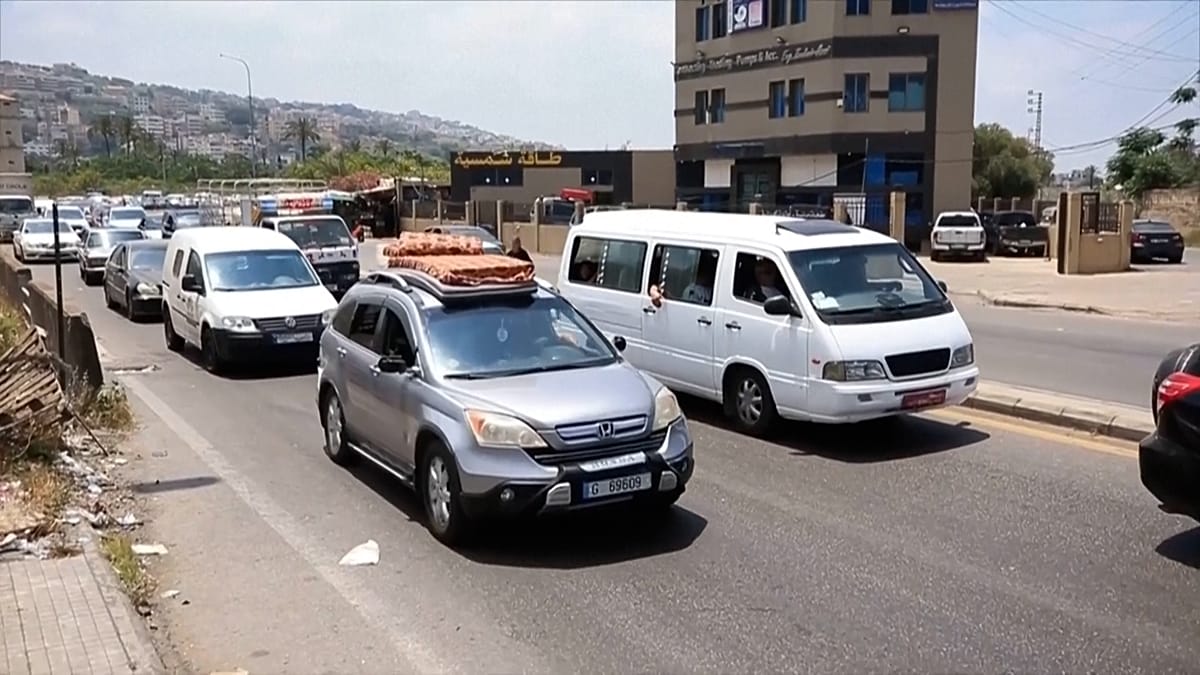
On Saturday, the Israeli military issued evacuation warnings to residents of 24 Lebanese towns and villages, urging them to leave their homes immediately. The warnings have already triggered a mass exodus from the southern city of Tyre, as reported in Israeli Warnings Spark Mass Evacuation of Tyre, Thousands Flee North.
The broader regional dynamics are also shaped by ongoing US-Iran tensions. In a related development, Trump Calls Off Iran Strikes, Signals Potential Deal After Talks, suggesting that diplomatic channels remain active even as military operations continue. Meanwhile, the US has tightened its naval blockade on Iran, with US Strikes Third Tanker This Week in Gulf of Oman, Tightening Iran Port Blockade, underscoring the high stakes of the negotiations.
For European observers, the situation in Lebanon carries direct implications. The EU has long supported the Lebanese state's sovereignty and the disarmament of militias, as reflected in President Aoun's remarks. Any further destabilisation could increase refugee flows toward Cyprus and southern Europe, while also affecting energy markets and regional security cooperation. The coming days will test whether the US-Iran talks can produce a framework that halts the violence, or whether the region slides deeper into a wider war.